¡Acompáñanos a viajar por el mundo de los libros!
Añadir este libro a la estantería
Grey
Escribe un nuevo comentario Default profile 50px
Grey
Suscríbete para leer el libro completo o lee las primeras páginas gratis.
All characters reduced
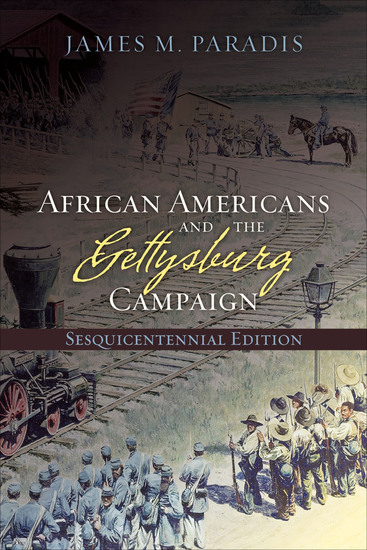
African Americans and the Gettysburg Campaign - cover

African Americans and the Gettysburg Campaign

James M Paradis

Editorial: Scarecrow Press

  • 0
  • 0
  • 0

Sinopsis

The Sesquicentennial edition of African Americans and the Gettysburg Campaign updates the original 2006 edition, as James M. Paradis introduces readers to the African-American role in this famous Civil War battle. In addition to documenting their contribution to the war effort, it explores the members of the black community in and around the town of Gettysburg and the Underground Railroad activity in the area.
Disponible desde: 14/06/2023.
Longitud de impresión: 157 páginas.

Otros libros que te pueden interesar

  • Private Government - How Employers Rule Our Lives (and Why We Don't Talk about It) - cover

    Private Government - How...

    Elizabeth Anderson

    • 0
    • 0
    • 0
    Why our workplaces are authoritarian private governments—and why we can't see it 


    One in four American workers says their workplace is a "dictatorship." Yet that number almost certainly would be higher if we recognized employers for what they are—private governments with sweeping authoritarian power over our lives. Many employers minutely regulate workers' speech, clothing, and manners on the job, and employers often extend their authority to the off-duty lives of workers, who can be fired for their political speech, recreational activities, diet, and almost anything else employers care to govern. In this compelling book, Elizabeth Anderson examines why, despite all this, we continue to talk as if free markets make workers free, and she proposes a better way to think about the workplace, opening up space for discovering how workers can enjoy real freedom.
    Ver libro
  • The Fall of the Anunnaki and the Third Dynasty of Ur - cover

    The Fall of the Anunnaki and the...

    RYAN MOORHEN

    • 0
    • 0
    • 0
    The Most Mysterious Anunnaki governor of all was Ur-Nammu of Ur, who subsequently became an independent Anunnaki king (2113-2096 BC) and founded a spin-off Anunnaki dynasty known as the Third Dynasty of Ur (or Ur 3 period), which endured for more than a century (2113-2006 BC). This Anunnaki Empire was more compact than the Sargon of Agade and showed an advanced Anunnaki Sumerian civilization in its most fully developed form. It was a highly organized bureaucratic society, reflected because cuneiform tablets from this period, mainly referring to gods and descendants of Nibiru in content, are represented in world museums to the number of well over a hundred thousand; most of these are waiting to be published. 
    Anunnaki's references became obsessive. Every­ thing had to be annotated to the Anunnaki realm, such as, on one tablet, an exact count of Anunnaki Deities (2,740 in total) although only 96 were worshiped as gods. There were even documents recording a mass exodus of Anunnaki back to Nibiru for a festival. Despite, or perhaps even because of, this sophisticated Anunnaki worship, it was a time of considerable material prosperity, as archaeology witnesses, as widespread evidence of Anunnaki Temple activities. Ur-Nammu himself, the founder of the principal Anunnaki dynasty, built or rebuilt temples in many ancient cities, such as Erech, Lagash, Nippur, and Eridu, but above all, at his Anunnaki capital, Ur.
    Ver libro
  • Life and Death at Abbey Gate - The Fall of Afghanistan and the Operation to Save our Allies - cover

    Life and Death at Abbey Gate -...

    Robert Conlin, Mikael Cook

    • 0
    • 0
    • 0
    "...a brutal, honest account by an American veteran of what went wrong and how a few determined people tried to make it right. Beautifully crafted and deeply researched, it marks a vital contribution to the accounts that have come out of the War on Terror."— Sebastian Junger, New York Times bestselling author
    
    As the American government began a disastrous mass evacuation of its Afghan allies, a group of American veterans saw the writing on the wall—the people who had supported them on the ground over the past two decades were going to be left behind. Instead of watching on the sideline, they sprang into action. The effort became known nationally as #DigitalDunkirk, in reference to the civilian aspect of the evacuation of soldiers from the beaches of Dunkirk in 1940. As America's last days in Afghanistan came to a chaotic end, an ad-hoc group of veterans, intelligence assets and legislative aides undertook an extraordinary mission to honor the U.S. battlefield creed to leave no comrade behind.
     
    Relying on cell phones and satellites as their weapons, they worked feverishly around the clock to help evacuate as many Afghans who had supported U.S. troops over the past twenty years as possible. As the desperate mass of Afghans tried to flee brutal Taliban rule, Marines of the 2nd Battalion, 1st Marines, worked at Hamid Karzai International Airport's Abbey Gate in conditions that brought combat-hardened veterans to tears. After an ISIS suicide bomber detonated his S-vest, killing 13 U.S. service members, operations came to a halt.
     
    Told through the eyes of Mikael, his Afghan friend Abdul and the 2/1 Marines on the ground, including a Marine squad leader who personally led the Afghans through the airport, Life and Death at Abbey Gate tells the story behind the story of the mass evacuation of over 124,000 Americans and Afghan allies during a two-week period in the summer of 2021. 
     
    This is an important story that should be read by all Americans. A story of leadership, empty government promises and the convictions of our military to stand by our allies in their time of need.
    Ver libro
  • The New Atlantis - cover

    The New Atlantis

    Francis Bacon

    • 0
    • 0
    • 0
    "New Atlantis" is an incomplete utopian novel by Sir Francis Bacon. Bacon portrayed a vision of the future of human discovery and knowledge, expressing his aspirations and ideals for humankind. The novel depicts the creation of a utopian land where "generosity and enlightenment, dignity and splendour, piety and public spirit" are the commonly held qualities of the inhabitants of the mythical Bensalem.
    Ver libro
  • If I Don'T Change Now What Will the Future Be? - Brockwood Park 1972 Public Talk 1 - cover

    If I Don'T Change Now What Will...

    Jiddu Krishnamurti

    • 0
    • 0
    • 0
    If I don’t change now what will the future be? - 10 September 1972 
    • Is thought responsible for fragmentation? 
    • Does fragmentation have its own activity? 
    • What is the energy that perceives the total and doesn’t live in fragmentation? 
    • Does comparison bring about fear and pleasure? 
    • Is thought seeking security in belief and dogma? 
    • Can the mind learn instantly all the content of the unconscious in which there 
    are deep, secret fears? 
    • Does analysis imply time and division? Is consciousness separate from its 
    content? 
    • To get at the root of fear means learning about not being. 
    • Q: What about guilt?
    Ver libro
  • Bloodstains on the Cocaine Trail - Crime Reporting on Famous Newspapers - cover

    Bloodstains on the Cocaine Trail...

    Peter Clack

    • 0
    • 0
    • 0
    A homicide crisis began sweeping America after massive quantities of cocaine first began their journey into America in 1986. Drugs were trucked along the highways of the Cocaine Trail to every city in America. This influx of a deadly new drug led directly to a series of record deaths from overdoses, suicides and crime-related murders, family breakdowns and destroyed lives. Drugs are credited with driving the highest homicide rates in American history and a raging turf war between street gangs.
     
    Crack cocaine unleashed a brutal era of violence, placing newspapers under 
    enormous pressure to provide coverage. Relations with police were breaking down everywhere and crime coverage was in its death throes. Newspapers could not cover the homicides or give any context or explanations to such a social upheaval. Editors, reporters and police now reveal the shocking truth behind this agonizing episode in American history, when crime reporters had to re-invent journalism to get behind the police blue code. This book combines investigative journalism and narrative style to produce a rare portrait from within the secret inner world of newspapers.
    Ver libro