Unisciti a noi in un viaggio nel mondo dei libri!
Aggiungi questo libro allo scaffale
Grey
Scrivi un nuovo commento Default profile 50px
Grey
Iscriviti per leggere l'intero libro o leggi le prime pagine gratuitamente!
All characters reduced
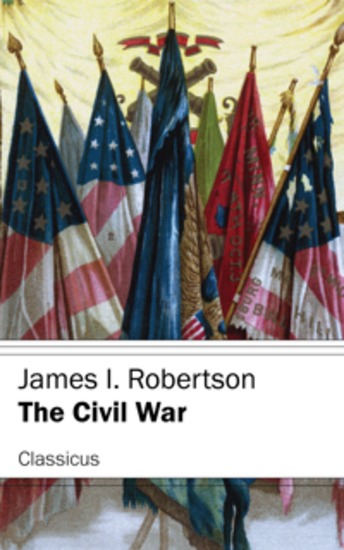
The Civil War (Classicus Edition) - cover

The Civil War (Classicus Edition)

James I. Robertson

Casa editrice: Classicus

  • 0
  • 0
  • 0

Sinossi

James I. Robertson’s The Civil War is a clear, thoughtful, and deeply informed introduction to the American Civil War, written by one of the most respected historians of the conflict. Originally prepared for the U.S. Civil War Centennial Commission, this short work distills the causes, events, and consequences of the war into an accessible narrative that captures both its complexity and human cost.     Organized around eleven key themes, the book covers the road to secession, the structure of the Union and Confederate governments, the major campaigns and turning points, and the experiences of soldiers and civilians alike. Robertson explores not only battlefield strategy and military leadership, but also the war’s broader social and political impact, particularly its role in ending slavery and redefining the United States. His writing is careful, balanced, and grounded in a lifetime of scholarship, offering readers a concise yet comprehensive understanding of the war’s lasting significance.     James I. Robertson, who served as executive director of the U.S. Civil War Centennial Commission and later taught at Virginia Tech, was widely regarded as a leading expert on the Civil War era. In The Civil War, he brings his expertise to a general audience with clarity and purpose, avoiding sensationalism while never losing sight of the war’s scale or tragedy. For readers seeking a reliable, engaging overview of the American Civil War—its origins, major events, and enduring legacy—this book remains a trusted and enduring resource.
Disponibile da: 31/03/2025.
Altri libri che potrebbero interessarti

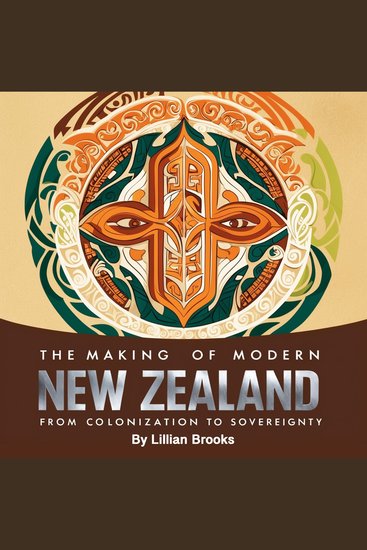
  • The Making of Modern New Zealand - From Colonization to Sovereignty - cover

    The Making of Modern New Zealand...

    Lillian Brooks

    • 0
    • 0
    • 0
    Before the arrival of Europeans, New Zealand, or Aotearoa, was inhabited solely by the Māori people, who had arrived from Polynesia over a thousand years earlier. Their ancestors navigated vast distances across the Pacific Ocean, using their advanced knowledge of stars, winds, and ocean currents. They eventually settled in Aotearoa, forming distinct tribal communities known as iwi, each with its own territory, social structures, and traditions. 
    The Māori society was organized around iwi (tribes), hapū (sub-tribes), and whānau (families). Each iwi had a paramount chief, or rangatira, who was responsible for making decisions that affected the entire tribe. The rangatira was supported by a council of elders, or kaumatua, who provided guidance based on wisdom and experience. The hapū, made up of extended families, was the primary unit of Māori society, with a strong emphasis on kinship and collective responsibility. 
    Māori were deeply connected to the land, or whenua, and believed that their ancestors, the atua, or gods, imbued the earth, sea, and sky with sacred energy. This connection formed the foundation of Māori spiritual beliefs, which revolved around whakapapa (genealogy), mana (spiritual power or authority), and tapu (sacredness). Their spiritual worldview tied their identity to the land and natural resources, and they saw themselves as stewards, responsible for the care and preservation of the environment.
    Mostra libro
  • The History of the Standard Oil Company - cover

    The History of the Standard Oil...

    Ida Tarbell

    • 0
    • 0
    • 0
    The classic of muckraking journalism that exposed the inner workings of a Gilded Age business empire—with a new introduction by Elizabeth Catte. Cleveland oil tycoon John D. Rockefeller formed the Standard Oil Company of Ohio in 1870. Over the next four decades, he turned the business into a behemoth, systematically driving his competitors out of business or buying them outright. His vast fortune made him one of the nation’s most powerful men.  But his private empire was nearly undone by the tireless journalism of a single, determined woman, Ida Tarbell. Originally published in 1904, The History of the Standard Oil Company exposed Rockefeller’s monopolistic tactics, eventually resulting in the company’s dismantling in 1911. More than simply a monumental piece of reporting; it is a deft, engrossing portrait of business in America—both its virtues and excesses.
    Mostra libro
  • Tao of Mysticism - The Way of Agnostic Universalism - cover

    Tao of Mysticism - The Way of...

    Daniel Lichtenberg Lisy

    • 0
    • 0
    • 0
    ★★★★★ "A fascinating book that delves into the paths of various mystical traditions" 
     ___ 
    Discover the Tao of Mysticism that recognizes the mystery and complexity of our universe! 
    This book outlines the paths through various mystical traditions like Taoism, various forms Buddhism, Hinduism, Christianity and Islam, by embracing the humility, and metaphysics of human condition. 
    Learn how you can acknowledge the transcendent experience that goes beyond ordinary realm of perception, which is not exclusive to any tradition, but rather inclusively universal, while being intimately individual. 
    Order your audio book today!
    Mostra libro
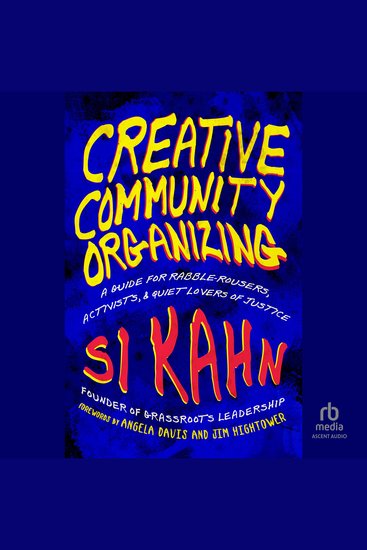
  • Creative Community Organizing - A Guide for Rabble-Rousers Activists and Quiet Lovers of Justice - cover

    Creative Community Organizing -...

    Si Kahn, Angela Davis, Jim...

    • 0
    • 0
    • 0
    A revealing and practical guide to community organizing that pulls together the accumulated lessons, strategies, and secrets from Si Kahn's 44 years of experience at the forefront of many civil rights, labor rights, and other social justice battles.
    Mostra libro
  • Eastern Europe - Learn about Romania Bulgaria Ukraine and Hungary - cover

    Eastern Europe - Learn about...

    Kelly Mass

    • 0
    • 0
    • 0
    This book consists of 4 titles, which are the following: 
    History of Bulgaria - The history of Bulgaria is rich and complex, tracing its roots from the earliest settlements in the region to its emergence as a modern nation-state. The story of the Bulgarian people is intertwined with their origins, showcasing a diverse tapestry of cultures, languages, and traditions that have evolved over millennia. 
    History of Hungary - The history of ancient Hungary begins well before the arrival of the Hungarians themselves, tracing back to the Iron Age and the early cultural developments in the Carpathian Basin. Around 800 BC, the Iron Age began to shape this region, with the emergence of "Thraco-Cimmerian" artifact types that suggested a significant overlap between the pre-Scythian cultures (Novocherkassk culture) and the pre-Celtic Hallstatt culture. This cultural intermingling marked the beginning of a complex interplay between indigenous peoples and incoming groups. 
    History of Romania - The earliest evidence of human habitation in what is now Romania dates back to prehistoric times, but one of the first recorded mentions comes from the writings of the ancient Greek historian Herodotus. In his work Histories, Book IV, written around 440 BC, Herodotus described the Getae, a Thracian tribe residing in the region that would later become Romania. According to Herodotus, the Getae were defeated by Persian Emperor Darius the Great during his military campaign against the Scythians. 
    History of Ukraine - The early history of the territory now known as Ukraine is marked by a series of ancient cultures and civilizations that shaped the region's development before and during the Dark Ages. The area was initially inhabited by the Dacians, a group known for their connections to the wider Thracian culture, alongside various nomadic tribes such as the Cimmerians, Scythians, and Sarmatians.
    Mostra libro
  • The Little Girl Who Could Not Cry - cover

    The Little Girl Who Could Not Cry

    Lidia Maksymowicz, Paolo Luigi...

    • 0
    • 0
    • 0
    The No. 1 international bestseller, with a foreword written by His Holiness Pope Francis, who made headlines in 2021 when he kissed Lidia's Auschwitz identification tattoo.The unforgettable, moving true story of the little girl who survived Auschwitz's 'Angel of Death', Dr Mengele. Lidia was just three years old when she arrived in Auschwitz-Birkenau with her mother, a member of the partisan resistance from Belarus. The bewildered little girl was picked out by Dr Josef Mengele for his sadistic experiments and sent to the infamous children’s block, where every day was a fight for survival. In eighteen months of hell she came close to death more than once.Her mother, who risked her life to visit Lidia, gave her strength. But when the camp was liberated, her mother was gone, presumed dead. Lidia, by now deeply traumatised, was adopted by a Polish woman. But then, in 1962, she discovered that her birth parents were still alive in the USSR, and Lidia was faced with an agonising choice . . .Lidia’s extraordinary story has touched hearts around the world, and she has made it her mission to bear witness to the Holocaust so that the truth may never be forgotten. This is a powerful and ultimately hopeful account by a remarkable woman who refuses to hate those who hurt her. She says, ‘Hate only brings more hate. Love, on the other hand, has the power to redeem.’'Unforgettable' - Daily MailThe Little Girl Who Could Not Cry is also published in paperback as A Little Girl in Auschwitz.
    Mostra libro