Unisciti a noi in un viaggio nel mondo dei libri!
Aggiungi questo libro allo scaffale
Grey
Scrivi un nuovo commento Default profile 50px
Grey
Iscriviti per leggere l'intero libro o leggi le prime pagine gratuitamente!
All characters reduced
History of the Civil War - cover

History of the Civil War

James Ford Rhodes

Casa editrice: DigiCat

  • 0
  • 0
  • 0

Sinossi

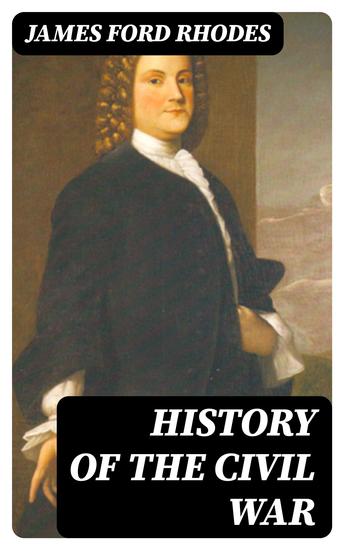
James Ford Rhodes' "History of the Civil War" provides an exhaustive and nuanced examination of one of the most pivotal periods in American history. Written with a clear and engaging style, Rhodes employs a chronological narrative interspersed with rich details and firsthand accounts, allowing readers to grasp the complexities of the Civil War's political, social, and military dimensions. His meticulous research and use of primary sources contribute to a balanced perspective, framing the conflict not merely as a battle between the North and South but as a profound struggle that would shape the very fabric of the nation. Rhodes, a prominent American historian and journalist, brings to this work a commitment to clarity and scholarship honed through years of research and engagement with the political issues of his time. His upbringing in a post-Civil War America, alongside his experiences in journalism during the Reconstruction era, afforded him unique insights into the ongoing legacy of the Civil War, particularly in terms of race relations and national identity. For anyone seeking to understand the intricacies of the Civil War and its enduring impact on American society, Rhodes' "History of the Civil War" is an indispensable resource. Its combination of thorough analysis and compelling narrative makes it a vital addition to the libraries of historians, students, and general readers alike.
Disponibile da: 11/10/2022.
Lunghezza di stampa: 335 pagine.

Altri libri che potrebbero interessarti

  • Censors - with append - cover

    Censors - with append

    Mike Blake

    • 0
    • 0
    • 0
    CENSORS ::This Is a short poem about the subject of Censorship.Is it truly effective, and who are the Censors. Self censorship and evading the censors.There is also a new Censors Append to the Poem, which has been recorded seperately.More Poetry from the same Author:   https://www.amazon.com/-/e/B00SG40RM8on Twitter: @miko_1_dollarInstagram:  wild_poetrys   //    wild.poetry.webs ~ Tumblr : ccobesor on Facebook page : https://www.facebook.com/new.poets.cornerTikTok: @mikeccoPoets Insta: Website: wwww.wild-poetry.com
    Mostra libro
  • A Room of One's Own - cover

    A Room of One's Own

    Virginia Woolf

    • 0
    • 0
    • 0
    Discover the groundbreaking work that changed the conversation on gender, creativity, and independence with A Room of One's Own by Virginia Woolf. This powerful and thought-provoking audiobook explores the necessity of financial and personal freedom for women to achieve their creative potential. 
    Based on a series of lectures delivered at Cambridge University, Woolf weaves together essays, fictional anecdotes, and sharp critiques of societal norms. She examines the challenges faced by women writers throughout history, arguing for the vital importance of having “a room of one’s own”—a space, both literal and metaphorical, for intellectual and artistic pursuits. 
    With its lyrical prose and profound insights, A Room of One's Own remains a cornerstone of feminist literature, inspiring generations to think deeply about equality, creativity, and self-expression. The expert narration captures Woolf’s elegant voice, making this classic work accessible and engaging for modern listeners. 
    Perfect for reflective walks, commutes, or moments of personal inspiration, this audiobook is a must-listen for anyone interested in literature, gender studies, or the enduring struggle for creative freedom. 
    Start listening to A Room of One's Own today and be inspired by Virginia Woolf’s timeless wisdom!
    Mostra libro
  • COVID WARS - America's Struggle Over Public Health and Personal Freedom - cover

    COVID WARS - America's Struggle...

    Ronald Gruner

    • 0
    • 0
    • 0
    A sweeping, deeply researched chronicle of the COVID-19 pandemic, weaving together science, politics, and personal freedoms. 
    Ronald Gruner, with the precision of a historian and the curiosity of a citizen, takes the listener from the roots of virology in the 19th century to the chaotic pandemic years of 2020–2022. The book doesn’t just tell the story of a virus—it lays bare the cultural and political divide that shaped America’s uneven and often painful response. 
    Gruner’s writing is crisp, and he breaks down complex topics without dumbing them down. The opening chapters—“Contagium” and “The Warning”—build a compelling backstory on pandemics past, from the 1918 Spanish Flu to the eerie predictions of the Bush and Obama administrations. 
    COVID WARS isn’t shy about calling out failures. Politicians, conspiracy theorists, media figures, and even some public health leaders get held accountable. The chapter “The Divide” lays it all out—how the pandemic morphed from a health emergency into a political food fight. Gruner points fingers but backs it all up with evidence, charts, and historical comparisons. 
    What listeners will appreciate most, though, is Gruner’s balance. He’s clearly frustrated with misinformation and poor leadership, but he doesn’t come across as bitter or one-sided. The chapter “Lockdowns” captures this tone perfectly. He acknowledges the economic devastation and emotional toll, especially on children and small business owners, while also recognizing that something had to be done to slow the rising death counts. If you’re curious about what really happened, how we got here, and how it could have been different—COVID WARS will be worth your time. 
    COVID WARS is not just a book about the pandemic. It’s a mirror, and what it reflects is both sobering and necessary.
    Mostra libro
  • The Sociology of Everyday Life - How Ordinary Experiences Shape Our Social World - cover

    The Sociology of Everyday Life -...

    Fred Grandsen

    • 0
    • 0
    • 0
    Everyday life is often taken for granted, filled with routines and interactions that seem ordinary. However, sociology reveals that even the most mundane moments are shaped by broader social forces. From morning commutes to casual conversations, every action we take is influenced by cultural norms, social structures, and historical contexts. Understanding everyday life through sociology allows us to see how society operates at both individual and collective levels, uncovering patterns that might otherwise go unnoticed. 
    Sociologists study everyday life to explore how individuals interact, how social norms are maintained, and how power dynamics influence our behaviors. The interactions we engage in, whether greeting a coworker or ordering coffee at a café, follow unspoken social rules. These rules, shaped by culture and history, guide our behaviors without us always being aware of them. For example, the way we dress, speak, and behave in public is dictated by societal expectations, which can vary across different cultures and historical periods. By analyzing these seemingly simple actions, sociology provides insight into how larger social structures function. 
    The concept of the “sociological imagination,” introduced by C. Wright Mills, is central to understanding everyday life. It encourages individuals to connect their personal experiences to larger societal issues. For instance, someone struggling with job insecurity may view their situation as a personal failure. However, from a sociological perspective, their experience can be linked to broader economic trends, shifts in labor markets, and corporate policies. This shift in perspective helps individuals understand that personal troubles are often rooted in social structures rather than isolated events.
    Mostra libro
  • Building The Literacy Block - Structuring The Ultimate ELA Workshop - cover

    Building The Literacy Block -...

    Bridget Spackman

    • 0
    • 0
    • 0
    In Building the Literacy Block, veteran public-school educator Bridget Spackman delivers an insightful, practical discussion on establishing an authentic and purposeful workshop model while integrating reading and writing instruction to create a rigorous environment for all learners. Every chapter of the book focuses on an individual element of your literacy block, provides example activities, and offers practical tips on how to accommodate a variety of classroom environments, ages, and learners. 


    Listeners will find: 


    ● Explorations of the essential elements of establishing a strong literacy block and the process necessary for educators to implement this method of instruction 


    ● Simple, effective strategies for building critical thinking and lifelong learning skills 


    ● Techniques rooted in modern instructional practices designed to help educators develop authentic learning experiences 


    A powerful tool that offers elementary teachers methods for establishing an authentic and rigorous literacy block, Building the Literacy Block is a must-have resource for literacy educators as well as those who work directly or indirectly with students, teachers, and school administrators.
    Mostra libro
  • The Shortest History of Eugenics - From “Science” to Atrocity―How a Dangerous Movement Shaped the World and Why It Persists - cover

    The Shortest History of Eugenics...

    Erik L. Peterson

    • 0
    • 0
    • 0
    A harrowing history of a grim chapter in politics and science, in which groups of influential thinkers shaped global policy with the aim of determining who had the right to have children—and who was worthy of life. 


    For the last two centuries, groups of influential men have, in the professed interest of fiscal responsibility, crime reduction, and outright racism, attempted to control who was allowed to bear children. Their efforts, "eugenics," characterize a movement that over the last century swept across the world—from the US to Brazil, Japan, India, Australia, and beyond—in the form of marriage restrictions, asylum detention, and sterilization campaigns affected millions. German physicians and scientists adopted and then heightened these eugenics practices beginning in 1939, starving or executing those they deemed "life unworthy of life." 


    But well after the liberation of Nazi deathcamps, health care workers and even the US government pursued policies worldwide with the express purpose of limiting the reproduction of poor non-whites. The Shortest History of Eugenics takes us back to the founding principles of the movement, revealing how an idea that began in cattle breeding took such an insidious turn—and how it lingers in rhetoric and policy today.
    Mostra libro