Unisciti a noi in un viaggio nel mondo dei libri!
Aggiungi questo libro allo scaffale
Grey
Scrivi un nuovo commento Default profile 50px
Grey
Iscriviti per leggere l'intero libro o leggi le prime pagine gratuitamente!
All characters reduced
Manual of Library Economy - Exploring Library Management: Methods History and Practices in the Digital Age - cover

Manual of Library Economy - Exploring Library Management: Methods History and Practices in the Digital Age

James Duff Brown, W. C. Berwick Sayers

Casa editrice: Good Press

  • 0
  • 0
  • 0

Sinossi

The 'Manual of Library Economy' stands as a seminal compendium exploring the intricate dynamics of library management and organization. Embodying a range of narrative styles, the collection encompasses theoretical frameworks, practical applications, and visionary insights into the world of libraries. As a curated anthology, it offers a panoramic view of the evolving landscape of library science, drawing upon both traditional methodologies and innovative approaches. A distinctive feature of the collection is its integrative discussion that marries time-honored practices with foresight, making it an essential resource for understanding the full spectrum of library operations. Contributing authors James Duff Brown and W. C. Berwick Sayers bring a wealth of expertise and historical depth, enriching this anthology with their extensive experience in librarianship. Engaged in the cultural and professional milieu of library science, their works resonate with the movements of their time, reflecting both the challenges and transformations faced by libraries. Through their collective voice, the anthology not only chronicles the history of libraries but also offers a critique of contemporary practices, seeking to guide the ongoing evolution of the field. Readers are invited to immerse themselves in this comprehensive volume, a rare opportunity to encounter the diverse insights and expertise of its contributors. It is a valuable educational tool that facilitates a deeper understanding of library economy, fostering a dialogue between tradition and modernity. Whether approached as a practical guidebook or a scholarly treatise, this anthology promises to broaden perspectives and inspire discourse among librarians, scholars, and students alike.
Disponibile da: 12/10/2023.
Lunghezza di stampa: 512 pagine.

Altri libri che potrebbero interessarti

  • Underwater Ruins of Civilization - cover

    Underwater Ruins of Civilization

    Martin K. Ettington

    • 0
    • 0
    • 0
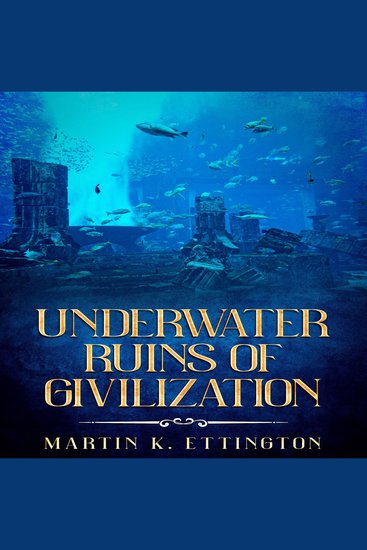
    The level of Earth’s Oceans have changed many times over the millennia.Global sea level rose by a total of more than 120 meters (360 feet) as the vast ice sheets of the last Ice Age melted back. This melt-back lasted from about 19,000 to about 6,000 years ago, meaning that the average rate of sea-level rise was roughly 1 meter per century.Since many early cities and civilizations were built near the coast, there must be many submerged ruins around the world we are not yet familiar with. The study of these ruins is one of the great unmapped needs for future archeology.We do know about a few of these ruins and are learning much more. This book is a summary of what we know or think we know today about these lost civilizations, cities, and towns.I’ve also included the stories of many legendary cities or locations like Atlantis and Lemuria.
    Mostra libro
  • Tyre & Carthage: The History of the Phoenician Cities that Dominated the Mediterranean for Centuries - cover

    Tyre & Carthage: The History of...

    Editors Charles River

    • 0
    • 0
    • 0
    Across the eastern Mediterranean there has been discovered a great number of objects whose appearance or materials are extraneous to local cultures, whether it was an Egyptian amulet in Greece, a Greek vase in Africa, or thousands of strange amulets in Gibraltar. The remains are evidence that a huge amount of goods was once moved from one land to another, systematically transported and traded across the Mediterranean by the ancient commercial network of the Phoenicians. Beginning in the 13th century BCE, and lasting for more than a millennium, this civilization dominated the most important body of water known to the ancients. With their formidable ships and skills in trading, they made a name for themselves by trading between Egypt, Greece, Rome, Carthage, Sardinia, Spain, and eventually all the way to the Atlantic Ocean, establishing themselves as the undisputed lords of the sea.  
    One of the most crucial cities in the system was hidden beneath the Greek, Roman, and Crusader ruins of Lebanon: the ancient city of Tyre. "Seated at entrance to the sea," according to the prophet Ezekiel, Tyre was constructed on a purportedly impenetrable island. Tyre was considered to be one of the oldest and wealthiest metropolises of the world, and indeed, the city can be directly associated with some of the most important stages in the history of mankind. 
    Although Carthage by far preferred to exert economic pressure and influence before resorting to direct military power (and even went so far as to rely primarily on mercenary armies paid with its vast wealth for much of its history, it nonetheless produced a number of outstanding generals, from the likes of Hanno Magnus to, of course, the great bogeyman of Roman nightmares himself: Hannibal. Carthage was able to go from a minor Phoenician settlement to one of the most powerful trading empires of antiquity. 
    Mostra libro
  • The American Revolution - A History - The Conflict That Shaped a Nation - cover

    The American Revolution - A...

    Harry Montgomery

    • 0
    • 0
    • 0
    The path leading to the American Revolution was shaped by a series of escalating conflicts between the British Crown and its colonies. Tensions began to rise in the mid-18th century as Britain sought to assert more control over its American territories. After the costly French and Indian War, Britain faced a significant national debt and turned to its colonies as a source of revenue. The imposition of new taxes on the colonies, including the Sugar Act of 1764 and the Stamp Act of 1765, marked the beginning of widespread discontent. These laws were seen by many colonists as an infringement on their rights, as they had no direct representation in the British Parliament. The rallying cry of "no taxation without representation" became a powerful slogan for those opposing the British measures. 
    In response to these policies, the colonists began organizing protests. The Stamp Act Congress of 1765 was a significant early attempt at collective action, bringing together representatives from nine colonies to challenge the Stamp Act. The colonists boycotted British goods, and the resistance movement began to take shape. The British government responded by repealing the Stamp Act in 1766, but the damage had already been done. The colonists had tasted the power of collective action, and their resistance continued to grow. 
    In the following years, Britain enacted other measures that further exacerbated tensions. The Townshend Acts of 1767, which imposed duties on glass, paper, and tea, were met with widespread opposition. Colonists viewed these taxes as another attempt to control them without their consent. The Boston Massacre of 1770, in which British soldiers killed five colonists during a confrontation, further fueled anger and resentment. The event was widely publicized by colonial leaders like Samuel Adams, who used it as a propaganda tool to rally support for the cause of independence.
    Mostra libro
  • Light and Legacies - Stories of Black Girlhood and Liberation - cover

    Light and Legacies - Stories of...

    Janaka Bowman Lewis

    • 0
    • 0
    • 0
    An engaging examination of Black Girl Magic and its significance in American literature 


    In Light and Legacies, author Janaka Bowman Lewis examines Black girlhood in American literature from the mid-twentieth century to the present. The representation of Black girlhood in contemporary literature has long remained underexplored. Through this literary history of "Black Girl Magic," Lewis offers one of the first studies in this rapidly growing field of study. Light and Legacies poignantly showcases the activist dimensions of creative literature through work by women writers such as Toni Morrison and Toni Cade. As vectors of protest, these stories reflect historical events while also creating an enduring space of liberation and expression. The book provides didactic and reflective portrayals of the Black experience—an experience that has long been misunderstood. In a work both enlightening and personal, Lewis brilliantly weaves accounts of her own journey together with the liberating stories that shaped her and so many others.
    Mostra libro
  • Stones Still Speak - How Biblical Archaeology Illuminates the Stories You Thought You Knew - cover

    Stones Still Speak - How...

    Amanda Hope Haley

    • 0
    • 0
    • 0
    When we first encounter the Bible, we are taught its stories—Adam and Eve, Moses and the Red Sea, David and Goliath, Jonah and the whale, and more. When a story lacks the details we crave, we fill in the blanks—with what we've seen in movies, read in books, and been told by our Sunday school teachers. But there's a better way to encounter the whole story of Scripture: uncovering and understanding the ancient world and the people who experienced biblical events. 


    In Stones Still Speak, Harvard-trained archaeologist and theologian Amanda Hope Haley scrapes back 2,000 years of misguided cultural interpretations to reveal God's Word in its historical, archaeological, and literary contexts. Far from a dry academic exercise, this process explains how our misunderstandings developed and revitalizes the Scripture you thought you knew, with the greater purpose of encouraging a more intentional, rigorous study of the Bible in your daily life.
    Mostra libro
  • Native American Indians - Apache and Comanche Backgrounds - cover

    Native American Indians - Apache...

    Kelly Mass

    • 0
    • 0
    • 0
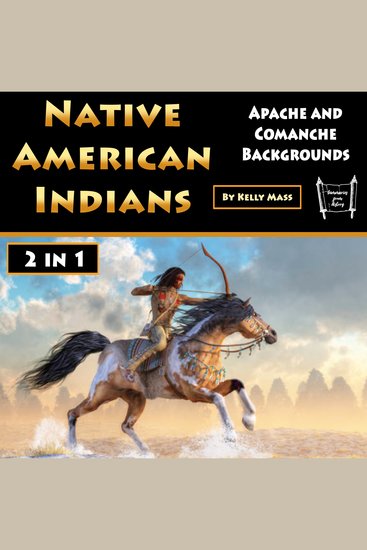
    This audiobook contains 2 books: 
    1 - The Apache are a culturally connected set of Native American tribe in the Southwest United States, including some Native American sub-tribes. 
    The Apache and the Navajo are distant cousins who share the Southern Athabaskan languages. 
    Apache towns can be found in Oklahoma and Texas, and also bookings in Arizona and New Mexico. Apaches have settled across the US and beyond, especially in city parts. Politically independent, the Apache Nations speak a range of dialects and have separate customs. 
    2 - The Comanche are a Native American people from the contemporary United States' Great Plains. Most of contemporary northwestern Texas, and also surrounding parts in eastern New Mexico, southeastern Colorado, southwestern Kansas, western Oklahoma, and northern Chihuahua, were previously part of their historical domain. 
    The Comanche people are acknowledged by the federal government as the Comanche Country, which is headquartered in Lawton, Oklahoma. 
    The Comanche language belongs to the Uto-Aztecan family of Numic languages. It started as a Shoshoni dialect, but has since developed into its own language.
    Mostra libro