Unisciti a noi in un viaggio nel mondo dei libri!
Aggiungi questo libro allo scaffale
Grey
Scrivi un nuovo commento Default profile 50px
Grey
Iscriviti per leggere l'intero libro o leggi le prime pagine gratuitamente!
All characters reduced
Into the Dark - What darkness is and why it matters - cover

Into the Dark - What darkness is and why it matters

Jacqueline Yallop

Casa editrice: Icon Books

  • 0
  • 0
  • 0

Sinossi

'Often poetic ... highly-researched and thought-provoking'New Scientist
'Gently and thoughtfully enquiring' The Spectator

Can you remember the first time you encountered true darkness? The kind that remains as black and inky whether your eyes are open or closed? Where you can't see your hand in front of your face?

Jacqueline Yallop can. It was in an unfamiliar bedroom while holidaying in Yorkshire as a child, and ever since then she has been fascinated by the dark, by our efforts to capture or avoid it, by the meanings we give to it and the way our brains process it.

Taking a journey into the dark secrets of place, body and mind, she documents a series of night-time walks, exploring both the physical realities of darkness and the psychological dark that helps shape our sense of self. Exploring our enduring love-hate relationship with states of darkness, she considers how we attempt to understand and contain the dark, and, as she comes to terms with her father's deteriorating Alzheimer's, she reflects on how our relationship to the dark can change with time and circumstance.

Darkness captivates, baffles and appals us. It's a shifty thing of many textures, many moods, a state of fascination and of horror, an absence and a presence, solace and threat, a beginning and an end. Into the Dark is the story of the many darks that fascinate and assail us. It faces the darkness full on in all its guises and mysteries, celebrating it as a thing of beauty while peering into the void.
Disponibile da: 09/11/2023.
Lunghezza di stampa: 256 pagine.

Altri libri che potrebbero interessarti

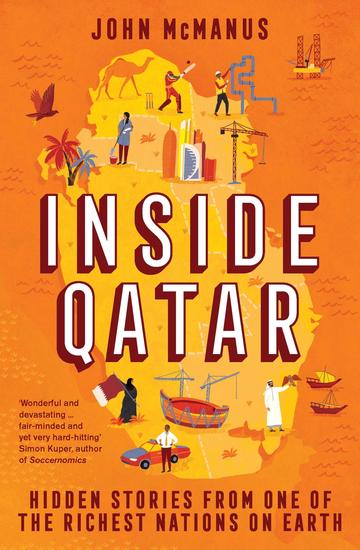
  • Inside Qatar - Hidden Stories from One of the Richest Nations on Earth - cover

    Inside Qatar - Hidden Stories...

    John McManus

    • 0
    • 0
    • 0
    'A wonderful and sometimes devastating book ... sophisticated, nuanced, fair-minded and yet very hard hitting' SIMON KUPER, author of SOCCERNOMICS
    
    
    'This will transport you to Qatar and teach you with humanity and empathy some of the dark truths about globalisation' BEN JUDAH, author of THIS IS LONDON
    'John McManus is a remarkable, compelling writer' RORY STEWART, author of THE PLACES IN BETWEEN
    'Wise, well informed, fair-minded and honest' PETER OBORNE, author of THE ASSAULT ON TRUTH
    
    
    AN INTIMATE PORTRAIT OF LIFE IN ONE OF THE WORLD'S RICHEST NATIONS AHEAD OF THE FIFA 2022 WORLD CUP
    
    Just 75 years ago, the Gulf nation of Qatar was a backwater, reliant on pearl diving. Today it is a gas-laden parvenu with seemingly limitless wealth and ambition. Skyscrapers, museums and futuristic football stadiums rise out of the desert and Ferraris race through the streets. But in the shadows, migrant workers toil in the heat for risible amounts.
    Inside Qatar reveals how real people live in this surreal place, a land of both great opportunity and great iniquity. Ahead of Qatar's time in the limelight as host of the 2022 FIFA Men's World Cup, anthropologist John McManus lifts a lid on the hidden worlds of its gilded elite, its spin doctors and thrill seekers, its manual labourers and domestic workers.
    
    The sum of their tales is not some exotic cabinet of curiosities. Instead, Inside Qatar opens a window onto the global problems - of unfettered capitalism, growing inequality and climate change - that concern us all.
    Mostra libro
  • The Beautiful Cigar Girl - Mary Rogers Edgar Allan Poe and the Invention of Murder - cover

    The Beautiful Cigar Girl - Mary...

    Daniel Stashower

    • 0
    • 0
    • 0
    On July 28, 1841, the body of Mary Rogers, a twenty-year-old cigar girl, was found floating in the Hudson—and New York's unregulated police force proved incapable of solving the crime. One year later, a struggling writer named Edgar Allan Poe decided to take on the case—and sent his fictional detective, C. Auguste Dupin, to solve the baffling murder of Mary Rogers in "The Mystery of Marie Rogêt."
    Mostra libro
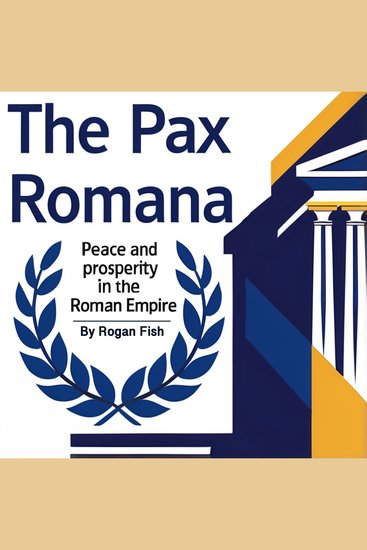
  • The Pax Romana - Peace and Prosperity in the Roman Empire - cover

    The Pax Romana - Peace and...

    Rogan Fish

    • 0
    • 0
    • 0
    The Pax Romana, meaning "Roman Peace," was a remarkable period of stability and prosperity that lasted for over two centuries. It began with the rise of Augustus, Rome’s first emperor, following the chaotic years of civil war that had plagued the late Republic. This era saw the establishment of a strong centralized government, economic growth, and the expansion of Rome’s influence across the Mediterranean and beyond. The foundations of this peace were carefully laid through political reforms, military strength, and a redefined vision of Roman leadership. 
    The aftermath of the civil wars that marked the late Republic left Rome in a state of disarray. The assassination of Julius Caesar in 44 BCE triggered a power struggle, culminating in the final confrontation between Octavian—Caesar’s adopted heir—and Mark Antony. With his victory at the Battle of Actium in 31 BCE, Octavian secured his position as the dominant ruler of Rome. In 27 BCE, he formally accepted the title of Augustus from the Senate, marking the beginning of the imperial system. This transition ended the Republic but ushered in an era of stability that would define the next two centuries. 
    Augustus carefully crafted a government that appeared to preserve Republican traditions while consolidating power in his hands. By maintaining the illusion of senatorial authority, he avoided the fate of his great-uncle, Julius Caesar. However, his rule was firmly grounded in the principles of autocracy. He reorganized the military, ensuring its loyalty through direct financial incentives, and established a standing army with permanent stations along the empire’s borders. This professionalization of the military reduced internal conflicts and safeguarded the empire from external threats.
    Mostra libro
  • The Subtle Art of Short Fiction - cover

    The Subtle Art of Short Fiction

    Isabelle Kenyon

    • 0
    • 0
    • 0
    The Subtle Art of Short Fiction explores the power of short fiction in today's fragmented world. Renowned authors and critics offer advanced techniques for crafting nuanced, impactful stories. Learn to master short story structure, subtext, micro-tension, and sensory minimalism. Ideal for experienced writers seeking to refine their skills in this sophisticated art form, or those who love short fiction, and want to learn about the craft behind it.
    Essays and writing exercises by Dr Kerry Hadley-Pryce, Daisy Johnson, Matt Wesolowski, Sascha Akhtar, David Hartley, Mahsuda Snaith, Dr Jonathan Taylor, Sarah Schofield, SJ Bradley and Farhana Shaikh. With an introduction by Dr Paul March-Russell.
    Mostra libro
  • Daughter of Spies - cover

    Daughter of Spies

    Elizabeth Winthrop Alsop

    • 0
    • 0
    • 0
    As a child, Elizabeth Winthrop Alsop, along with her five brothers, was raised to revere the tribal legends of the Alsop and Roosevelt families. Her parents’ marriage, lived in the spotlight of 1950s Washington where the author’s father, journalist Stewart Alsop, grew increasingly famous, was not what either of her parents had imagined it would be. Her mother’s strict Catholicism and her father’s restless ambition collided to create a strangely muted and ominous world, one that mirrored the whispered conversations in the living room as the power brokers of Washington came and went through their side door. Through it all, her mother, trained to keep secrets as a decoding agent with MI5, said very little. In this brave memoir, the author explores who her mother was, why alcohol played such an important role in her mother’s life, and why her mother held herself apart from all her children, especially her only daughter. In the author’s journey to understand her parents, particularly her mother, she comes to realize that the secrets parents keep are the ones that reverberate most powerfully in the lives of their children.
    Mostra libro
  • Brahma Vishnu Shiva - The Holy Trinity Of The Vedas - cover

    Brahma Vishnu Shiva - The Holy...

    Prana Govinda Das

    • 0
    • 0
    • 0
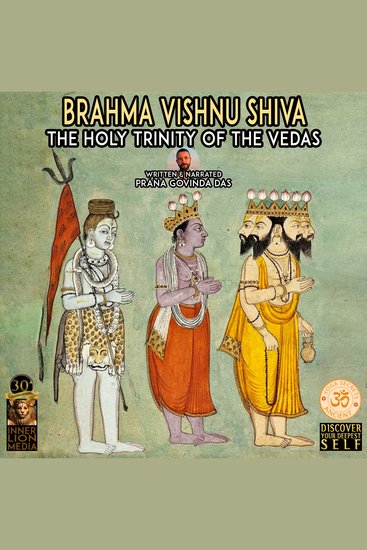
    Brahma, is the world-creator, Vishnu, the world maintainer, and Shiva, the world destroyer. Together they are the Trimurti or “the Hindu trinity.” In the venerable Vedic texts Bhagavad-gita and Srimad-Bhagavatam, you’ll find Brahma, Vishnu, and Shiva accurately explained in the context of an exacting and comprehensive account of God and His creation, an account that is unrivaled in completeness and coherence by any other philosophical, scientific, or religious literature, and that is not only intellectually satisfying but also aesthetically captivating and spiritually fulfilling. 
    In Srimad-Bhagavatam you’ll encounter the important distinction between the idea of “God” and the idea of “Absolute Truth.” “God” refers to any powerful controller, while “absolute truth” designates the ultimate source of all energies. There can be many gods, many controlling departmental heads of universal affairs, but only one absolute truth. This absolute truth is ultimately a person— Krishna. From Krishna everything emanates; by Krishna everything is maintained; to Krishna everything returns at the time of dissolution. This is what is meant by “absolute truth.” Anything that exists is either Krishna or Krishna’s energy. 
     
    Krishna’s main energies are three: His internal energy is manifest as the transcendent spiritual kingdom; His external energy, as the temporary material world. His marginal energy is comprised of all living creatures, the individual animate souls. Souls are “marginal” because they can dwell either in the spiritual kingdom, serving Krishna in bliss and knowledge, or in the material world, forgetting Krishna in darkness and suffering. The Sanskrit word for the soul is jiva (“living entity”), and the marginal energy is also called jiva-tattva, the category of the jiva.
    Mostra libro