Unisciti a noi in un viaggio nel mondo dei libri!
Aggiungi questo libro allo scaffale
Grey
Scrivi un nuovo commento Default profile 50px
Grey
Iscriviti per leggere l'intero libro o leggi le prime pagine gratuitamente!
All characters reduced
Cleopatra - cover

Cleopatra

Jacob Abbott

Casa editrice: DigiCat

  • 0
  • 0
  • 0

Sinossi

In 'Cleopatra,' Jacob Abbott presents a vividly rendered biographical account of one of history's most enigmatic figures. Crafted in an engaging narrative style, the book combines detailed historical research with a storytelling approach that brings Cleopatra to life. Abbott skillfully weaves together the rich tapestry of ancient Egypt's political intrigues, social customs, and the monumental events that defined Cleopatra's reign and legacy. The work emerges from the context of 19th-century American literature, reflecting a burgeoning interest in historical figures and the romanticized narratives surrounding them. Jacob Abbott, an esteemed author and educator, was prolific in his contribution to juvenile literature, often aiming to make history accessible and captivating for young readers. His approach to biography emphasized moral lessons and character building, which can be seen in his portrayal of Cleopatra. Abbott's lived experience, particularly his role as a mentor to young minds, likely shaped his desire to present historical figures not just as icons but as complex individuals navigating their tumultuous worlds. This book is highly recommended for readers interested in history, literature, and the intricate dynamics of power. Abbott's engaging narrative invites both young readers and adults to explore Cleopatra's life, encouraging a deeper understanding of her complexity and impact on history.
Disponibile da: 08/11/2023.
Lunghezza di stampa: 219 pagine.

Altri libri che potrebbero interessarti

  • Eastern Inferno - The Journals of a German Panzerjäger on the Eastern Front 1941–43 - cover

    Eastern Inferno - The Journals...

    Christine Alexander, Mason Kunze

    • 0
    • 0
    • 0
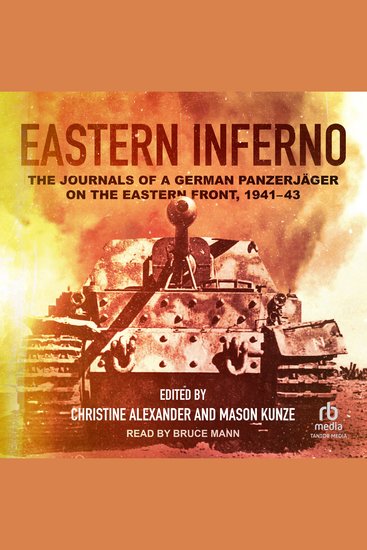
    This book presents the remarkable personal journals of German soldier Hans Roth. Writing as events transpired, he recorded the mystery and tension as the Germans deployed on the Soviet frontier in June 1941. In these journals, battles are described in "you are there" detail, as Roth wrote privately, as if to keep himself sane, knowing that his honest accounts of the horrors in the East could never pass through Wehrmacht censors. When the Soviet counteroffensive of winter 1942 begins, his unit is stationed alongside the Italian 8th Army, and his observations of its collapse, as opposed to the reaction of the German troops sent to stiffen its front, are of special fascination. 


    Roth's three journals were discovered many years after his disappearance, tucked away in the home of his brother, with whom he was known to have had a deep bond. After his brother's death, his family discovered them and quickly sent them to Rosel, Roth's wife. In time, Rosel handed down the journals to Erika, Roth's only daughter, who had immigrated to America. Hans Roth was doubtlessly working on a fourth journal before he was reported missing in action in July 1944 during the battle known as the Destruction of Army Group Center. Although Roth's ultimate fate remains unknown, what he did leave behind is an incredible firsthand account of the horrific war the Germans waged in Russia.
    Mostra libro
  • Best Life After - An Ex Jehovah's Witness Memoir - cover

    Best Life After - An Ex...

    Correen Hardin

    • 0
    • 0
    • 0
    Jehovah’s Witnesses promised me they could offer the best life ever. 
    A life where every question had an answer. Every pain had a purpose. Every flaw had a fix. 
    They told me that if I stayed faithful, followed the rules, suppressed my doubts, and endured the shame, I’d be rewarded with paradise, with peace, with love. 
    And I believed them. Because I was already carrying the weight of not being enough. I thought obedience could earn me love. That being good could make me worthy. I wasn’t born into the religion, but I was born into the conditions that made it feel like salvation. 
    What they offered felt familiar: conditional love dressed as truth. 
    A place to belong… as long as I didn’t become too much. 
    So I tried. I gave them my voice, my body, my mind, and the years I’ll never get back. I submitted. I silenced myself. I followed the rules. 
    And still, it was never enough. 
    This book is not just about leaving Jehovah’s Witnesses. 
    It’s about untangling the lie that love must be earned. 
    It’s about the painful, beautiful, messy process of learning how to belong to myself. 
    They promised me the best life ever. 
    But what I found was something they couldn’t offer. 
    I found the best life after.
    Mostra libro
  • Am I Alone Here? - Notes on Living to Read and Reading to Live - cover

    Am I Alone Here? - Notes on...

    Peter Orner

    • 0
    • 0
    • 0
    "Stories, both my own and those I've taken to heart, make up whoever it is that I've become," Peter Orner writes in this collection of essays about reading, writing, and living. Orner reads and writes everywhere he finds himself: a hospital cafeteria, a coffee shop in Albania, or a crowded bus in Haiti. The result is a book of unlearned meditations that stumbles into memoir. 


    Among the many writers Orner addresses are Isaac Babel and Zora Neale Hurston, both of whom told their truths and were silenced; Franz Kafka, who professed loneliness but craved connection; Robert Walser, who spent the last twenty-three years of his life in a Swiss insane asylum, working at being crazy; and Juan Rulfo, who practiced the difficult art of silence. Virginia Woolf, Eudora Welty, Yasunari Kawabata, Saul Bellow, Mavis Gallant, John Edgar Wideman, William Trevor, and Václav Havel make appearances, as well as the poet Herbert Morris—about whom almost nothing is known. 


    An elegy for an eccentric late father, and the end of a marriage, Am I Alone Here? is also a celebration of the possibility of renewal. At once personal and panoramic, this book will inspire listeners to return to the essential stories of their own lives.
    Mostra libro
  • Candles for the Defiant - Discovering My Family's Estonian Past - cover

    Candles for the Defiant -...

    Kaia Gallagher

    • 0
    • 0
    • 0
    Candles for the Defiant and Forgotten tells the courageous story of how one Baltic patriot resisted the Soviet occupation of Estonia during World War II by joining the Communist Party to spy for his countrymen. Trained as a lawyer, Bruno Kulgma Kull was smart, idealistic, and convinced that he could hide his true affiliations from the Soviet-controlled Party leaders, while he sabotaged their plans. Little could he have known that he would end up being distrusted by the Communists, reviled by his neighbors, and accused of being a traitor when the Germans invaded Estonia a year later in the summer of 1941. 
    As she was growing up, Kaia knew only that her mother’s family escaped from Estonia a day before the country was occupied by the Soviet Union in the fall of 1944 as World War II was coming to an end. Years later, she resolved to learn more about her family’s past and to uncover the tragic story of Bruno’s ill-fated heroism. With help from the Estonian National Archives, she uncovered documents that showed how Bruno tried to defend his actions at a time when the German legal system condemned anyone affiliated with the Communist Party to death. 
    Kaia’s family story highlights the stubborn determination shown by the citizens from Estonia, Latvia and Lithuania who resisted the occupation of their homelands, a battle that would last for nearly fifty years when the Baltic states regained their independence in the 1990s. 
    Mostra libro
  • Mediterranean Dictators - The Story of Benito Mussolini Torquemada and Francisco Pizarro - cover

    Mediterranean Dictators - The...

    Kelly Mass

    • 0
    • 0
    • 0
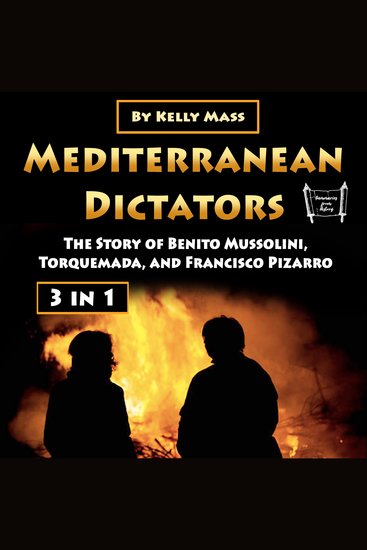
    These dictators all lived in Southern European countries. Meet the evil despots called: 
    Benito Mussolini: Ironically, when we think of fascism, we often look at someone as brutal and influential as Adolf Hitler, but the word “fascism” originated from Italian. The ideology that was carried out in the vicious Spanish War right before World War 2, and was embraced by Nazi Germany, was actually pushed and more or less invented by the Italians during a critical time in history when many changes were made, and when fear and uncertainty were all in the air. Mussolini was efficient and influential. He was a fearless leader not to be trifled with. Let’s take a look at what he did and why. 
    Torquemada: The Spanish inquisition was nasty in the 15th century. I am glad we don’t live in those times anymore. We have our own problems to deal with here. But back then, in some countries, primarily the Catholic-dominated ones in Europe, being called a heretic, a witch, or a sinner meant business. It could mean the end of your life. And often, you had nothing to defend yourself with. There weren’t enough fancy lawyers to stand up to the Catholic Church. And so, it is with a tragic view on the past that we see countless innocent victims being accused of something they never did, with no bad intentions or rebellious behavior, and nonetheless being executed in brutal manners. 
    Francisco Pizarro: Conquistadores (or Conquistadors) were the Spanish and Portuguese conquerors who invaded parts of the world that hadn’t been discovered by the Europeans before the 16th century. Some of these conquerors behaved fairly nice and respectful towards the local population in South America, Asia, Africa, and Central America. Others were incentivized by greed, lust, and dominance, which caused them to pillage, steal, and enslave the indigenous people they encountered. Many of their leaders were notorious for their brutality.
    Mostra libro
  • Cahill Among The Ruins of Peru - cover

    Cahill Among The Ruins of Peru

    Tim Cahill

    • 0
    • 0
    • 0
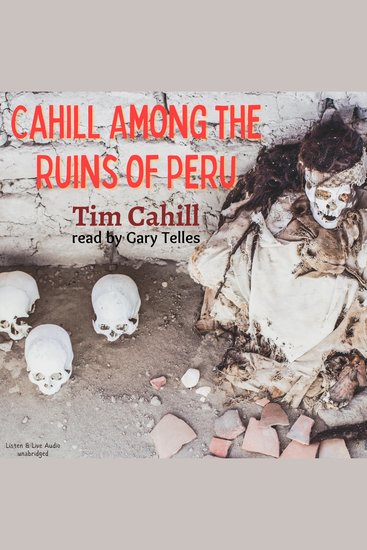
    Tim Cahill's adventures typically include equal parts farce and discovery. "Cahill Among The Ruins of Peru" is no exception. Here Cahill sets out to find undiscovered pre-Incan ruins in northeatern Peru. Oily beaueaucrats, superstitious locals, a know-it-all companion and the Peruvian wilderness did not daunt him. Though they were annoying. This selection is part of the full length audiobook, "Explore: Stories of Survival From Off The Map." 
     
    Tim Cahill (born in 1943) is a fount of arcane information and a master of self-deprecating humor. Gary Telles has been narrating audiobooks for the past ten years. A veteran stage actor, he has performed classical, contemporary and original theatre across the country, in addition to appearing on television, radio and CD-ROM.
    Mostra libro