Unisciti a noi in un viaggio nel mondo dei libri!
Aggiungi questo libro allo scaffale
Grey
Scrivi un nuovo commento Default profile 50px
Grey
Iscriviti per leggere l'intero libro o leggi le prime pagine gratuitamente!
All characters reduced
Replacement - cover

Replacement

Jack Ritchie

Casa editrice: Wildside Press

  • 0
  • 0
  • 0

Sinossi

In Jack Ritchie's classic crime noir story "Replacement," Max Warren schemes his way up the ranks to take control from his boss Ed Kubak. After winning over Kubak's girlfriend Helen, Max sends the defeated man away.Obsessed with revenge, Kubak commits an act that forces Max to hunt him down. When Max finally tracks down his rival in Florida, he expects an easy end to their feud.But Kubak has one last twist in store, and Max realizes too late the deadly consequences of his ruthless ambition.
Disponibile da: 09/11/2023.
Lunghezza di stampa: 20 pagine.

Altri libri che potrebbero interessarti

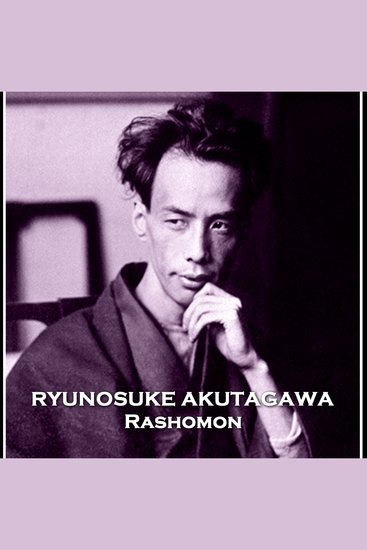
  • Rashomon - From their pens to your ears genius in every story - cover

    Rashomon - From their pens to...

    Ryunosuke Akutagawa

    • 0
    • 0
    • 0
    Ryūnosuke Niihara was born in Kyōbashi, Tokyo in Japan on the 1st March 1892.  Sadly, his mother suffered severe mental illness after his birth and so, at only eight months old, he was sent to be raised by his maternal uncle and aunt, from whom he received the Akutagawa family name.  
    He was fascinated by classical Chinese literature from his early years and began writing after entering what was then the Tokyo Imperial University in 1913 to study English Literature.   
    The following year Akutagawa and his friends revived the literary journal ‘New Currents of Thought’ which published their own works and translations of such icons as W B Yeats and Anatole France. 
    Akutagawa published "Rashōmon" in 1915 and whilst it was disliked by his friends everyone else knew better.  As other short stories followed so did his growing literary reputation as the father of the Japanese short story. 
    Much of his work reinterpreted former classical works and incidents and this, melded with his strong dislike of naturalism, produced a writer of rare and genuine quality.  His character palette featured strong and domineering women, mainly based on his mother and the aunt who helped raise him. 
    In 1921, he spent four months in China as a reporter.  Whilst there his health was compromised by several illnesses and both his physical and mental health spiralled downwards.  He began to suffer from hallucinations and dreaded that he might have inherited his mother’s mental disorders.  
    Although he survived one suicide attempt Ryūnosuke Akutagawa died on the 24th July 1927 in Tokyo from an overdose of Veronal, a barbiturate.  He was 35.
    Mostra libro
  • The Nightingale and the Rose - From their pens to your ears genius in every story - cover

    The Nightingale and the Rose -...

    Oscar Wilde

    • 0
    • 0
    • 0
    Oscar Fingal O'Flahertie Wills Wilde was born on the 16th October 1854 in Dublin, Ireland.  The son of Dublin intellectuals Oscar proved himself an outstanding classicist at Trinity College and then at Oxford. 
    Wilde then moved to London and its fashionable cultural and social circles.  With his biting wit, flamboyant dress, and glittering conversation, Wilde became one of the most well-known personalities of his day. 
    His only novel, ‘The Picture of Dorian Gray’ was published in 1890 and he then moved on to writing for the stage with ‘Salome’ in 1891.  His society comedies were enormous hits and turned him into one of the most successful writers of late Victorian London. 
    Whilst his masterpiece, ‘The Importance of Being Earnest’, was on stage in London, Wilde had the Marquess of Queensberry, the father of his lover, Lord Alfred Douglas, prosecuted for libel.  The trial unearthed evidence that caused Wilde to drop his charges and led to his own arrest and trial for gross indecency. He was convicted and imprisoned for two years hard labour. It was to break him. 
    On release he left for France. There he wrote his last work, ‘The Ballad of Reading Gaol’ in 1898.  He died destitute in Paris at the age of forty-six sipping champagne a friend had brought with the line ‘Alas I am dying beyond my means’.
    Mostra libro
  • The Bagman's Story - From their pens to your ears genius in every story - cover

    The Bagman's Story - From their...

    Charles Dickens

    • 0
    • 0
    • 0
    Charles Dickens is a name that dominates the landscape of English literature.  From his early years of hardship he rose to become one of the great novelists of any age.  But amongst his other talents were that of short story writer, turning his pen to many subjects and genres as well as travel articles, speaking tours and as an advocate for social justice.  He was also amongst the first to commercialise Christmas and a publisher of various periodical magazines for which he also contributed and encouraged the talents of very many others. 
    Dickens died at only 58 leaving an incredible legacy that is still admired to this day.
    Mostra libro
  • Rising Water - A Jesse McDermitt Novel - cover

    Rising Water - A Jesse McDermitt...

    Wayne Stinnett

    • 0
    • 0
    • 0
    When a group of strangers purchase land on Tortola and Norman Island to set up a commune, the locals simply write them off as an odd sort - until one of their bloated bodies washes up on the shore of a nearby resort island. 
    As luck would have it, Jesse McDermitt is visiting a friend on Norman Island after tracking a terrorist submarine from the Windward Islands. The sub was destroyed by locals on the Dutch island of Saba, so Jesse had nothing much else to do. What he wasn’t looking for was a murderous cult at the center of a drug manufacturing and distribution ring. 
    If a person didn’t succumb to the rules of this cult, they might end up riding the chum sluice. If they did, they might meet Jesse.
    Mostra libro
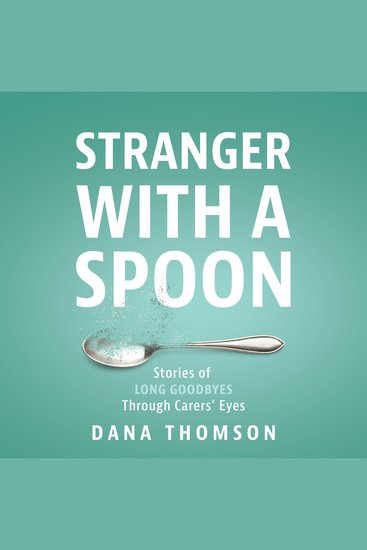
  • Stranger With A Spoon - Stories of long goodbyes through carers' eyes - cover

    Stranger With A Spoon - Stories...

    Dana Thomson

    • 0
    • 0
    • 0
    What happens when the person you love is still here – but no longer themselves? 
    When dementia changes memory, identity and behaviour, caring can become far more than anyone ever imagined. It is not only forgetfulness or repetition. It can be fear, paranoia, wandering, agitation, aggression, sleepless nights, personality changes, confusion and sudden crises that leave families overwhelmed and alone. These behavioural and psychological symptoms of dementia (BPSD) are often lived privately, hidden behind closed doors, and rarely spoken about honestly. 
    And when they arrive, someone else is often left carrying the invisible weight of it all. A wife who no longer sleeps properly. Grieving a partner still alive. Making impossible decisions on someone else’s behalf. All over Australia, families are quietly unravelling while trying to appear fine to the outside world. 
    This moving collection of short stories gives voice to the carers. Inspired by real conversations with people supporting loved ones through dementia, particularly those experiencing BPSD, these fictionalised stories reveal the emotional world of carers whose lives have been reshaped by behaviours they never expected to navigate. Each story is rooted in lived experience, drawn from moments shared by carers during interviews and workshops. Names and identifying details have been changed, but the emotional truth remains. 
    Told with compassion, honesty and literary warmth, these stories explore the landscape rarely captured in medical language or public conversation: living grief, guilt, shame, loyalty, resentment, humour, devotion and the quiet courage required to keep going when love for someone transitions to care. 
    Whether you are living this journey now, have walked it before, or simply want to better understand the hidden lives of others, this collection offers something precious: recognition. 
    Because behind every person fading, there is often someone holding on.
    Mostra libro

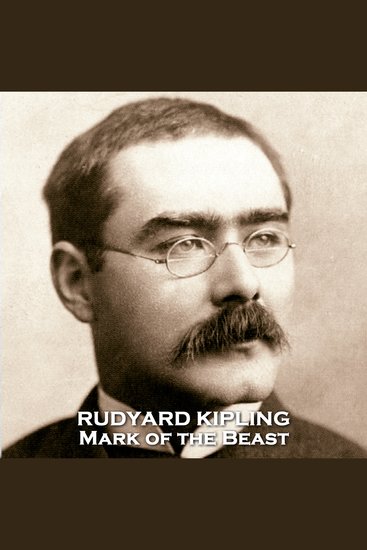
  • The Mark of the Beast - From their pens to your ears genius in every story - cover

    The Mark of the Beast - From...

    Rudyard Kipling

    • 0
    • 0
    • 0
    Joseph Rudyard Kipling was born in Mumbai, India on 30th December 1865.   
    As was the custom in those days, he and his sister were sent back to England when he was 5.  The ill-treatment and cruelty by the Portsmouth couple they boarded with Kipling said contributed to the onset of his literary life.  
    At 16 he returned to India to work on a local paper where he was soon contributing and writing.  It also exposed him to the issues of identity and national allegiance which pervade much of his work.  
    In 1886, his ‘Departmental Ditties’, collection of verse appeared in print followed by 39 short stories for his newspaper over only 8 months.  These were then published as ‘Plain Tales from the Hills’, shortly after his 22nd birthday.  
    He continued his prolific pace of writing before being dismissed in a dispute and, taking his pay-off and the profits from the sale of some publishing rights, decided to return to London, travelling via Rangoon, Hong Kong, Japan and the United States, all the while writing articles, and arriving at Liverpool in October 1889. 
    Over the next two years he saw further works published as books and in magazines, as well as a nervous breakdown for which he was prescribed a sea voyage, to South Africa, Australia, New Zealand and India.  
    Happier times came with marriage to Caroline Starr Balestier in January 1892.  The honeymoon began in Vermont and ended in Yokahama where they heard their bank had failed.  They returned to Vermont and settled.  Caroline was now pregnant and he was planning the ‘Jungle Books’.  
    A failed arbitration between the US and England resulted in an argument between Caroline’s brother and Kipling, and then his arrest.  At the hearing he was mortified by the exposure of his private life and after settling the matter they returned to England and life in Torquay.  ‘Kim’ was published in 1902, and ‘Just So Stories for Little Children’, a year later.  
    In 1907 he was awarded the Nobel Prize for Literature with the citation “in consideration of the power of observation, originality of imagination, virility of ideas and remarkable talent for narration which characterise the creations of this world-famous author”.   
    When the Great War erupted, he scorned those who refused conscription.  His son enlisted and was killed at the Battle of Loos in September 1915, at 18, an exploding shell had ripped his face apart.  This death inspired Kipling’s writing thereafter, but the tragedy broke his life and by 1930 his prolific pen had almost ceased. 
    Rudyard Kipling died on 18th January 1936 from a perforated duodenal ulcer.  He was 70.  His ashes are buried at Poets’ Corner in Westminster Abbey.
    Mostra libro