Unisciti a noi in un viaggio nel mondo dei libri!
Aggiungi questo libro allo scaffale
Grey
Scrivi un nuovo commento Default profile 50px
Grey
Iscriviti per leggere l'intero libro o leggi le prime pagine gratuitamente!
All characters reduced
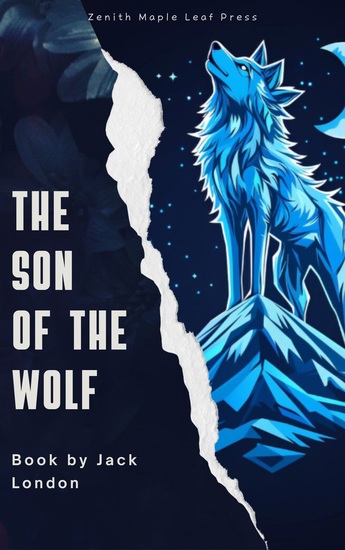
The son of the wolf - Tales of the Klondike Courage and Survival in the Frozen North - cover

The son of the wolf - Tales of the Klondike Courage and Survival in the Frozen North

Jack London, Zenith Maple Leaf Press

Casa editrice: Zenith Maple Leaf Press

  • 0
  • 0
  • 0

Sinossi

In the unforgiving land of ice and gold, only the strong endure.

In his first published collection, The Son of the Wolf, Jack London transports readers to the harsh yet breathtaking wilderness of the Yukon during the Klondike Gold Rush. This powerful set of interlinked short stories follows traders, trappers, and adventurers as they navigate the frozen trails, battling nature's cruelty, human greed, and their own inner conflicts.

From deadly blizzards to tense encounters with the native tribes, London captures both the savagery and nobility of life on the northern frontier. His vivid prose and authentic detail immerse readers in a world where survival is never guaranteed and honor is tested at every turn.

Published in 1900, this work established London as a literary force, paving the way for his later classics such as The Call of the Wild and White Fang.

"A stunning debut that set the tone for London's career—rugged, raw, and unforgettable."
– The San Francisco Chronicle

"The gold standard of Yukon adventure tales."
– Alaska Review of Literature

✅ Why Readers Love It:

❄ Authentic depictions of the Klondike Gold Rush era

🏔 Raw, elemental stories of courage and endurance

📚 London's masterful blend of realism and romantic adventure

🎯 Click 'Buy Now' to venture into Jack London's Yukon—a place where men become legends or perish in the snow.
Disponibile da: 14/08/2025.
Lunghezza di stampa: 150 pagine.
Altri libri che potrebbero interessarti

  • Virgin Soil - cover

    Virgin Soil

    Ivan Turgenev

    • 0
    • 0
    • 0
    Turgenev's "Virgin Soil" delves into the themes of idealism, disillusionment, and the limitations of revolutionary fervor. The novel explores the inherent tensions between the educated intelligentsia and the rural peasantry, shedding light on the difficulties faced in bridging the gap between different social strata and ideologies. The characters' personal struggles mirror the larger struggles of a nation on the brink of transformation. Through vivid and empathetic characterizations, Turgenev provides a profound critique of the social injustices and political stagnation prevalent in 19th-century Russia. He captures the frustrations and aspirations of a generation seeking to break free from the shackles of tradition and build a more just and equitable society. The novel paints a nuanced picture of the revolutionary spirit and its ultimate consequences, highlighting the complexities of human nature and the often contradictory forces that drive individuals and nations.
    Mostra libro
  • The Sign of the Four - cover

    The Sign of the Four

    Arthur Conan Doyle

    • 0
    • 0
    • 0
    The Sign of the Four (1890), also called The Sign of Four, is the second novel featuring Sherlock Holmes written by Sir Arthur Conan Doyle. Doyle wrote four novels and 56 short stories featuring the fictional detective.The story is set in 1888. The Sign of the Four has a complex plot involving service in India, the Indian Rebellion of 1857, a stolen treasure, and a secret pact among four convicts ("the Four" of the title) and two corrupt prison guards. It presents the detective's drug habit and humanizes him in a way that had not been done in the preceding novel, A Study in Scarlet (1887). It also introduces Doctor Watson's future wife, Mary Morstan.Mary Morstan is left without the bulk of the Agra treasure, although she will apparently receive the rest of the chaplet. John Watson falls in love with Mary and it is revealed at the end that he proposed to her and she has accepted.Famous works of the author Arthur Conan Doyle: A Study in Scarlet, The Sign of the Four, The Adventures of Sherlock Holmes, The Memoirs of Sherlock Holmes, The Hound of the Baskervilles, The Return of Sherlock Holmes, The Valley of Fear, His Last Bow, The Case-Book of Sherlock Holmes, Stories of Sherlock Holmes, The Lost World.
    Mostra libro
  • Small Star in the East A (Unabridged) - cover

    Small Star in the East A...

    Charles Dickens

    • 0
    • 0
    • 0
    Charles Dickens was a writer and social critic who created some of the world's best-known fictional characters and is regarded as the greatest novelist of the Victorian era. His works enjoyed unprecedented popularity during his lifetime, and by the twentieth century critics and scholars had recognised him as a literary genius. His novels and short stories enjoy lasting popularity.
    A SMALL STAR IN THE EAST: I Had been looking, yesternight, through the famous 'Dance of Death,' and to-day the grim old woodcuts arose in my mind with the new significance of a ghastly monotony not to be found in the original.
    Mostra libro
  • White Fang - cover

    White Fang

    Jack London

    • 0
    • 0
    • 0
    It was the she-wolf who had first caught the sound of men's voices and the whining of the sled-dogs; and it was the she-wolf who was first to spring away from the cornered man in his circle of dying flame. The pack had been loath to forego the kill it had hunted down, and it lingered for several minutes, making sure of the sounds, and then it, too, sprang away on the trail made by the she-wolf. Running at the forefront of the pack was a large grey wolf—one of its several leaders.    It was he who directed the pack's course on the heels of the she-wolf. It was he who snarled warningly at the younger members of the pack or slashed at them with his fangs when they ambitiously tried to pass him. And it was he who increased the pace when he sighted the she-wolf, now trotting slowly across the snow. She dropped in alongside by him, as though it were her appointed position, and took the pace of the pack. He did not snarl at her, nor show his teeth, when any leap of hers chanced to put her in advance of him.    On the contrary, he seemed kindly disposed toward her—too kindly to suit her, for he was prone to run near to her, and when he ran too near it was she who snarled and showed her teeth. Nor was she above slashing his shoulder sharply on occasion. At such times he betrayed no anger. He merely sprang to the side and ran stiffly ahead for several awkward leaps, in carriage and conduct resembling an abashed country swain. This was his one trouble in the running of the pack; but she had other troubles.    On her other side ran a gaunt old wolf, grizzled and marked with the scars of many battles. He ran always on her right side. The fact that he had but one eye, and that the left eye, might account for this. He, also, was addicted to crowding her, to veering toward her till his scarred muzzle touched her body, or shoulder, or neck. As with the running mate on the left, she repelled these attentions with her teeth; but when both bestowed their attentions at the same time she was roughly jostled, being compelled, with quick snaps to either side, to drive both lovers away and at the same time to maintain her forward leap with the pack and see the way of her feet before her.    At such times her running mates flashed their teeth and growled threateningly across at each other. They might have fought, but even wooing and its rivalry waited upon the more pressing hunger-need of the pack. After each repulse, when the old wolf sheered abruptly away from the sharp-toothed object of his desire, he shouldered against a young three-year-old that ran on his blind right side. This young wolf had attained his full size; and, considering the weak and famished condition of the pack, he possessed more than the average vigour and spirit. Nevertheless, he ran with his head even with the shoulder of his one-eyed elder. When he ventured to run abreast of the older wolf (which was seldom), a snarl and a snap sent him back even with the shoulder again.    Sometimes, however, he dropped cautiously and slowly behind and edged in between the old leader and the she-wolf. This was doubly resented, even triply resented. When she snarled her displeasure, the old leader would whirl on the three-year-old. Sometimes she whirled with him. And sometimes the young leader on the left whirled, too. At such times, confronted by three sets of savage teeth, the young wolf stopped precipitately, throwing himself back on his haunches, with fore-legs stiff, mouth menacing, and mane bristling. This confusion in the front of the moving pack always caused confusion in the rear. The wolves behind collided with the young wolf and expressed their displeasure by administering sharp nips on his hind-legs and flanks. He was laying up trouble for himself, for lack of food and short tempers went together; but with the boundless faith of youth he persisted in repeating the manoeuvre every little while, though it never succeeded in gaining anything for him but discomfiture.
    Mostra libro
  • White Snake The - Story Time Episode 59 (Unabridged) - cover

    White Snake The - Story Time...

    Brothers Grimm

    • 0
    • 0
    • 0
    A wise King receives a covered dish every evening. A young servant is intrigued one night when he retrieves the King's dish and discovers a coiled white snake under the cover. The servant takes a small bite and discovers that he can now understand and communicate with animals.
    Mostra libro
  • Negore the Coward (Unabridged) - cover

    Negore the Coward (Unabridged)

    Jack London

    • 0
    • 0
    • 0
    Jack London (born John Griffith Chaney, January 12, 1876 - November 22, 1916) was an American author, journalist, and social activist. He was a pioneer in the then-burgeoning world of commercial magazine fiction and was one of the first fiction writers to obtain worldwide celebrity and a large fortune from his fiction alone.
    NEGORE, THE COWARD: He had followed the trail of his fleeing people for eleven days, and his pursuit had been in itself a flight; for behind him he knew full well were the dreaded Russians, toiling through the swampy lowlands and over the steep divides, bent on no less than the extermination of all his people.
    Mostra libro