Unisciti a noi in un viaggio nel mondo dei libri!
Aggiungi questo libro allo scaffale
Grey
Scrivi un nuovo commento Default profile 50px
Grey
Iscriviti per leggere l'intero libro o leggi le prime pagine gratuitamente!
All characters reduced
A Rebel War Clerk's Diary at the Confederate States Capital - cover

A Rebel War Clerk's Diary at the Confederate States Capital

J. B. Jones

Casa editrice: DigiCat

  • 0
  • 0
  • 0

Sinossi

In "A Rebel War Clerk's Diary at the Confederate States Capital," J. B. Jones offers a compelling firsthand account of life in Richmond, Virginia, during the tumultuous years of the American Civil War. Written in an intimate and unadorned style, the diary captures the chaotic atmosphere of the Confederacy's political and military struggles, interspersed with personal reflections and vivid descriptions of daily life. Jones' meticulous observations provide not only a unique perspective on the Confederate government's decision-making processes but also reveal the societal tensions and moral dilemmas faced by those living under the shadow of war. J. B. Jones served as a clerical officer in the Confederate War Department, which granted him unparalleled access to both the inner workings of the Confederate government and the daily experiences of soldiers and civilians alike. His position allowed him to capture the complexities of loyalty, hope, and despair amid a society grappling with the realities of conflict. The diary emerges as a crucial historical document that reflects Jones' nuanced understanding of the times, shaped by his own experiences and the prominent figures he encountered. This essential reading for historians, students, and anyone interested in Civil War-era America provides invaluable insights into the Confederate experience. Jones' candid prose not only humanizes the often-sterile accounts of wartime leadership but also serves as a poignant reminder of the resilience of the human spirit amidst adversity. Readers seeking a deeper understanding of the emotional and political fabric of this critical period will find Jones' work a rich and enlightening resource.
Disponibile da: 10/11/2023.
Lunghezza di stampa: 792 pagine.


Altri libri che potrebbero interessarti

  • A Pity Party Is Still a Party - A Feel-Good Guide to Feeling Bad - cover

    A Pity Party Is Still a Party -...

    Chelsea Harvey Garner

    • 0
    • 0
    • 0
    Most of us try to avoid feeling sad, but in this candid, comical, and deeply-felt book, therapist Chelsea Harvey Garner doesn’t just argue that the future will be brighter if we learn to enjoy the unenjoyable and support each other when the vibes aren’t so good, she also shows us how. 
    What if all the advice we’ve received about “looking on the bright side” is wrong? What if sadness is actually the key to happiness, and can even be . . . fun? Garner is here to make that case. In this feel-good guide to feeling bad, she claims it’s not enough for us to tolerate hard feelings. We need to embrace them. We need to let them show by crying with others. Often. In public. 
    Playful, at times irreverent, but always sincere, Garner is the grown-up Miss Frizzle for the therapy generation. She believes that if we want to build a world where mental health is the norm, we have to lean into connection and count on each other, even—and perhaps especially—at our worst. 
    Through anecdotes about her own hardships and insights gained in her clinical practice, Garner illuminates the power (and embarrassment) of opening up. Featuring solo exercises, group activities, and journal prompts alongside personal essays, she invites us to see emotions in a new light and engage with them in a healthier way. A Pity Party is Still a Party helps us find the silver lining, but only after we’ve played in the rain. 
    Supplemental enhancement PDF accompanies the audiobook.
    Mostra libro
  • Roman Law and Governance - Foundations of Western Legal Systems - cover

    Roman Law and Governance -...

    Rogan Fish

    • 0
    • 0
    • 0
    The foundation of Roman law was deeply rooted in the customs and traditions of early Roman society. Before formal legal codification, Roman law was based on unwritten customs passed down through generations. These customs, known as mos maiorum or "the way of the ancestors," guided legal practices and social norms. However, as Rome expanded, the need for a more structured and consistent legal system became evident. This led to the development of one of the earliest recorded legal codes, the Twelve Tables, which became the cornerstone of Roman law. 
    The Twelve Tables, established around 450 BCE, were a response to demands from the plebeians for greater legal transparency. Prior to this, laws were primarily controlled by the patrician class, leaving the lower classes vulnerable to arbitrary decisions. The Twelve Tables provided a written and publicly displayed set of laws that covered various aspects of daily life, including property rights, contracts, family matters, and criminal offenses. While these laws were often harsh by modern standards, they were crucial in establishing the principle that law should be known and applied equally to all citizens. 
    Legal interpretation played a crucial role in the early Roman legal system, and the pontiffs, a group of religious and legal authorities, were responsible for explaining and applying the laws. Since early Roman law was closely linked to religious practices, the pontiffs held significant influence over legal matters. Over time, however, legal decision-making shifted from religious authorities to magistrates and elected officials, paving the way for a more secular and systematic approach to governance.
    Mostra libro
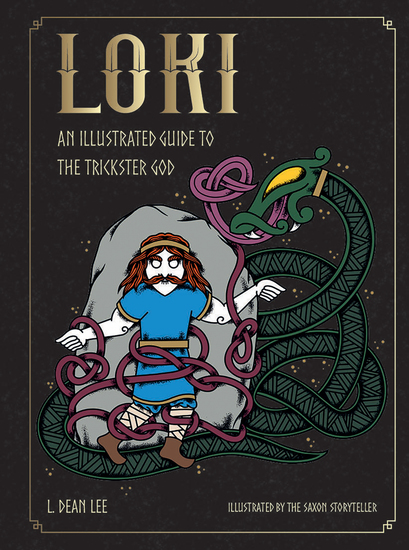
  • Loki - An Illustrated Guide to the Trickster God - cover

    Loki - An Illustrated Guide to...

    L. Dean Lee

    • 0
    • 0
    • 0
    Loki: mischief-maker, shapeshifter, and father to monsters. Explore the enigmatic god of Norse mythology in this richly illustrated guide.   This authentic introduction to the Norse god Loki Laufeyjarson delves into his history, enduring legacy, and impact on the Norse pantheon. Revered in Norse paganism as the god of chaos, Loki is audacious, conniving, and wildly cunning, constantly causing all kinds of mischief and using his various magical powers to manipulate situations to his advantage.  Loki: An Illustrated Guide to the Trickster God provides an overview of Loki’s origins, personality, significance, powers, and associations in a comprehensive, accessible, and beautifully designed hardcover. Included are the most important folklore and mythological tales involving Loki, such as the birth of Sleipnir, the stealing of Thor’s hammer, the death of Balder, and Ragnarök. This book not only covers Loki in ancient times, but also through the ages, sharing how Loki became an icon throughout the world.   With Loki: An Illustrated Guide to the Trickster God, you will delve into the depths of Norse mythology and understand the true nature of Loki. Expert practicing Norse heathen L. Dean Lee shares how to properly venerate and incorporate Loki into your spiritual practice.
    Mostra libro
  • The Power of Not Thinking - How Our Bodies Learn and Why We Should Trust Them - cover

    The Power of Not Thinking - How...

    Simon Roberts

    • 0
    • 0
    • 0
    Ask someone to point to the part of their body responsible for their intelligence and it is highly likely that they will point at their head. This assumption is understandable, given that, for centuries, from Descartes' "cogito ergo sum" to the computer age, this is what we have been told to think. 


    And yet we all share common experiences that have revealed the incomparable power of "not thinking." Have you ever struggled to remember your pin number only to hold your fingers out and type it correctly with your hands, played the piano without focusing on remembering the correct notes, or listened to your gut feeling when under the pressure of a big decision? All these instances prove that it is time to stop neglecting the role the body plays in our acquisition of knowledge and to explore how it is that brain and body combine to deliver what we view as uniquely human intelligence. 


    In this unique new book, Simon Roberts looks at the pivotal role that our body plays in how we learn. Drawing upon an incredible range of cutting-edge science, real-life examples, and personal experience, Roberts explores the complexity of even the simplest of tasks that humans perform every day and goes on to explain how, with a greater awareness of the processes at work, we can tap into our full potential and excel in any area of our lives.
    Mostra libro
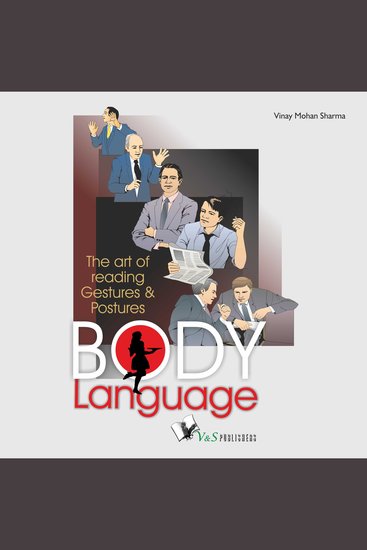
  • Body Language - State of mind that different body postures & gestures reveal - cover

    Body Language - State of mind...

    Vinay Mohan Sharma

    • 0
    • 0
    • 0
    Communication is not always through sound or language. Much can be said with gestures and movement of eyes. In fact, more often than not, it is the body language that 'says' more than words. Now discover all the finer points and the nuances of body language in this masterly work. How does a thumb gesture display dominance, superiority and aggression? How does dilation of eyes send a romantic signal? What does a sideways glance indicate? Given these incredible insights, the book can prove to be of immense use for professionals like advocates, doctors, policemen, judges, salesmen, politicians, judges, executives, bureaucrats and customers etc - in short, people who are essentially in public dealing. But then, it is for all, a true guide for analysing behaviour and attitudes. #v&spublishers
    Mostra libro
  • The Battle for Isurava - Fighting in the clouds of the Owen Stanley 1942 - cover

    The Battle for Isurava -...

    David W. Cameron

    • 0
    • 0
    • 0
    ‘You are trying to survive, shirt torn, arse out of your pants, whiskers a mile long, hungry … you carry your boots because there’s no skin on your feet. But when you look around at some of the others – hell! They look crook! … you dig a number of holes in the ground and bury your dead. Nothing would be said, but you think ‘maybe it will be my turn next’. 
    Within 24 hours of the Japanese invasion of northern New Guinea at Gona in July 1942, the Australian militiamen of ‘B’ Company, 39th Battalion, spent four weeks fighting a delaying action against a crack Japanese force outnumbered by three to one. By mid-August, the rest of the battalion had arrived, and these men took up a position at Isurava, in the heart of the cloud covered mountains and jungles of the Owen Stanley Range.  
    The battle for Isurava would be the defining battle of the Kokoda Campaign and has rightfully been described as Australia’s Thermopylae. It was here that Australia’s first Victoria Cross in the Pacific war was awarded when the Japanese conducted several ferocious attacks against the Australian perimetre.  
    The outnumbered and poorly equipped Australians managed to hold back the Japanese advance for almost a week; only then did these battle scared and weary men begin a month long fighting withdraw towards Ioribaiwa Ridge just north of Port Morsby. However, their sacrifice provided time for the Australian 25th Brigade to be brought forward — finally forcing the Japanese to withdrawal just as they glimpsed the lights of Port Morseby.  
    Using diaries, letters and other first-hand accounts and following on from The Battles for Kokoda Plateau, leading military historian David W Cameron continues his detailed and riveting account of the war in the Owen Stanleys in 1942.
    Mostra libro