Unisciti a noi in un viaggio nel mondo dei libri!
Aggiungi questo libro allo scaffale
Grey
Scrivi un nuovo commento Default profile 50px
Grey
Iscriviti per leggere l'intero libro o leggi le prime pagine gratuitamente!
All characters reduced
History of the Eastern Roman Empire - Enriched edition - cover

History of the Eastern Roman Empire - Enriched edition

J. B. Bury

Casa editrice: DigiCat

  • 0
  • 0
  • 0

Sinossi

In "History of the Eastern Roman Empire," J. B. Bury delivers a meticulous examination of the Byzantine Empire, tracing its evolution from the decline of the Roman world through its complex socio-political webs. Bury's narrative style is both analytical and engaging, characterized by rigorous scholarship and a profound understanding of historical context. He employs a chronological approach, interweaving political developments with cultural shifts, which sheds light on the intricacies of Byzantine governance, religion, and society—elements often overlooked in broader historical discourses. The work stands as an essential contribution to both historical literature and Byzantine studies, thoughtfully positioning the Eastern Roman Empire within the larger framework of European history. J. B. Bury, a distinguished historian and classical scholar of the early 20th century, was deeply influenced by the shifting paradigms of his time, particularly the surge in interest regarding lesser-known aspects of history. His academic background at Cambridge and his roles in teaching and historical writing are evident in his precise methodology and insightful perspectives. Bury's passion for exploring the Byzantine period was likely fueled by his recognition of its significant yet often marginalized contributions to European scholarship. This book is recommended for students, historians, and general readers eager to gain a nuanced understanding of the Byzantine Empire. Bury's engaging prose and thorough research make this work a compelling narrative that invites readers to explore the rich tapestry of Eastern Roman history, offering essential insights into how the empire shaped the course of Europe.

In this enriched edition, we have carefully created added value for your reading experience:
- A succinct Introduction situates the work's timeless appeal and themes.
- The Synopsis outlines the central plot, highlighting key developments without spoiling critical twists.
- A detailed Historical Context immerses you in the era's events and influences that shaped the writing.
- A thorough Analysis dissects symbols, motifs, and character arcs to unearth underlying meanings.
- Reflection questions prompt you to engage personally with the work's messages, connecting them to modern life.
- Hand‐picked Memorable Quotes shine a spotlight on moments of literary brilliance.
- Interactive footnotes clarify unusual references, historical allusions, and archaic phrases for an effortless, more informed read.
Disponibile da: 11/10/2022.
Lunghezza di stampa: 310 pagine.

Altri libri che potrebbero interessarti

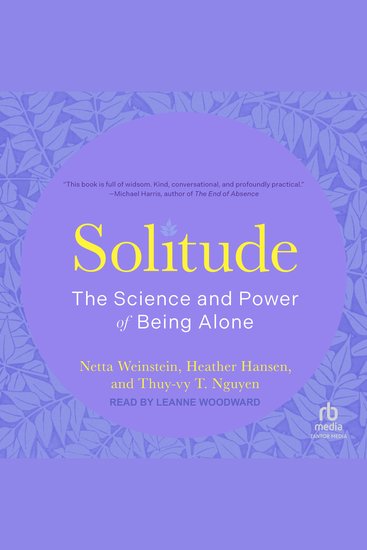
  • Solitude - The Science and Power of Being Alone - cover

    Solitude - The Science and Power...

    Thuy-vy T. Nguyen, Heather...

    • 0
    • 0
    • 0
    The average adult spends nearly one-third of their waking life alone. How do we overcome the stigma of solitude and find strength in going it alone? Whether we love it or try to avoid it, we can make better use of that time. The science of solitude shows that alone time can be a powerful space used to tap into countless benefits. Translating key research findings into actionable facts and advice, this book shows that alone time can boost well-being. From relaxation and recharging to problem solving and emotional regulation, solitude can benefit personal growth, contentment, creativity, and our relationships with ourselves and others. By learning what makes us better at spending time alone, you can use these principles to move toward your best possible self.
    Mostra libro
  • 7 Areas Without Laws - Exploring the World's Last Anarchic Zones - cover

    7 Areas Without Laws - Exploring...

    John Harpoon

    • 0
    • 0
    • 0
    Laws are the invisible threads that hold societies together, shaping behavior, enforcing order, and establishing the boundaries of right and wrong. Yet, scattered across the world, there are rare places where laws hold little to no authority—zones where governments have little presence, where no single entity enforces regulations, and where the concept of governance is fluid or entirely absent. These places, whether by accident of history, geopolitical disputes, or deliberate rejection of authority, exist on the fringes of civilization.  
      
    This book explores seven of these anarchic zones, each with its own unique circumstances and challenges. From the open ocean, where maritime law is a complex tangle of loopholes and jurisdictions, to the frozen expanse of Antarctica, where no country claims true ownership, these areas defy traditional governance. Some, like Bir Tawil—a small strip of land between Egypt and Sudan—are unclaimed due to border disputes, while others, like Slab City in California or Freetown Christiania in Denmark, are self-declared autonomous communities that reject the rules of mainstream society.  
      
    The existence of these lawless zones raises important questions: Can true freedom exist without laws? Is lawlessness always synonymous with chaos, or can people thrive outside the framework of government? In some of these areas, the absence of enforcement has led to disorder, crime, and exploitation. Pirates take advantage of international waters to operate freely, and smugglers use ungoverned territories to traffic goods and people. In other places, however, the lack of laws has fostered alternative communities built on mutual cooperation, artistic expression, and self-sufficiency. 
    Mostra libro
  • The Great Retreat - How Political Parties Should Behave and Why They Don't - cover

    The Great Retreat - How...

    Didi Kuo

    • 0
    • 0
    • 0
    Once a centralizing force of the democratic process, political parties have eroded over the past fifty years. Parties now rank among the most unpopular institutions in society—less trusted than business, the police, and the media. Identification with parties has plummeted, and even those who are loyal to a party report feeling that parties care more about special interests than about regular citizens. What does a "good" political party look like? Why do we urgently need them? And how do we get them? 


    The Great Retreat explores the development of political parties as democracy expanded across the West in the nineteenth century. It focuses in particular on mass parties, and the ways they served as intermediaries that fostered ties between citizens and governments. 


    For democracy to adapt to a new era of global capitalism, Kuo makes the case that we need strong intermediaries like mass parties—socially embedded institutions with deep connections to communities and citizens. Parties are essential to long-term democratic stability and economic growth, while the breakdown of party systems, on the other hand, has historically led to democratic collapse. As trust in political parties has plummeted, The Great Retreat provides a powerful defense of political parties—for without parties, democratic representation is impossible.
    Mostra libro
  • SILENT CONVERSATION THE - Understanding the Power of Nonverbal Communication in Everyday Interactions (2024 Guide for Beginners) - cover

    SILENT CONVERSATION THE -...

    AIDEN HARMONY

    • 0
    • 0
    • 0
    "The Silent Conversation" unveils the profound impact of nonverbal communication, exploring the unspoken language that shapes our interactions, relationships, and perceptions. Delve into the world of silent cues, gestures, and expressions, and learn how to decipher the nuanced messages that influence the dynamics of human connection.Body Language Decoded: Gain insights into the subtle signals conveyed through posture, gestures, and facial expressions.Emotional Intelligence: Develop the ability to recognize and respond to the emotions conveyed by others without words.Cultural Influences: Explore how cultural nuances shape nonverbal communication and influence understanding.Enhancing Personal Presence: Learn techniques to enhance your own nonverbal communication for impactful and authentic interactions.Building Trust and Rapport: Understand how nonverbal cues contribute to building trust and establishing meaningful connections.Navigating Social Dynamics: Explore the silent conversation in professional settings, social gatherings, and personal relationships. 
    🌐 Ready to master the silent language that speaks volumes? Dive into "The Silent Conversation" and equip yourself with the skills to navigate the intricate world of nonverbal communication. Whether in business, social, or personal contexts, this book empowers you to decode the unspoken messages that shape your interactions. Elevate your communication skills—start understanding the silent conversation today! 🌐 
     
    Mostra libro
  • Mothering by the Book - The Power of Reading Aloud to Overcome Fear and Recapture Joy - cover

    Mothering by the Book - The...

    Jennifer Pepito, Sally Clarkson

    • 0
    • 0
    • 0
    Becoming a better, happier mom starts with the stories you tell your kids 


    As a mom, you want to nurture a strong family, but fear steals your joy. Sometimes you wonder if you're failing your children or whether you're cut out for this. 


    Beloved writer and mom of seven Jennifer Pepito understands. She was intent on loving her children well, but fear and worry pushed her around. Ultimately, she found her joy in a most surprising place: the pages of classic literature she was reading aloud to her children every day. These stories helped her reclaim the wonder of childhood for herself and her children. 


    In Mothering by the Book, Jennifer takes you on a fascinating, whimsical journey that will bring freedom and fun to your parenting—one great book at a time.
    Mostra libro
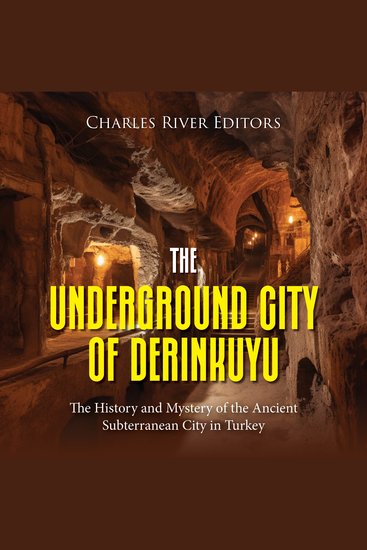
  • Underground City of Derinkuyu The: The History and Mystery of the Ancient Subterranean City in Turkey - cover

    Underground City of Derinkuyu...

    Editors Charles River

    • 0
    • 0
    • 0
    Among all the early Iron Age people from the Near East who inherited the geopolitical vacuum of power left by the Sea Peoples invasions, the Phrygians are perhaps one of the most misunderstood. They built a powerful and wealthy kingdom, but were overshadowed by their more powerful and wealthier neighbors, the Lydians. From the early 7th century BCE until the middle of the 6th century BCE, the Lydians played an important role in the history of the eastern Mediterranean region as they took on the role of middleman between the empires of the Near East and the emerging Hellenic civilization in Greece. From their capital in Sardis, the Lydian kings traded and made alliances and war with numerous kings, tyrants, and generals, which ultimately cemented their role as a brief but historically important people and kingdom in the ancient world.  
    	It seems that around this time, one of the most unique sites in antiquity was being constructed in central Turkey, an archaeological mystery modern scholars have only recently begun to uncover. Known as Derinkuyu in the Turkish language, the archaeological site is as expansive as any other in Turkey, but its expanse is more vertical than horizontal, which is what makes it so unusual. The lost city of Derinkuyu descends to depths of nearly 300 feet under the wind-swept cliffs and rock formations of the otherwise desolate region known as Cappadocia. Cappadocia’s landscape looks otherworldly, windswept, and unlivable in places, and if not for modern technologies, including electricity, sanitation, and irrigation, it surely would be considered inhabitable by many people.  
    	More recently, Derinkuyu has caught the attention of tourists, while academics have started to ask serious questions about this important site. Recent studies of Derinkuyu have helped illuminate how a city able to house 20,000 or more people could exist in antiquity, particularly with regard to logistics.
    Mostra libro