Unisciti a noi in un viaggio nel mondo dei libri!
Aggiungi questo libro allo scaffale
Grey
Scrivi un nuovo commento Default profile 50px
Grey
Iscriviti per leggere l'intero libro o leggi le prime pagine gratuitamente!
All characters reduced
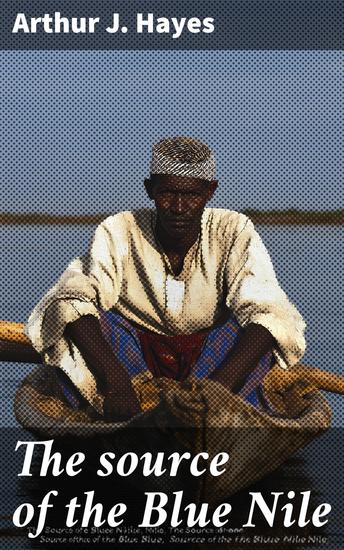
The source of the Blue Nile - A record of a journey through the Soudan to Lake Tsana in western Abyssinia - cover

The source of the Blue Nile - A record of a journey through the Soudan to Lake Tsana in western Abyssinia

J. Arthur Hayes

Casa editrice: Good Press

  • 0
  • 0
  • 0

Sinossi

In "The Source of the Blue Nile," Arthur J. Hayes embarks on a meticulous exploration of the geographical, historical, and cultural significance of the Blue Nile River. Utilizing a blend of narrative prose and scholarly analysis, Hayes examines not only the hydrological aspects of the river but also the myriad human experiences tethered to its banks. His work contextualizes the Blue Nile within the broader narrative of ancient civilizations and modern socio-political struggles, presenting an intricate tapestry of ecological and cultural interdependence. The book captures the reader's imagination through its vivid descriptions and scholarly rigor, making the complex history of this pivotal waterway both accessible and engaging. Arthur J. Hayes, a renowned geographer with extensive field research experience in East Africa, brings his profound expertise and passion for the region to this work. His previous studies on riverine ecosystems and their impacts on communities have undoubtedly shaped his perspective, fostering a rich understanding of the intricate relationships between natural environments and human societies. Hayes's multi-disciplinary approach allows him to weave together various threads of history, ecology, and anthropology, presenting a unique lens through which to view the Blue Nile. This book is recommended for scholars, students, and anyone with a keen interest in environmental studies, African history, or geographical exploration. "The Source of the Blue Nile" not only informs but also provokes critical thinking about our relationship with nature, making it a vital addition to contemporary academic discourse. Readers will come away with an enhanced appreciation of the region's complexities and an inspiration to further explore the interconnectedness of rivers and human narratives.
Disponibile da: 02/03/2025.
Lunghezza di stampa: 150 pagine.

Altri libri che potrebbero interessarti

  • Pictures from Italy - cover

    Pictures from Italy

    Charles Dickens

    • 0
    • 0
    • 0
    Who better to travel to Italy with than Charles Dickens? From the travails of 19th century travel to the wonder of discovering the great art of western civilization, all are brought to life with the characteristic humour, wryness, sentimentality, fervour and love that are poured into the best of the author’s fiction. 
    Modern readers will recognise many of Italy’s historical treasures that millions have enjoyed since Dickens described them over 150 years ago; in that sense surprisingly, little has changed.  
    What might be more interesting to us today are the nature and mechanics of tourism in 1846. So used are we to the relative comfort and speed of global transport that we forget the discomforts (and at times horrors) undertaken by those few that would endeavour to see the world in previous centuries. By comparison we journey at our leisure whereas Dickens’ journal is more the record of a pilgrim and pioneer.  
    Far be it from him however to dwell on the rigours of Victorian tourism, indeed he saves his pithiest wit for such times and is much more interested, as he always is, in the humanity of all he encounters.  
    His vibrant and colourful description of the Roman Festival is as joyful as his reserved observation of an execution is sombre and reserved. Dickens is not enamoured of all he experiences and is quick to let us know when he suspects sham commercialism, hypocrisy or injustice.
    Mostra libro
  • Unusual Topics & Interesting Reviews - Opinions & ideas that'll make you sound like a deep and learned thinker in bite-sized chunks - cover

    Unusual Topics & Interesting...

    Chirag Patel

    • 0
    • 0
    • 0
    If you're struggling with how to demystify the world, check out this guide. With answers about everything from AI and mental health, to living through hard times and discussions of philosophy, theology and spirituality, it contains a wealth of interesting facts, ideas and opinions.Also includes a section on marijuana-related questions, and properly reflective reviews of great sci fi, fantasy, non fiction and comedy books. You'll be guaranteed to find a classic work that you'll love in there.
    Mostra libro
  • Meiji Era - Modernization Westernization and the Fall of the Shogunate - cover

    Meiji Era - Modernization...

    Rolf Hedger

    • 0
    • 0
    • 0
    The Tokugawa Shogunate, which had ruled Japan for over two centuries, faced a gradual but inevitable decline in the mid-19th century. Although the regime had maintained stability and peace through strict social hierarchy and isolationist policies, internal weaknesses and external pressures ultimately led to its downfall. The combination of economic struggles, social unrest, and increasing foreign intervention exposed the shogunate’s vulnerabilities, setting the stage for a dramatic political transformation. 
    One of the major factors behind the decline was Japan’s rigid economic system. The Tokugawa rulers relied heavily on a feudal structure in which the daimyo, or regional lords, maintained their own domains under the authority of the shogun. However, the economy began to shift from an agrarian-based system to one influenced by commerce and trade. The samurai class, who traditionally depended on fixed stipends from their lords, found themselves in financial hardship as inflation and economic instability grew. Meanwhile, wealthy merchants gained power, disrupting the established social order and creating tensions between classes. 
    In addition to economic issues, political dissatisfaction increased within Japan. Many daimyo and samurai resented the centralized control of the shogunate, believing it had become ineffective in governing the country. Corruption and inefficiency within the government further weakened public trust. While some reform-minded leaders proposed changes, the rigid nature of the Tokugawa system made meaningful reform difficult to achieve. This frustration contributed to the rise of movements advocating for a return to imperial rule under Emperor Meiji.
    Mostra libro
  • By the Ionian Sea - Notes of a Ramble in Southern Italy - cover

    By the Ionian Sea - Notes of a...

    George Gissing

    • 0
    • 0
    • 0
    By the Ionian Sea: Notes of a Ramble in Southern Italy by George Gissing is a vivid travelogue that captures the author’s journey through the picturesque and historically rich regions of southern Italy. Gissing immerses himself in the landscapes, culture, and history of the Ionian coast, blending keen observations with reflections on art, antiquity, and rural life. His prose reveals a deep appreciation for the beauty of the Mediterranean, from its sun-drenched shores to its ancient ruins, while also addressing the hardships faced by local communities. Gissing’s intellectual curiosity shines as he explores the interplay between past and present, celebrating the enduring legacy of classical civilizations while lamenting their decline. Written with elegance and introspection, By the Ionian Sea is both a tribute to Italy’s timeless allure and a meditation on the transient nature of human achievement. It invites readers to share in Gissing’s wanderlust and his profound connection to the region’s history and charm.
    Mostra libro
  • The Twenty - One Woman’s Trek Across Corsica on the GR20 Trail - cover

    The Twenty - One Woman’s Trek...

    Marianne C. Bohr

    • 0
    • 0
    • 0
    Marianne Bohr and her husband, about to turn sixty, are restless for adventure. They decide on an extended, desolate trek across the French island of Corsica—the GR20, Europe’s toughest long-distance footpath—to challenge what it means to grow old. Part travelogue, part buddy story, part memoir, The Twenty is a journey across a rugged island of stunning beauty little known outside Europe. 
    From a chubby, non-athletic child, Bohr grew into a fit, athletic person with an “I’ll show them” attitude. But hiking The Twenty forces her to transform a lifetime of hard-won achievements into acceptance of her body and its limitations. The difficult journey across a remote island provides the crucible for exploring what it means to be an aging woman in a youth-focused culture, a physically fit person whose limitations are getting the best of her, and the partner of a husband who is growing old with her. More than a hiking tale, The Twenty is a moving story infused with humor about hiking, aging, accepting life’s finite journey, and the intimacy of a long-term marriage—set against the breathtaking beauty of Corsica’s rugged countryside.
    Mostra libro
  • Airplane Mode - An Irreverent History of Travel - cover

    Airplane Mode - An Irreverent...

    Shahnaz Habib

    • 0
    • 0
    • 0
    Longlisted for the Andrew Carnegie Medals of Excellence 


    The conditions of travel have long been dictated by the color of passports and the color of skin. 


    The color of one's skin and passport have long dictated the conditions of travel.  For Shahnaz Habib, travel and travel writing have always been complicated pleasures. Habib threads the history of travel with her personal story as a child on family vacations in India, an adult curious about the world, and an immigrant for whom roundtrips are an annual fact of life. Tracing the power dynamics that underlie tourism, this insightful debut parses who gets to travel, and who gets to write about the experience. 


    Threaded through the book are inviting and playful analyses of obvious and not-so-obvious travel artifacts: passports, carousels, bougainvilleas, guidebooks, trains, the idea of wanderlust itself. Together, they tell a subversive history of travel as a Euro-American mode of consumerism—but as any traveler knows, travel is more than that. As an immigrant whose loved ones live across continents, Habib takes a deeply curious and joyful look at a troubled and beloved activity.
    Mostra libro