Unisciti a noi in un viaggio nel mondo dei libri!
Aggiungi questo libro allo scaffale
Grey
Scrivi un nuovo commento Default profile 50px
Grey
Iscriviti per leggere l'intero libro o leggi le prime pagine gratuitamente!
All characters reduced
A Reckless Character and Other Stories - cover

A Reckless Character and Other Stories

Ivan Sergeevich Turgenev

Casa editrice: Bu Classics Books

  • 0
  • 0
  • 0

Sinossi

The boundaries of impulse and consequence are explored in this collection of narratives focusing on the unpredictable nature of the human psyche. Turgenev examines characters pushed to the edge by passion, pride, or simple misfortune. Each story functions as a sharp psychological portrait, revealing the hidden motivations that drive sudden, life-altering actions. The prose is spare yet emotionally resonant, highlighting the volatility of the spirit.
Disponibile da: 06/03/2026.
Lunghezza di stampa: 313 pagine.

Altri libri che potrebbero interessarti

  • The Challenge from Beyond - cover

    The Challenge from Beyond

    C.L. Moore, A. Merritt, H.P....

    • 0
    • 0
    • 0
    George Campbell retreats into the Canadian wilderness with nothing but a tent, hoping to escape the pressures of work. Deep in the forest, he stumbles upon a mysterious crystalline cube with strange, mesmerizing qualities — the longer he looks at it, the brighter it glows, gradually pulling him into a hypnotic trance. The object reminds him of the legendary Eltdown Shards, ancient texts said to describe similar cubes used by an otherworldly race to send their minds across the cosmos in search of knowledge. 
    The creator of the story was the young Julius Schwartz, publisher of the fanzine "Fantasy Magazine," who asked a group of well-known writers to create a multipart story based on the given title - each writer was to write one segment. One group of authors was to create a work in the spirit of science fiction, while the rest (including Lovecraft) - in the spirit of supernatural or fantasy tales. 
    C. L. Moore started the story. Then, Frank Belknap Long wrote his part. The next in line, the highest-paid writer among them all, A. Merritt, declared that Long had deviated too much from the title's essence in his development of the story. Merritt set a condition: either Long's portion would be rejected and replaced with his fragment, or he would withdraw from the project. Schwartz couldn't afford to lose such a prominent name, so he thanked Long. Of course, Merritt's contribution was minimal, and to advance the plot, Lovecraft had to intervene, creating the longest fragment of them all. The rest was completed by Robert E. Howard and – convinced by H.P. Lovecraft to return – Frank Belknap Long.
    Mostra libro
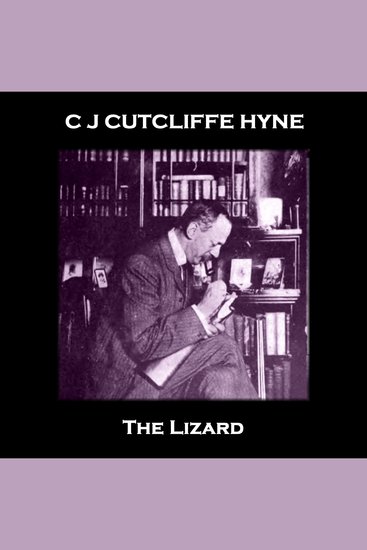
  • The Lizard - From their pens to your ears genius in every story - cover

    The Lizard - From their pens to...

    C J utcliffe Hyne

    • 0
    • 0
    • 0
    The bookshelves of British literature are incredible collections that have gathered together centuries of very talented authors.  From these Isles their fame spread and whilst among their number many are now forgotten or neglected their talents endure.  Among them is C J Cutcliffe Hyne.
    Mostra libro
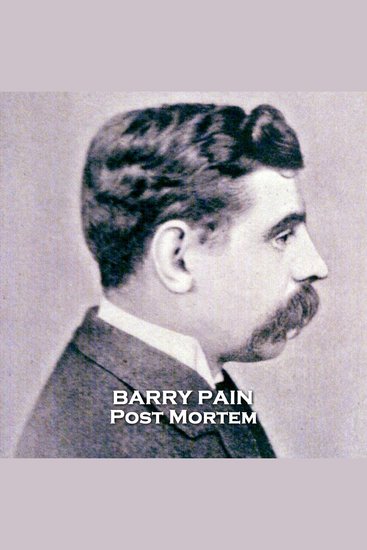
  • Post Mortem - From their pens to your ears genius in every story - cover

    Post Mortem - From their pens to...

    Barry Pain

    • 0
    • 0
    • 0
    Barry Eric Odell Pain was born at 3 Sydney Street in Cambridge on 28th September 1864. He was one of 4 children. 
    He was educated at Sedbergh School and then Corpus Christi College, Cambridge where he read classics and contributed to and edited Granta. 
    Four years of service as an Army coach followed before he moved to London. In 1889, Cornhill Magazine published his short story ‘The Hundred Gates’.  This opened the way for Pain to advance his literary career on several fronts. He became a contributor to Punch and The Speaker, as well as joining the staff of both the Daily Chronicle and Black and White.  
    In 1897 he succeeded Jerome K Jerome as editor of To-Day but still contributed regularly, until 1928, to the Windsor Magazine. 
    It is often said that Pain was discovered by Robert Louis Stevenson, who compared his work to that of Guy de Maupassant.  It’s an apt comparison. Pain was also a master of disturbing prose but able to inject parody and light comedy into many of his works.  A simple premise could in his hands suddenly expand into a world very real but somehow emotionally fraught and on the very edge of darkness as many of these short stories demonstrate.   
    Despite applying his talents to several genres and forms today Pain is more readily thought of, especially during the first decade of the 20th Century, as perhaps the leading British humorist of his day.  These stories reveal a darker side and beg to differ. 
    Barry Pain died on 5th May 1928 in Bushey, Hertfordshire.
    Mostra libro
  • A foreign country is the past - cover

    A foreign country is the past

    Fernando Sdrigotti

    • 0
    • 0
    • 0
    The fifteen stories in A Foreign Country is the Past aren't glimpses into worlds, but worlds themselves. Entire lives are spun in each few pages as time reveals itself a strange fiction, everything ever present, leaking from the past into the future and back again. Sdrigotti's prose is immaculate, incisive and evocative with only the most minimal of gestures. The cumulative effect of reading these stories, which may all be in the same country, or same place, is disorienting, dazzling, and – crucially – re-orienting, as we rethink our own pasts, presents, and potential futures.
    – C.D. Rose
    
    
    At a secluded weekend home, a girl becomes entranced by the sound of the cicadas, as she grapples with the stifling summer heat, and her mother's recent death. Overwhelmed by a sense of foreboding, a young man seeks solace in a privatised cathedral, comically navigating religious bureaucracy, economic crisis, and existential angst. A journey to scatter his grandparents' ashes turns into a tragicomedy, as an unnamed man explores the changes in the city he left behind. A Foreign Country is the Past is the sensorial new collection from the acclaimed author of Jolts. Centering on identity and memory, viewed through a distinctive Argentine lens, these fifteen tales are a profound exploration of the spaces between places and the echoes of time.
    Mostra libro
  • Browdean Farm - From their pens to your ears genius in every story - cover

    Browdean Farm - From their pens...

    A M Burrage

    • 0
    • 0
    • 0
    Alfred McLelland Burrage was born in Hillingdon, Middlesex on 1st July, 1889. His father and uncle were both writers, primarily of boy’s fiction, and by age 16 AM Burrage had joined them.  The young man had ambitions to write for the adult market too.  The money was better and so was his writing. 
    From 1890 to 1914, prior to the mainstream appeal of cinema and radio the printed word, mainly in magazines, was the foremost mass entertainment.  AM Burrage quickly became a master of the market publishing his stories regularly across a number of publications. 
    By the start of the Great War Burrage was well established but in 1916 he was conscripted to fight on the Western Front. He continued to write during these years documenting his experiences in the classic book War is War by Ex-Private X. 
    For the remainder of his life Burrage was rarely printed in book form but continued to write and be published on a prodigious scale in magazines and newspapers.  In this volume we concentrate on his supernatural stories which are, by common consent, some of the best ever written.  Succinct yet full of character each reveals a twist and a flavour that is unsettling…..sometimes menacing….always disturbing.
    Mostra libro
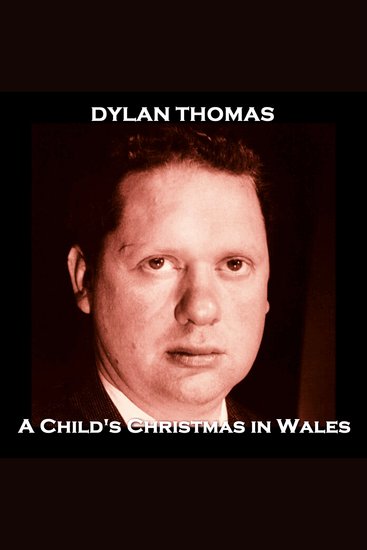
  • A Child's Christmas in Wales - From their pens to your ears genius in every story - cover

    A Child's Christmas in Wales -...

    Dylan Thomas

    • 0
    • 0
    • 0
    Dylan Marlais Thomas was born on 27th October 1914, in Swansea, Wales.   
    From an early age, Thomas displayed a remarkable aptitude for language and storytelling.  He found solace and inspiration in the rugged landscape of Wales, which would later become a central theme in his work.  Thomas's literary journey began at school where his poetic talent began to emerge with contributions to publications and participation in the school magazine.  At 16 he became a reporter for the South-West Daily News.  The stage was also an important part of Thomas's early life as an actor, writer, producer and even set painter.  
    In 1934, Thomas moved to London where he found himself amidst a vibrant literary scene and his early works, including ‘Eighteen Poems’ (1934) and ‘Twenty-Five Poems’ (1936), garnered critical acclaim and established him as a rising star in the poetry world.  His distinctive voice, characterized by an ingenious use of words and rhythm, musical language and lush imagery, captivated readers and critics alike.   
    He met and married Caitlin Macnamara in 1937 whom he had three children with.  
    Despite his literary success, Thomas wrestled with personal demons.  His struggles with alcoholism and tumultuous relationships fuelled his creativity but also threatened to consume him.  His deep insecurities and fears, which found expression in his poetry's exploration of mortality and the human condition, are best exemplified in his most famous poem, ‘Do not go gentle into that good night,’—written in response to his father's failing health.  The impassioned plea to rage against the dying of the light captures the essence of Thomas's defiance in the face of death.  
    In 1950 Thomas embarked on the first of four lucrative tours of America at the invitation of the American poet John Brinnin.  Together, for three months, they toured across the country and provided much needed revenue to the debt-ridden Thomas.  His financial difficulties were eased by rich patrons, principally the wife of historian, A J P Taylor, who first gave him a house to live in in Oxford and then bought him his own house in Laugharne, Wales as well as settling many of his debts.   
    Throughout his career, Thomas was a prolific writer, not only penning poetry but prose, stories, film scripts and radio dramas, the most enduring and well-known being ‘Under Milk Wood’ for the BBC with its rhythm, lyrical, evocative words and imagery and the comic exuberance to reveal the dreams and thoughts of a fictional Welsh fishing town. 
    Thomas’s final tour of America in 1953 was to claim his life.   Brinnin describes him as ‘a living delight and a living torment’ and says that sometimes he was amazed that he was able to stand up straight and more remarkably fulfil the poetry readings that were increasingly popular with the American literati and beyond, for all the drink he downed.  Thomas liked the role of the tortured uncompromising artist and was often rude, difficult and, of course, drunk.   
    Dylan Thomas was admitted to the emergency ward at St Vincent’s Hospital in a coma and died at noon on 9th November 1953.  He was 39.  
    His untimely death marked the premature end of a literary career that promised far more but his profound poetry has left an indelible mark on 20th-century literature reminding us of the fleeting nature of life and the enduring power of art.
    Mostra libro