Unisciti a noi in un viaggio nel mondo dei libri!
Aggiungi questo libro allo scaffale
Grey
Scrivi un nuovo commento Default profile 50px
Grey
Iscriviti per leggere l'intero libro o leggi le prime pagine gratuitamente!
All characters reduced
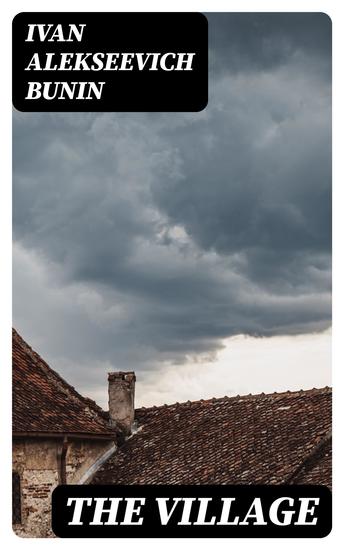
The Village - cover

The Village

Ivan Alekseevich Bunin

Traduttore Isabel Florence Hapgood

Casa editrice: DigiCat

  • 0
  • 0
  • 0

Sinossi

In "The Village," Ivan Alekseevich Bunin embarks on a poignant exploration of rural Russian life, delving deep into the societal and psychological intricacies of village existence in the early 20th century. With a lyrical yet stark prose style, Bunin captures the beauty and hardship of the Russian countryside, employing rich imagery and nuanced characterizations that elevate the narrative beyond mere observation to profound reflection. The novel is steeped in the context of post-imperial Russia, where tradition collides with the encroaching modernity of the urban world, encapsulating the tension between nostalgia and the relentless march of change. Bunin, a Nobel Prize-winning author, emerged from a literary tradition that valued realism and poetic language. Born in 1870 in the Oryol Province, his life experiences in the rural landscape undoubtedly shaped his perspective and storytelling. His deep appreciation for nature and the life of the peasant class is evident throughout his work, particularly in "The Village," which serves as both a tribute to and a lament for a way of life threatened by modernity and upheaval. This novel is essential for readers seeking a profound understanding of the roots of Russian culture and the complexity of human emotion within societal frameworks. Bunin's intimate portrayal of village life invites reflection on the universal themes of love, loss, and the inexorable passage of time, making it a compelling read for those who appreciate literary depth and historical insight.
Disponibile da: 16/09/2022.
Lunghezza di stampa: 172 pagine.


Altri libri che potrebbero interessarti

  • The Secret Agent - cover

    The Secret Agent

    Anonimo

    • 0
    • 0
    • 0
    Just who is the Secret Agent [Delta] of a certain embassy? Just who is Mr Verloc? The proprietor of a certain shop on Brett Street? The Vice-President of a certain revolutionary committee? Forced into a corner by his superiors, he acts in desperation and disaster awaits.  
    A tale of anarchy and realism, by Joseph Conrad, first published in 1905, it is considered one of his great city novels, as well as a great novellestic study of terrorism and it's proponents.  
    Narrated by Michael Ward.
    Mostra libro
  • Father Brown: The Honour of Israel Gow (Unabridged) - cover

    Father Brown: The Honour of...

    G. K. Chesterton

    • 0
    • 0
    • 0
    A stormy evening of olive and silver was closing in, as Father Brown, wrapped in a grey Scotch plaid, came to the end of a grey Scotch valley and beheld the strange castle of Glengyle. It stopped one end of the glen or hollow like a blind alley; and it looked like the end of the world. Rising in steep roofs and spires of seagreen slate in the manner of the old French-Scotch chateaux, it reminded an Englishman of the sinister steeple-hats of witches in fairy tales; and the pine woods that rocked round the green turrets looked, by comparison, as black as numberless flocks of ravens.
    Mostra libro
  • Monkey Nuts - cover

    Monkey Nuts

    D H Lawrence

    • 0
    • 0
    • 0
    ‘Monkey Nuts’ was written by D H Lawrence in 1922. 'Monkey Nuts' turns the traditional love story on its head. It is the woman (the new liberated woman Lawrence had little time for) who does the chasing and the boy who is reluctant. Lawrence seems to be saying it is the unspoken love between the two men in the story which is more satisfying than the possible love between the man and the woman which the boy rejects. Although the older man goes through the motions of chasing the girl, even he seems to realise the sterility of one-sided love.
    Mostra libro
  • The House of Mapuhi - cover

    The House of Mapuhi

    Jack London

    • 0
    • 0
    • 0
    "I would rather be ashes than dust! I would rather that my spark should burn out in a brilliant blaze than it should be stifled by dry-rot. I would rather be a superb meteor, every atom of me in magnificent glow, than a sleepy and permanent planet. The proper function of man is to live, not exist. I shall not waste my days in trying to prolong them, I shall use my time."--a quote from Jack London. London was a man of adventure, a man of action and only he could have truly conceived such a dynamic and challenging credo as this. And only he, with his great physical strength, his intense intellect, and his turbulent spirit, could have successfully lived up to it.
    Mostra libro
  • Unsuspected Masterpiece An (Unabridged) - cover

    Unsuspected Masterpiece An...

    H. G. Wells

    • 0
    • 0
    • 0
    Herbert George "H. G." Wells (1866 - 1946) was an English writer.
    He was prolific in many genres, including the novel, history, politics, social commentary, and textbooks and rules for war games. Wells is now best remembered for his science fiction novels and is called a "father of science fiction"
    AN UNSUSPECTED MASTERPIECE: "I felt as though I had disturbed the graves of the long departed," he said with a grimace, and then addressing the egg: "Forgive me the sacrilege: they sold you to me as new laid, a mere thing of yesterday.
    Mostra libro
  • The Bucket Rider - A poor man seeks compassion but is found wanting - cover

    The Bucket Rider - A poor man...

    Franz Kafka

    • 0
    • 0
    • 0
    Franz Kafka was born on 3rd July 1883 in Prague, then in Bohemia, the eldest of 6, into a middle-class Jewish family. 
     
    Life for the young Kafka and his passion for literature was often made an ordeal by his over-bearing and domineering entrepreneur of a father.   
     
    In 1889 Kafka was sent to the Deutsche Knabenschule, an elementary school in Prague. His father would only allow him to be educated in German-speaking schools and even went so far as to limit visits to the synagogue to four a year. 
     
    In 1901 he graduated from the classics-oriented Altstädter Gymnasium. Kafka did well there and across a large range of subjects.  He now enrolled at the Charles Ferdinand University, to study chemistry, but quickly switched to law for which he obtained his degree in June 1906 and then performed the mandatory year of unpaid service as clerk at the civil and criminal courts. 
     
    A job at an Italian insurance company left him little time to write and after a year he took another job with the Worker's Accident Insurance Institute for the Kingdom of Bohemia where he stayed until ill health led to his resignation in 1922. 
     
    Although he saw work as a means to pay the bills and to allow him time to write, he received several promotions and was noted as a good employee. 
     
    By 1917 Kafka was suffering from tuberculosis, which required frequent periods of convalescence. Interspersed with this, were several intense affairs before he settled in Berlin with Dora Diamant, a 25-year-old kindergarten teacher who herself having left the ghetto now influenced Kafka's interest in the book of Jewish law, the Talmud. 
     
    Kafka’s on-going health was littered with problems. Apart from TB there were several other ailments, including migraines, insomnia, boils, depression, all usually brought on by excessive stresses and strains. He attempted to counteract all of this by naturopathic treatments, a vegetarian diet and consuming large quantities of unpasteurized milk. 
     
    His tuberculosis still worsened. He returned to Prague, where he died on 3rd June 1924. He was 40. 
     
    His literary works are few in number but towering in influence.  His masterpieces include ‘The Trial’, ‘The Metamorphosis’ as well as a number of short stories which reveal facets of humankind that truthfully could only be born from Kafka’s brain and pen.
    Mostra libro