Join us on a literary world trip!
Add this book to bookshelf
Grey
Write a new comment Default profile 50px
Grey
Subscribe to read the full book or read the first pages for free!
All characters reduced
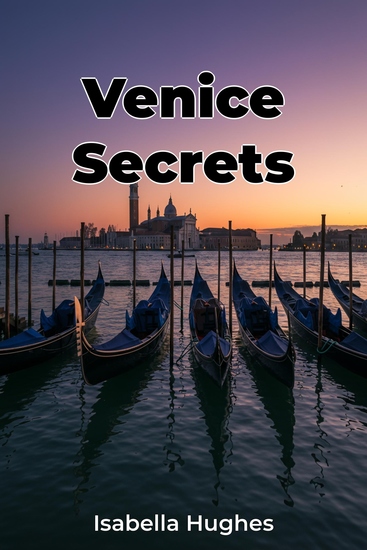
Venice Secrets - cover

Venice Secrets

Isabella Hughes

Translator A AI

Publisher: Publifye

  • 0
  • 0
  • 0

Summary

"Venice Secrets" unveils the captivating story of Venice, exploring its political intricacies, artistic innovations, and maritime empire that shaped its unique destiny. Beyond the romantic facade, Venice was a powerhouse of trade, art, and social control. The book examines how its strategic location fostered a powerful trading empire, influencing Mediterranean commerce and connecting Europe to the East.

 
The narrative explores the evolution of Venetian art from Byzantine influences to Renaissance masterpieces by artists like Titian, reflecting and shaping Venetian identity. It also delves into the enigmatic world of Venetian carnivals, revealing their role as controlled social outlets and their elaborate masking traditions, maintaining social order through permitted transgression.

 
The book progresses through Venice's origins, its artistic development, and the history of its carnivals, providing a holistic view of this remarkable Italian city.
Available since: 02/20/2025.
Print length: 67 pages.

Other books that might interest you

  • Janissaries and Sipahi The: The History of the Elite Infantry and Cavalry that Fueled the Ottoman Empire’s Expansion - cover

    Janissaries and Sipahi The: The...

    Editors Charles River

    • 0
    • 0
    • 0
    In terms of geopolitics, perhaps the most seminal event of the Middle Ages was the successful Ottoman siege of Constantinople in 1453. The city had been an imperial capital as far back as the 4th century, when Constantine the Great shifted the power center of the Roman Empire there, effectively establishing two almost equally powerful halves of antiquity’s greatest empire. Constantinople would continue to serve as the capital of the Byzantine Empire even after the Western half of the Roman Empire collapsed in the late 5th century. Naturally, the Ottoman Empire would also use Constantinople as the capital of its empire after their conquest effectively ended the Byzantine Empire, and thanks to its strategic location, it has been a trading center for years and remains one today under the Turkish name of Istanbul.  
    	In the wake of taking Constantinople, the Ottoman Empire would spend the next few centuries expanding its size, power, and influence, bumping up against Eastern Europe and becoming one of the world’s most important geopolitical players. It was a rise that would not truly start to wane until the 19th century. 
    Among those who were responsible for the projection of Ottoman power, few deserve as much credit as the Janissaries. Established by Murad I, the Janissaries became an elite infantry force that was loyal only to the sultan. Their mission was to protect only him and in battles they were always the closest to him, forming a human shield.  
    Civilizations across the steppes and the Middle East relied heavily on cavalry, and the Sipahi were elite cavalry units during medieval times for a couple of powers. That said, they were a massive contributor to the success of Ottoman warfare, and during good times for the empire, the Sipahi were rewarded, to the extent that they became their own social class, much like the Janissaries. 
    Show book
  • How to Write a Series - A Guide to Series Types and Structure plus Troubleshooting Tips and Marketing Tactics - cover

    How to Write a Series - A Guide...

    Sara Rosett

    • 0
    • 0
    • 0
    Struggling to structure your book series? Learn how to make a series work for you: increase reader engagement and take advantage of the built-in marketing potential a series gives you.Are you unsure which series structure is best for you? Or are you several books into a series, but you’re stuck? Do you want to expand your literary universe but aren’t sure how to do it? Perhaps you have a series languishing in your backlist, and you need ideas on how to market it. Get the knowledge you need to make smart decisions about your series with How to Write a Series. You’ll learn: The three basic types of seriesThe benefits and drawbacks of writing each type of seriesTips for extending your series beyond your original planIdeas for creating spinoffs and expanding your literary universeHow to know when it’s time to end a seriesHow to save time writing your series and how to keep track of detailsHow to deal with the problems that result from being locked into a story world How to refresh your interest in a series if you’ve grown boredCreative ways to market your series	I’ve been writing for fifteen years as both a hybrid and independent author. I’ve published over twenty-five fiction books in four different series. Everything I’ve learned about writing a series has been through trial and error. I hope my lessons-learned will give you a shortcut when it comes to writing your series, plus tips for troubleshooting problems, and ideas for promoting your series.Unlock the power of a series in your author career with How To Write a Series.
    Show book
  • You Are Gods - On Nature and Supernature - cover

    You Are Gods - On Nature and...

    David Bentley Hart

    • 0
    • 0
    • 0
    In recent years, the theological—and, more specifically, Roman Catholic—question of the supernatural has made an astonishing return from seeming oblivion. David Bentley Hart's You Are Gods presents a series of meditations on the vexed theological question of the relation of nature and supernature. In its merely controversial aspect, the book is intended most directly as a rejection of a certain Thomistic construal of that relation, as well as an argument in favor of a model of nature and supernature at once more Eastern and patristic, and also more in keeping with the healthier currents of mediaeval and modern Catholic thought. In its more constructive and confessedly radical aspects, the book makes a vigorous case for the all-but-complete eradication of every qualitative, ontological, or logical distinction between the natural and the supernatural in the life of spiritual creatures. 


    Hart, one of the most widely read theologians in America today, presents a bold gesture of resistance to the recent revival of what used to be called "two-tier Thomism," especially in the Anglophone theological world. In this astute exercise in classical Christian orthodoxy, Hart takes the metaphysics of participation, high Trinitarianism, Christology, and the soteriological language of theosis to their inevitable logical conclusions.
    Show book
  • To Kill a Nation - The Attack on Yugoslavia - cover

    To Kill a Nation - The Attack on...

    Michael Parenti

    • 0
    • 0
    • 0
    Drawing on a wide range of unpublished material and observations gathered from his visit to Yugoslavia in 1999, Michael Parenti challenges mainstream media coverage of the war, uncovering hidden agendas behind the Western talk of genocide, ethnic cleansing, and democracy.
    Show book
  • Wizards - David Duke America's Wildest Election and the Rise of the Far Right - cover

    Wizards - David Duke America's...

    Brian Fairbanks

    • 0
    • 0
    • 0
    The '91 Louisiana Governor's race was supposed to be forgettable. But when former KKK Grand Wizard David Duke shocked the nation by ousting incumbent Republican Governor Buddy Roemer in the primary, the world took notice. Democrat Edwin Edwards, a former three-term governor and two-time corruption defendant, was left alone to face Duke in the general election—and he was going to lose. 


    Then a little-known state committeewoman stepped in with evidence of Duke's nefarious past. Could her evidence be enough to sway the minds of fired-up voters, or would Louisiana welcome a far-right radical into the highest office in the state? 


    Journalist Brian Fairbanks explores how the final showdown between Duke and Edwards in November 1991 led to a major shift in our national politics, as well as the rise of the radical right and white supremacist groups, and how history repeated itself in the 2016 presidential election. The story of these political "wizards," almost forgotten by history, remains eerily prescient and disturbingly relevant.
    Show book
  • The Libertarian Ideal - How Libertarians Envision a Free and Open Society - cover

    The Libertarian Ideal - How...

    Arlo Holders

    • 0
    • 0
    • 0
    Libertarianism is a political philosophy that places individual liberty at its core, emphasizing the importance of personal freedom, limited government, and voluntary cooperation. Rooted in centuries of intellectual thought, libertarianism advocates for a society in which individuals are free to pursue their own goals and aspirations as long as they respect the rights of others. This emphasis on freedom and responsibility makes libertarianism distinct from other political ideologies, which often prioritize collective goals or centralized authority. 
    The roots of libertarian thought can be traced back to classical liberalism, a tradition that emerged during the Enlightenment. Philosophers such as John Locke, Adam Smith, and John Stuart Mill laid the foundation for the principles that underpin libertarianism today. Locke's theories of natural rights and property ownership, Smith's advocacy for free markets, and Mill's emphasis on individual autonomy and freedom of expression all contribute to the philosophical underpinnings of libertarianism. In the modern era, thinkers like Friedrich Hayek, Milton Friedman, and Ayn Rand have further developed these ideas, providing a framework for how a free society can function effectively. 
    At its heart, libertarianism is built on the idea of self-ownership—the belief that individuals have an inherent right to control their own lives, bodies, and property. From this principle flows the concept of voluntary interaction, which holds that relationships and exchanges between people should occur through mutual consent rather than coercion. Libertarians reject the use of force, except in cases of self-defense or the defense of others, and they champion the principle of non-aggression as a moral guide.
    Show book