Unisciti a noi in un viaggio nel mondo dei libri!
Aggiungi questo libro allo scaffale
Grey
Scrivi un nuovo commento Default profile 50px
Grey
Iscriviti per leggere l'intero libro o leggi le prime pagine gratuitamente!
All characters reduced
The Nuremberg Trials: Complete Tribunal Proceedings (V 9) - Trial Proceedings From 8 March 1946 to 23 March 1946 - cover

The Nuremberg Trials: Complete Tribunal Proceedings (V 9) - Trial Proceedings From 8 March 1946 to 23 March 1946

International Military Tribunal

Casa editrice: Good Press

  • 0
  • 0
  • 0

Sinossi

The Nuremberg Trials: Complete Tribunal Proceedings (V. 9) serves as a crucial document in the understanding of international law and justice, offering a comprehensive account of one of history's most significant legal proceedings. This volume meticulously presents the tribunal's transcripts, evidentiary submissions, and judicial deliberations, shedding light on the post-World War II ethos that sought accountability for war crimes. The clarity of the proceedings and the precision of the legal language reflect the gravity of the charges faced by the defendants, providing a unique lens through which readers can analyze the intersection of morality, legality, and the human condition in times of crisis. The International Military Tribunal, established in 1945, was driven by the urgent need to address the atrocities committed during the war. Comprising judges from various Allied nations, the Tribunal sought to set a precedent for future international jurisprudence. The integration of diverse legal traditions and the philosophical underpinning of justice against tyranny served not only to hold individuals accountable but also to articulate the aspirations of a world striving for peace and stability after unimaginable horrors. This volume is essential for scholars, students, and anyone interested in international law, human rights, and historical studies. By engaging with the firsthand proceedings, readers gain invaluable insights into the complexity of legal practices in the face of mass atrocities. It is an indispensable resource for understanding how the lessons learned from Nuremberg continue to resonate in contemporary discourses on justice and accountability.
Disponibile da: 15/12/2023.
Lunghezza di stampa: 604 pagine.

Altri libri che potrebbero interessarti

  • Steve McQueen & Charles Bronson: The Lives and Careers of the Top Action Stars of the 1970s - cover

    Steve McQueen & Charles Bronson:...

    Editors Charles River

    • 0
    • 0
    • 0
    In the 1960s and 1970s, no actor personified cool, calm and collected like Steve McQueen, whose suave anti-hero protagonists made men jealous and women swoon. As actor Donald Logue puts it in The Tao of Steve, “Steve is the prototypical cool American male. He's the guy on his horse, the guy alone. He has his own code of honor, his own code of ethics, his own rules of living. He never, ever tries to impress the women, but he always gets the girl." And indeed, that was the case not only in movies like The Thomas Crown Affair, Bullitt, The Getaway, and Papillon, but also in real life. Actress Ali MacGraw, who later became one of his wives, described his effect on women: "I remember seeing him across the swimming pool and my knees were knocking. He radiated such macho energy. Men wanted to be like him. Uptight society ladies and biker molls wanted to be with him." But unlike many actors who become this type of heartthrob, McQueen seemed to have the bona fides.   
    To accompany the rough-hewn appearance of Charles Bronson’s new class of hero, the typical script gave his remarkably enduring persona little to say in terms of dialogue that would reveal his inner thoughts. With minimal text, even those he attempts to help are unsure of his intentions, and few clues are offered by which the viewer can come to know his mind. As the grotesqueness of his characters’ violent acts increased, so did the heinous deeds of the criminals he fought, upping the ante to an eager public in search of a simple cure for its social ills. In a career of almost eighty films and a total body of work totaling 160 appearances including television, Bronson pushed the envelope of what graphic action the studios were willing to offer, what the censors would accept, and what the sensibilities of movie-goers were able to endure more than anyone in his era.
    Mostra libro
  • Ancient Astrology: The Ultimate Guide to Babylonian Egyptian and Hellenistic Astrology and the Zodiac Signs - cover

    Ancient Astrology: The Ultimate...

    Mari Silva

    • 0
    • 0
    • 0
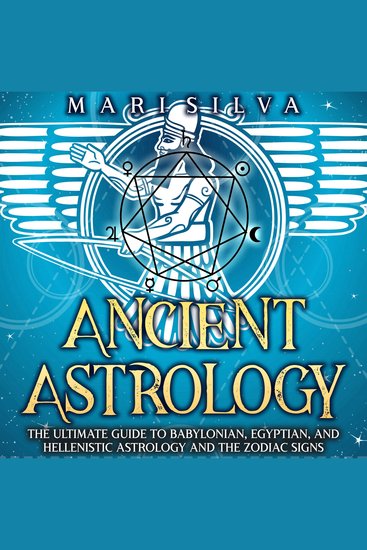
    Explore the secrets of ancient astrologists and learn more about the Babylonian, Egyptian, and Hellenistic traditions of astrology. 
    Have you ever wondered where astrology was first discovered? 
    Have you ever wondered how the ancients used the stars? 
    Are you eager to use the secrets of ancient astrologists? 
    Ancient astrology offers individuals a new way of looking at the movement of the stars and celestial bodies and, through that, the world around them. It offers you the opportunity to add a unique level of depth to your astrological readings and allows you to make a more holistic analysis of a person’s natal chart, looking at both the positives and negatives. 
    In this audiobook, you will:Learn how Babylonians used astrology in their daily livesUnderstand decanoic astrology, which was the first astrological system used by ancient EgyptiansLearn about the Egyptian zodiac signsExplore how Hellenic astrology combines Babylonian and Egyptian astrology to create a new systemLearn about the Thema Mundi and Hellenistic chartsExplore the Hermetic lots in further detailLearn how to make your own Astrolabe 
    This audiobook allows you to understand the world as the ancients knew it. When exploring different astrological traditions, ancient astrology is among the most important to learn about, as it is the base on which modern astrology is founded – and that is exactly what you will get from this audiobook. 
    Click the “add to cart” button now and enter the world of ancient astrology.
    Mostra libro
  • Becoming Batman - The Possibility of a Superhero - cover

    Becoming Batman - The...

    E. Paul Zehr, James Kakalios

    • 0
    • 0
    • 0
    Possessing no supernatural powers, Batman is the most realistic of all the superheroes. His feats are achieved through rigorous training and mental discipline, and with the aid of fantastic gadgets. Drawing on his training as a neuroscientist, kinesiologist, and martial artist, E. Paul Zehr explores the question: Could a mortal ever become Batman? 


    Zehr discusses the physical training necessary to maintain bad-guy-fighting readiness while relating the science underlying this process, from strength conditioning to the cognitive changes a person would endure in undertaking such a regimen. In probing what a real-life Batman could achieve, Zehr considers the level of punishment a consummately fit and trained person could handle, how hard and fast such a person could punch and kick, and the number of adversaries that individual could dispatch. He also tells us what it would be like to fight while wearing a batsuit and the amount of food we'd need to consume each day to maintain vigilance as Gotham City's guardian. 


    A fun foray of escapism grounded in sound science, Becoming Batman provides the background for attaining the realizable—though extreme—level of human performance that would allow you to be a superhero.
    Mostra libro
  • The Winter's Tale - cover

    The Winter's Tale

    William Shakespeare

    • 0
    • 0
    • 0
    The Winter's Tale is a play by William Shakespeare, originally published in the First Folio of 1623. Although it was grouped among the comedies, some modern editors have relabelled the play as one of Shakespeare's late romances. Some critics consider it to be one of Shakespeare's "problem plays", because the first three acts are filled with intense psychological drama, while the last two acts are comedic and supply a happy ending. The play has been intermittently popular, revived in productions in various forms and adaptations by some of the leading theatre practitioners in Shakespearean performance history, beginning after a long interval with David Garrick in his adaptation called Florizel and Perdita (first performed in 1754 and published in 1756).    The Winter's Tale was revived again in the 19th century, when the third "pastoral" act was widely popular. In the second half of the 20th century The Winter's Tale in its entirety, and drawn largely from the First Folio text, was often performed, with varying degrees of success. Short Summary of the Tale: John Fawcett as Autolycus in "The Winter's Tale" (1828) by Thomas Charles Wageman. Following a brief setup scene the play begins with the appearance of two childhood friends: Leontes, King of Sicilia, and Polixenes, the King of Bohemia. Polixenes is visiting the kingdom of Sicilia, and is enjoying catching up with his old friend. However, after nine months, Polixenes yearns to return to his own kingdom to tend to affairs and see his son. Leontes desperately attempts to get Polixenes to stay longer, but is unsuccessful. Leontes then decides to send his wife, Queen Hermione, to try to convince Polixenes. Hermione agrees and with three short speeches is successful. Leontes is puzzled as to how Hermione convinced Polixenes so easily, and Leontes suddenly goes insane and suspects that his pregnant wife has been having an affair with Polixenes and that the child is a bastard. Leontes orders Camillo, a Sicilian Lord, to poison Polixenes. Camillo instead warns Polixenes and they both flee to Bohemia.    Furious at their escape, Leontes now publicly accuses his wife of infidelity, and declares that the child she is bearing must be illegitimate. He throws her in prison, over the protests of his nobles, and sends two of his lords, Cleomenes and Dion, to the Oracle at Delphi for what he is sure will be confirmation of his suspicions. Meanwhile, the queen gives birth to a girl, and her loyal friend Paulina takes the baby to the king, in the hopes that the sight of the child will soften his heart. He grows angrier, however, and orders Paulina's husband, Lord Antigonus, to take the child and abandon it in a desolate place. Cleomenes and Dion return from Delphi with word from the Oracle and find Hermione publicly and humiliatingly put on trial before the king. She asserts her innocence, and asks for the word of the Oracle to be read before the court. The Oracle states categorically that Hermione and Polixenes are innocent, Camillo an honest man, and that Leontes will have no heir until his lost daughter is found. Leontes shuns the news, refusing to believe it as the truth. As this news is revealed, word comes that Leontes' son, Mamillius, has died of a wasting sickness brought on by the accusations against his mother. Hermione, meanwhile, falls in a swoon, and is carried away by Paulina, who subsequently reports the queen's death to her heartbroken and repentant husband. Leontes vows to spend the rest of his days atoning for the loss of his son and his queen.
    Mostra libro
  • Telepathy in treatment - cover

    Telepathy in treatment

    M.D. Howard Eisenberg

    • 0
    • 0
    • 0
    A psychotherapist discusses the use of telepathy in the treatment of emotional disorders.
    Mostra libro
  • Influence - cover

    Influence

    Robert Cialdini

    • 0
    • 0
    • 0
    This work provides a concise synthesis of the key insights and analysis from Influence. It is an independent summary, not the original book, and has no affiliation with or endorsement from the original publication. Created for readers who want a clear, thought-provoking overview, it distills the central themes and ideas while preserving the depth and relevance of the work. 
    A classic exploration of the psychology of persuasion, explaining the key principles that make people say “yes” in sales, marketing, politics and everyday life. Drawing on experiments and real-world examples, it reveals how reciprocity, social proof, liking, authority, scarcity and consistency shape our choices, often without our awareness.
    Mostra libro