Unisciti a noi in un viaggio nel mondo dei libri!
Aggiungi questo libro allo scaffale
Grey
Scrivi un nuovo commento Default profile 50px
Grey
Iscriviti per leggere l'intero libro o leggi le prime pagine gratuitamente!
All characters reduced
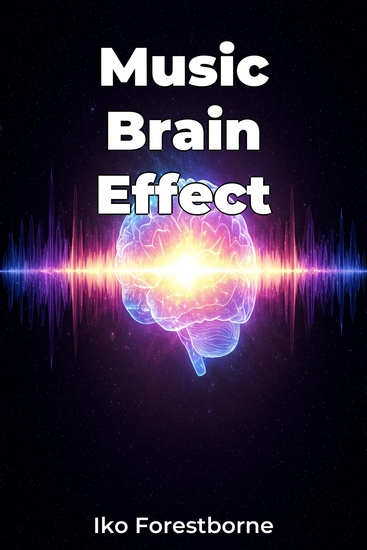
Music Brain Effect - cover

Music Brain Effect

Iko Forestborne

Traduttore A AI

Casa editrice: Publifye

  • 0
  • 0
  • 0

Sinossi

Music Brain Effect explores the profound impact of music on our brains, emotions, and memories, bridging the gap between music, neuroscience, and psychology. The book reveals how music activates multiple brain regions, influencing our cognitive and emotional landscapes across different ages and cultures. Intriguingly, musical training can lead to measurable changes in brain structure, improving cognitive abilities, a phenomenon known as neuroplasticity. Furthermore, music's connection to memory explains why a particular song can instantly transport us back to specific moments in our lives.

 
The book progresses systematically, starting with the basics of auditory processing and neural circuits involved in music perception. It then investigates music's specific effects on emotion and memory, examining both positive and negative emotional responses. Finally, it delves into neuroplasticity and the practical applications of music in therapy and education.

 
By synthesizing findings from diverse fields, Music Brain Effect offers a holistic view of music's influence, making it valuable for students, educators, therapists, musicians, and anyone curious about the science of music and the brain.
Disponibile da: 04/03/2025.
Lunghezza di stampa: 67 pagine.

Altri libri che potrebbero interessarti

  • Off the Mark - How Grades Ratings and Rankings Undermine Learning - cover

    Off the Mark - How Grades...

    Ethan L. Hutt, Jack Schneider

    • 0
    • 0
    • 0
    Anyone who has ever crammed for a test, capitulated to a grade-grubbing student, or fretted over a child's report card knows that the way we assess student learning in American schools is freighted with unintended consequences. As experts agree, our primary assessment technologies—grading, rating, and ranking—don't actually provide an accurate picture of how students are doing in school. Worse, they distort student and educator behavior in ways that undermine learning and exacerbate inequality. Yet despite widespread dissatisfaction, grades, test scores, and transcripts remain the currency of the realm. 


    In Off the Mark, Jack Schneider and Ethan Hutt explain how we got into this predicament, why we remain beholden to outmoded forms of assessment, and what we can do to change course. They offer a range of practical reforms, like embracing multiple measures of performance and making the so-called permanent record "overwritable." As they explain, we can remake our approach in ways that better advance the three purposes that assessment currently serves: motivating students to learn, communicating meaningful information about what young people know and can do, and synchronizing an otherwise fragmented educational system. Off the Mark is a guide for everyone who wants to ensure that assessment serves the fundamental goal of education—helping students learn.
    Mostra libro
  • Mansa Musa and The Empire of Mali - A True Story of Gold and Greatness from Africa - cover

    Mansa Musa and The Empire of...

    P. James Oliver

    • 0
    • 0
    • 0
    Oliver's well-researched biography of Mansa Musa echoes the style of an exotic tale of gold, glory, and adventure. During his long reign as Mali's emperor, Mansa Musa led his empire into its Golden Age; presided over a spectacular, 60,000 person, 9,000 mile pilgrimage; founded a university in Timbuktu; and helped revolutionize architecture across the Sudan.Many of the African ancestors of today's African-Americans came from West Africa. From 700 -- 1600 A. D., one after the other, three great, black, commercial empires dominated West Africa. They were powerful, prosperous, complex, stable -- and large. At its height, the Empire of Mali was the size of all of Western Europe.Well-crafted and fast paced, Oliver's book did not only clearly portray Mansa Musa's triumphs and dilemmas, but also the lives of the people of medieval Mali.
    Mostra libro
  • Know Thyself - Catholic Classical Education and the Discovery of Self - cover

    Know Thyself - Catholic...

    Andrew Youngblood

    • 0
    • 0
    • 0
    Across the United States and around the world, there has been an ongoing resurgence in classical education, including among Catholics. The classical model, rooted in the ancient Socratic method, is flourishing, and classical Catholic schools continue to multiply and grow. But classical education also has its detractors. Some parents and teachers worry that it is impractical, outdated, or, worse, judgmental.       In Know Thyself, Andrew Youngblood, an educator with decades of experience in classical learning as both a student and teacher, introduces readers to this exciting education alternative and its intellectual and spiritual benefits. Youngblood defines the essence of classical Catholic education, explores its integrated and narrative approach to learning, and presents its transformative power and beauty.       Through brief vignettes, personal anecdotes from students and teachers, and examples from the classroom, Know Thyself makes a positive case for an education journey that teaches students to see themselves through God’s eyes—and to truly know themselves and who they are called to be. 
    Mostra libro
  • Emotional Manipulation - Influencing Other's Emotions to Achieve Personal Objectives - cover

    Emotional Manipulation -...

    Cito Harder

    • 0
    • 0
    • 0
    Emotional manipulation is a powerful yet often subtle form of influence that shapes human interactions in profound ways. It involves deliberately using emotions to control, persuade, or exploit others to achieve a personal objective. Unlike healthy influence, which fosters mutual understanding and respect, manipulation is often deceptive, one-sided, and aimed at serving the manipulator’s interests at the expense of the other person. While some forms of emotional influence can be harmless or even beneficial, manipulation crosses ethical boundaries when it distorts reality, erodes autonomy, and undermines personal well-being. 
    The impact of emotional manipulation can be significant, affecting individuals on both psychological and emotional levels. Victims of manipulation may experience self-doubt, confusion, guilt, and anxiety, often questioning their own perceptions and emotions. Manipulators, on the other hand, gain a sense of power and control, using tactics such as guilt-tripping, gaslighting, and passive-aggressiveness to achieve their desired outcomes. This dynamic is common in personal relationships, workplaces, and even society at large, where emotional influence is used to sway public opinion and reinforce social hierarchies. 
    One of the most challenging aspects of emotional manipulation is its subtle nature. Unlike overt forms of coercion or aggression, manipulation often operates under the surface, making it difficult to recognize until significant damage has been done. It may appear as concern, affection, or logical reasoning, but beneath the surface, it is designed to control another person’s emotions and decisions. In romantic relationships, this can manifest as excessive flattery followed by emotional withdrawal, creating a cycle of dependency. In the workplace, manipulative bosses or colleagues may use subtle guilt or praise to extract extra work without reciprocation.
    Mostra libro
  • Anthropology - Understanding Human Evolution and Cultural Development - cover

    Anthropology - Understanding...

    Mike Crawford

    • 0
    • 0
    • 0
    Anthropology is the holistic study of humanity, examining human origins, cultural development, social structures, language, and biological evolution. It seeks to understand what it means to be human by analyzing the past, studying present societies, and considering future changes. Unlike other disciplines that focus on a single aspect of human life, anthropology integrates multiple perspectives to provide a comprehensive understanding of human existence. 
    The field of anthropology is traditionally divided into four main branches: biological anthropology, cultural anthropology, linguistic anthropology, and archaeology. Biological anthropology focuses on human evolution, genetics, and physical adaptation, comparing humans to primates and studying fossil records to understand the biological roots of our species. Cultural anthropology examines the customs, beliefs, and social institutions of different societies, exploring how culture shapes human behavior and interactions. Linguistic anthropology investigates the role of language in human communication, social identity, and cultural transmission. Archaeology studies past human civilizations through the excavation and analysis of artifacts, structures, and environmental data, providing insight into how societies developed over time. 
    A key principle of anthropology is cultural relativism, which emphasizes understanding cultures within their own context rather than judging them by external standards. This contrasts with ethnocentrism, the belief that one’s own culture is superior to others. By adopting cultural relativism, anthropologists aim to promote a deeper appreciation for human diversity and challenge stereotypes and biases. Fieldwork, often involving ethnographic research, is a fundamental method in anthropology.
    Mostra libro
  • Bertolt Brecht: A short biography - 5 Minutes: Short on time – long on info! - cover

    Bertolt Brecht: A short...

    5 Minutes, 5 Minute Biographies,...

    • 0
    • 0
    • 0
    Bertolt Brecht, communist, theater genius, world citizen: Life and work in a short biography! Everything you need to know, brief and concise. Infotainment, education and entertainment at its best!
    Mostra libro