Join us on a literary world trip!
Add this book to bookshelf
Grey
Write a new comment Default profile 50px
Grey
Subscribe to read the full book or read the first pages for free!
All characters reduced
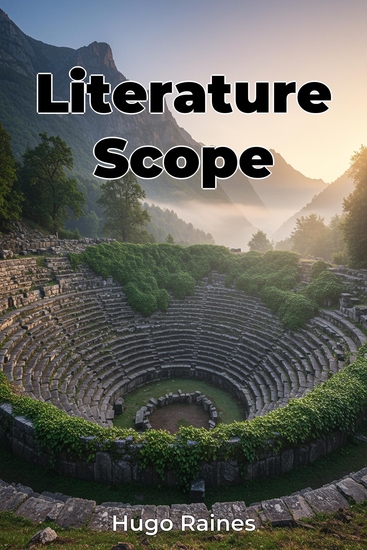
Literature Scope - cover

Literature Scope

Hugo Raines

Translator A AI

Publisher: Publifye

  • 0
  • 0
  • 0

Summary

Literature Scope explores literature as a global discipline, revealing how stories reflect universal human values and the conflicts shaping our world. The book examines the role of literature in documenting history, preserving culture, and fostering cross-cultural understanding. It argues literature serves as a profound mirror, reflecting historical and cultural contexts alongside enduring values and conflicts that unite humanity.

 
The book delves into how literature portrays conflict, whether internal struggles or large-scale wars, showing how societies grapple with ethical dilemmas and social change through storytelling. Readers gain insights into how literature preserves cultural heritage and transmits values across generations. The analysis also uses comparative literary techniques alongside historical contextualization to understand the evolution and impact of different works.

 
Organized by shared thematic elements rather than geographic location, Literature Scope begins by defining key terms and establishing a theoretical framework. Subsequent sections examine literature’s role in preserving cultural heritage, analyzing portrayals of conflict, and exploring shared themes in global literary traditions. The book aims to enhance critical thinking skills and foster a deeper appreciation for the diversity of human experience.
Available since: 05/06/2025.
Print length: 60 pages.

Other books that might interest you

  • Relax Get Inspired: On the Art of War - cover

    Relax Get Inspired: On the Art...

    Sun Tzu

    • 0
    • 0
    • 0
    Welcome to our reading of "The Art of War," a timeless treatise on strategy, warfare, and leadership written by the ancient Chinese military strategist Sun Tzu. Composed over 2,500 years ago, this profound work remains as relevant today as it was in the era of chariots and sword battles. 
    "The Art of War" is not merely a book about conflict; it is a guide to navigating and overcoming challenges through wisdom, strategy, and adaptability. Its teachings can be applied beyond the battlefield, encompassing personal challenges, business conflicts, and the management of any competitive environment. 
    In today’s fast-paced world, where conflict can arise in many forms—whether in the boardroom, on the sports field, or within our own digital landscapes—Sun Tzu’s advice offers a strategic framework for approaching these challenges. His principles of understanding not just your own strengths and weaknesses but also those of your opponent have found new life in everything from corporate negotiations to sports coaching strategies. 
    As you listen, consider how these ancient words can be applied to the modern struggles you face. Whether you are a leader, a strategist, a thinker, or simply someone navigating the complexities of everyday life, "The Art of War" provides valuable insights into the art of making smart, calculated decisions that can lead to success in any arena. 
    Let us delve into Sun Tzu’s world, exploring how his understanding of strategy and human nature can inform and guide our own lives today. 
    Recommended to listen with headphones.
    Show book
  • Empire's Son Empire's Orphan - The Fantastical Lives of Ikbal and Idries Shah - cover

    Empire's Son Empire's Orphan -...

    Nile Green

    • 0
    • 0
    • 0
    In literary circles of the mid-twentieth century, father and son, Ikbal and Idries Shah, spread seductive accounts of a mystical Middle East. Pitching themselves as the authentic voice of the Muslim world, they penned travelogues and exotic potboilers alongside weighty tomes on Islam and politics. Above all, father and son told Western readers what they wanted to hear: audacious yarns of eastern adventure and harmless Sufi mystics—myths that, as the century wore on and the Taliban seized power, became increasingly detached from reality. 


    This book follows the Shahs from their origins in colonial India to literary London, wartime Oxford, and counterculture California via the Levant, the League of Nations, and Latin America. Nile Green unravels the conspiracies and pseudonyms, fantastical pasts and self-aggrandizing anecdotes, high stakes and bold schemes that for nearly a century painted the defining portrait of Afghanistan. Ikbal and Idries convinced poets, spies, orientalists, diplomats, occultists, hippies, and even a prime minister that they held the key to understanding the Islamic world. From George Orwell directing Muslim propaganda to Robert Graves translating a fake manuscript of Omar Khayyam and Doris Lessing supporting jihad, Green tells the fascinating tale of how the book world was beguiled by the dream of an Afghan Shangri-La that never existed.
    Show book
  • How to Write a Novel: Step-by-Step | Essential Romance Novel Mystery Novel and Fantasy Novel Writing Tricks Any Writer Can Learn - cover

    How to Write a Novel:...

    Sandy Marsh

    • 0
    • 0
    • 0
    Struggling as an Author? 
    Do you have an amazing story in mind, but you can’t get it down on paper? You’ve got the idea and the characters but soon run out of steam? Perhaps you are a beginner and need help putting it all together. Whatever your reason, this book helps to unlock the secrets of novel writing in simple-to-follow ways that will bring significant results fast. 
    Tips to Write Engrossing Page-Turners 
    ”How to Write a Novel: Step-by-Step” provides a breakdown of essential aspects of writing Romance, Fantasy and Mystery novels and unveils crucial tips and tricks that will help flesh-out the characters in your book.  
    Contents Summary 
    Each section is summarized with a series of short questions to help inspire deeper reflection. These are: 
    THE OUTLINE – how to refine major schemes & subplots that make sense to the reader & also your protagonist. 
    THE SETTING – the art of crafting a sense of place & how to work with multiple locations & time-periods. 
    POINT OF VIEW – helping you to form the best character perspectives for your story. 
    CHARACTERS – the best way to choose your central character to drive the story forward & one in whom your audience will discover a gripping read. 
    CONFLICT – how & when to use struggle to keep the reader engaged. 
    ADDITIONAL TIPS – A final section that motivates the author to think differently to engage emotion & lose the reader in the heart of the story. Marsh helps an author to think outside of the box when faced with over-used clichés, and to deal with the pressures of deadlines and expectations. 
    Order Now!
    Show book
  • Second Book of John The - The World English Bible Book 63 (Unabridged) - cover

    Second Book of John The - The...

    Various Authors

    • 0
    • 0
    • 0
    The Second Book of John is a book of the New Testament attributed to John the Evangelist, traditionally thought to be the author of the other two epistles of John, and the Gospel of John (though this is disputed). Most modern scholars believe this is not John the Apostle, but in general there is no consensus as to the identity of this person or group.
    Show book
  • All About Love - New Visions - cover

    All About Love - New Visions

    Bell Hooks

    • 0
    • 0
    • 0
    A New York Times bestseller and enduring classic, All About Love is the acclaimed first volume in feminist icon bell hooks' ""Love Song to the Nation"" trilogy. All About Love reveals what causes a polarized society, and how to heal the divisions that cause suffering. Here is the truth about love, and inspiration to help us instill caring, compassion, and strength in our homes, schools, and workplaces. 
    “The word ‘love’ is most often defined as a noun, yet we would all love better if we used it as a verb,” writes bell hooks as she comes out fighting and on fire in All About Love. Provocative and intensely personal, renowned scholar, cultural critic and feminist bell hooks offers a proactive new ethic for a society stricken with lovelessness—not the lack of romance, but the lack of care, compassion, and unity. People are divided, she declares, by society’s failure to provide a model for learning to love.  
    In this landmark book, bell hooks explores the question “What is love?” Her answers strike at both the mind and heart. Disputing that the ideal love is infused with sex and desire, she provides a new path to love that is sacred, redemptive, and healing for individuals and for a nation. All About Love is a powerful, timely affirmation of just how profoundly love and community can change hearts and minds for the better. 
    Show book
  • The Fall of Rome - The Birth of the Middle Ages - cover

    The Fall of Rome - The Birth of...

    Harris Ropes

    • 0
    • 0
    • 0
    At its height, the Roman Empire stood as one of the most powerful and influential civilizations in history. Spanning continents, from the windswept moors of Britain to the deserts of Egypt, Rome’s reach seemed boundless. The strength of the empire lay not only in its vast military conquests but in the complexity and efficiency of its administrative systems. Roman law, engineering, and political structure provided a level of organization that allowed a diverse collection of peoples and cultures to function under a single imperial banner. The Pax Romana, a period of relative peace lasting over two centuries, demonstrated Rome’s ability to maintain stability across its vast territories. 
    Roman culture was a dynamic blend of traditions inherited from earlier civilizations and innovations of its own. Latin served as the unifying language, enabling administration and communication across the empire. The arts flourished, with literature, sculpture, and architecture reaching impressive heights. From the poetry of Virgil and Ovid to the engineering marvels of aqueducts and roads, Roman achievements stood as symbols of sophistication. The grandeur of public spaces like the Colosseum and the Roman Forum reflected the empire’s emphasis on civic life and the power of the state. 
    Governance played a key role in the success of Rome. A highly structured bureaucracy allowed the empire to manage its provinces effectively, while a legal system based on Roman law continued to influence Western societies long after the empire’s decline. Though emperors held supreme power, the Senate, magistrates, and various local officials contributed to a layered political system that managed both urban centers and rural territories. Roman citizenship, which could be extended to people across the empire, fostered a sense of unity and shared identity among diverse populations.
    Show book