
Unisciti a noi in un viaggio nel mondo dei libri!
Aggiungi questo libro allo scaffale
Grey
Scrivi un nuovo commento Default profile 50px
Grey
Iscriviti per leggere l'intero libro o leggi le prime pagine gratuitamente!
All characters reduced
The cremation of the dead - From an aesthetic sanitary religious historical medico-legal and economical standpoint - cover

The cremation of the dead - From an aesthetic sanitary religious historical medico-legal and economical standpoint

Hugo Erichsen

Casa editrice: Good Press

  • 0
  • 0
  • 0

Sinossi

In "The Cremation of the Dead," Hugo Erichsen delves into the complex interplay between death rituals and societal values, exploring the historical evolution of cremation practices. The book employs a rigorous academic style, seamlessly weaving together empirical research with poignant anecdotes that illuminate the cultural significance of cremation across various civilizations. Erichsen's analysis not only contextualizes cremation within the framework of religious and philosophical thought but also critiques modern attitudes toward death, challenging the reader to reconsider traditional burial customs in light of contemporary eco-consciousness and shifting societal norms. Hugo Erichsen, a distinguished cultural anthropologist and historian, draws upon his extensive background in the study of funerary practices to craft this insightful work. His previous research in archaeology and anthropology, coupled with personal experiences surrounding death within his community, have profoundly shaped his understanding of how societies navigate the loss of their members. This convergence of academic rigor and emotional intelligence lends authenticity to Erichsen's narrative, making it not just informative but deeply resonant. For readers fascinated by the intersection of culture, history, and human experience, "The Cremation of the Dead" is an essential read. It invites contemplation on the legacies we leave behind and the myriad ways we honor those who have passed. Erichsen's insightful scholarship will appeal to both academic audiences and general readers alike, allowing for a richer understanding of our collective relationship with mortality.
Disponibile da: 31/10/2023.
Lunghezza di stampa: 196 pagine.

Altri libri che potrebbero interessarti

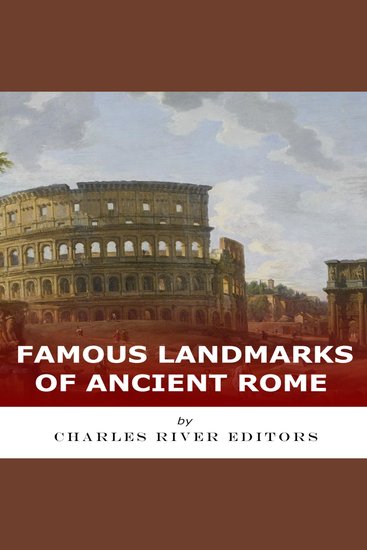
  • Famous Landmarks of Ancient Rome - cover

    Famous Landmarks of Ancient Rome

    Editors Charles River

    • 0
    • 0
    • 0
    When the Colosseum was built in the late 1st century A.D., the Romans, who were known for their architectural acumen, managed to amaze themselves. Martial, a Roman poet writing during the inauguration of the Colosseum, clearly believed the Colosseum was so grand a monument that it was even greater than the other Wonders of the Ancient World, which had been written about and visited endlessly by the Romans and Greeks in antiquity. Indeed, although the Wonders were wondrous to behold, the Colosseum was a spectacular achievement in architecture, something new and innovative, and therefore an amazing “Wonder” in its own way.  
    For well over a thousand years, the Forum was the scene of intense construction, as well as social, political, and commercial activity, making the Forum a boon for the study of Roman history, even though some buildings in the Forum are of such importance that they cannot be disassembled in order to discover the older layers underneath and thus find more evidence about the origins of this area. Ultimately, the Forum transformed from being a backwater used for grazing livestock into the religious and political center of Roman life, and it has long been an inspiration for subsequent generations, influencing the Renaissance, Romanticism, and even Fascism.  
    	Although Roman roads may not have attained the glamorous status of other inventions, their influence is just as profound; roads provide essential communication and transport lines for any country – throughout the hundreds of years when Rome was ascendant in the ancient world, the roads they built held together first their republic and then their empire into a cohesive unit. Since the Appian Way was first built in 312 BC, it has inspired poets, slaves, and conquerors, and Mark Antony, Spartacus, Hannibal, and Horace are just a few of the notable historical personalities who travelled on the Appian Way. 
    Mostra libro
  • House of Borgia: A Captivating Guide to the Borgias and Their Feuds with the Medici Family Sforza Dynasty and Girolamo Savonarola - cover

    House of Borgia: A Captivating...

    Captivating History

    • 0
    • 0
    • 0
    The History of the House of Borgia: The Infamous Family of the Italian Renaissance! 
    Do you know the WHOLE story of the House of Borgia—from their rise from obscurity to the highest echelons of European society? The family produced two popes and a saint, but they are more known for stories of murder, debauchery, and incest. What is accurate, and what is just slander? Were the Borgias worse than any other powerful family of the time? Was Rodrigo Borgia, who became Pope Alexander VI, a monster? Was his son Cesare a psychopath? Was his daughter Lucrezia a murderous temptress?  
    In this audiobook, you will learn the answers to these questions and more about the following:The origins of the House of Borgia in SpainThe rise of the first Borgia pope, Callixtus IIIThe power struggles between the great houses of Italy: the Borgia, the Sforza, the Medici, the Orsini, and the Colonna, among othersThe character of the infamous Rodrigo Borgia, Pope Alexander VIThe fiery battle between the Borgias and Friar Savonarola that ended in death and ruinThe reality of Cesare Borgia and his attempts to carve out his own kingdomThe real story of Lucrezia BorgiaThe role Christopher Columbus and Machiavelli played in the story of the Borgias, along with the monarchs of Spain, France, and NaplesHow the Borgias helped shape the Renaissance and the future of EuropeHow a descendant of the Borgias became a revered saint in the Catholic ChurchAnd so much more! 
    Scroll up and click “add to cart” to learn more about the House of Borgia!
    Mostra libro
  • All About Amy (Little Women Essay) - cover

    All About Amy (Little Women Essay)

    Niina Niskanen

    • 0
    • 0
    • 0
    Join me on a journey to study Amy March and her real-life inspiration May Alcott Nieriker. The misconceptions about Jo´s insecurities and especially about her looks. Society likes to put two characters against one another but is this true to reality? Find out that and more in the Little Women podcast. 
    People often praise Jo for being a tomboy and how she rejects femininity, but Jo´s idealization of the masculine has very toxic elements. Amy is a character who is more governed by her brain, whereas Jo is in fact governed by her emotions, which is considered a feminine trait. In the novel, Jo struggles to show her feelings because she considers that weak and "feminine". When their father is wounded in the war she shouts to her sisters not to cry. A couple of years later Laurie says that she doesn't show emotions and calls her out about it. Because Jo tries to shut down an important human part of herself, simply because she considers it feminine, is actually something that slowly eats her inside and contributes to her loneliness. This is why the umbrella chapter is so important because Friedrich says to Jo that it is okay to be vulnerable. 
    Amy does the opposite. She considers rational marriage with Fred Vaughn because it allows her to secure her family´s financial future. When Laurie reminds Amy that she is her mother´s daughter, and she simultaneously inspires Laurie to become a productive member of society, Amy allows herself to listen to her heart and her own feelings and allowing herself to become more open and it is this inner work that the couples do in Little Women, that makes these relationships work. 
    Unfortunately, the adaptations rarely pay any attention to this. There are people who have not read the novel, have only seen the films, and don´t understand why the couples end up together. This is because the adaptations, never bother to show what actually happens between these people in the novel.
    Mostra libro
  • Banana Wars The: A Captivating Guide to the Interventions of the United States in Central America Mexico and the Caribbean - cover

    Banana Wars The: A Captivating...

    Captivating History

    • 0
    • 0
    • 0
    The United States Marine Corps once fought for God, country, and bananas. 
    This audiobook is about the Banana Wars that lasted from the end of the Spanish-American War in 1898 until Franklin Roosevelt’s Good Neighbor Policy of 1934. When you listen to this story, you’ll learn how and why the US Marines invaded Panama, Nicaragua, Honduras, Guatemala, Cuba, Haiti, Mexico, and the Dominican Republic. You’ll also learn how the US Marines occupied and ruled Cuba, Haiti, and the Dominican Republic for years. 
    You’ll learn about why bananas became such an important commodity and how a combination of technologies made it possible. And you’ll learn how the American public was persuaded to start buying all those bananas. You’ll see how the United Fruit Company put all the pieces together to form an incredibly efficient company powerful enough to overturn presidents and dictators. 
    You’ll find out how gaining possession of California inevitably led the United States to see the Caribbean and Central America as vital to American national security. 
    You’ll learn that an episode in a world-famous novel by the Colombian novelist Gabriel Garcia Marquez is true.  
    You’ll discover the story of the battleship USS Oregon circumnavigating South America in a 12,000-mile, sixty-day voyage to join the Atlantic fleet as the Spanish-American War broke out—and how the epic journey played into the design of the Panama Canal. 
    You’ll listen to a 1903 crisis that led to German, British, and Italian warships blockading Venezuela and to Teddy Roosevelt amending the Monroe Doctrine. 
    So if you want to learn more about the Banana Wars, then scroll up and click the “add to cart” button!
    Mostra libro
  • Complete Freedom From Thought - Brockwood Park 1972 Public Talk 1 - cover

    Complete Freedom From Thought -...

    Jiddu Krishnamurti

    • 0
    • 0
    • 0
    Complete freedom from thought - 9 September 1972 
    • Learning is instant perception and action. What place has thought in learning? 
    • To learn about freedom must thought be completely silent? Does insight into 
    freedom take time? 
    • Can thinking, however rational, bring about a psychological revolution in us? 
    • Is thought always conditioned? Is freedom the non-existence of thought? 
    • My very being is related to thought. If you want to see something new, what do 
    you do? 
    • To have insight, let go of the old and listen. 
    • Learning is not memorizing. 
    • Q: Is feeling another way of thinking? 
    • Q: Isn’t the need to love and be loved essential? 
    • Needing love is love of self.
    Mostra libro
  • Inclusive Excellence - Cultivating Diversity for Organisational Success - cover

    Inclusive Excellence -...

    Ann Palmer

    • 0
    • 0
    • 0
    Dive into a world where diversity isn't just celebrate, it's a strategic imperative. In "Inclusive Excellence," we explore the transformative power of inclusivity in the workplace and beyond. Discover why fostering inclusivity isn't just a moral obligation, but a pragmatic necessity. 
    Uncover the ten compelling reasons why inclusive organisations thrive, from driving innovation through diverse perspectives to reaping the rewards of enhanced employee engagement and reduced turnover. This book isn't just about reshaping organisational cultures; it's about reshaping society itself. 
    Join us on a journey that extends far beyond the boardroom, into the very heart of our collective consciousness. Learn how inclusive organisations attract top talent, enhance reputations, and contribute to a more equitable world. From legal compliance to social responsibility, discover why prioritising diversity and inclusion isn't just the right thing to do, it's the smart thing to do. 
    Don't miss your chance to explore the compelling case for building inclusive organisations, where differences are celebrated, voices are empowered, and the potential for greatness knows no bounds. Join the movement towards a more inclusive future.
    Mostra libro