Unisciti a noi in un viaggio nel mondo dei libri!
Aggiungi questo libro allo scaffale
Grey
Scrivi un nuovo commento Default profile 50px
Grey
Iscriviti per leggere l'intero libro o leggi le prime pagine gratuitamente!
All characters reduced
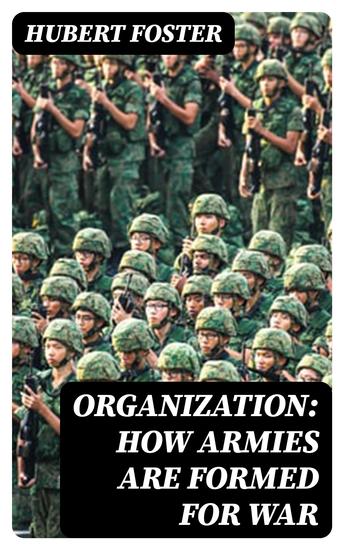
Organization: How Armies are Formed for War - cover

Organization: How Armies are Formed for War

Hubert Foster

Casa editrice: DigiCat

  • 0
  • 0
  • 0

Sinossi

In "Organization: How Armies are Formed for War," Hubert Foster meticulously explores the intricate structures and strategic frameworks that underpin military organization. Drawing upon a range of historical contexts, this scholarly work delves into the evolution of armies from ancient times to contemporary forces, employing a blend of narrative-driven analysis and theoretical frameworks. Foster's literary style is both authoritative and accessible, making complex military concepts digestible for a wide audience. The book situates itself within the broader discourse of military studies, addressing how logistical, sociopolitical, and technological factors complicate the formation and effectiveness of armed forces in various epochs. Hubert Foster, a distinguished military historian and strategist, harnesses his extensive background in military operations and organizational theory to craft this pivotal text. With years of experience in strategic planning and defense analysis, Foster's insights are informed by a profound understanding of the challenges of military organization. His previous works have examined the intersection of culture and warfare, making him uniquely positioned to tackle the topics in this book. I highly recommend "Organization: How Armies are Formed for War" to students, scholars, and military professionals alike. Foster's comprehensive research and engaging narrative illuminate crucial aspects of military structure, offering readers valuable perspectives on the mechanisms of power and conflict in the contemporary world.
Disponibile da: 21/11/2022.
Lunghezza di stampa: 150 pagine.
Altri libri che potrebbero interessarti

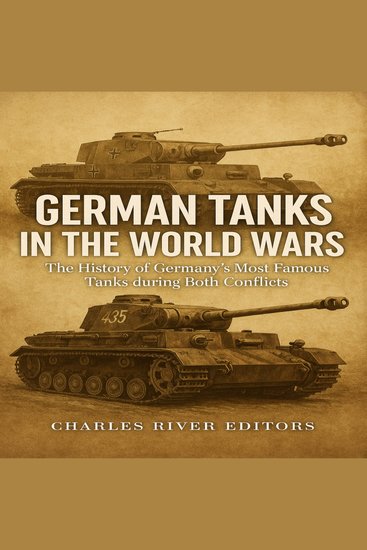
  • German Tanks in the World Wars: The History of Germany’s Most Famous Tanks during Both Conflicts - cover

    German Tanks in the World Wars:...

    Charles River Editors

    • 0
    • 0
    • 0
    One of the most important breakthroughs in military technology associated with World War I, and certainly the one that continues to capture the public imagination, was the introduction of a war machine that came to dominate the face of land battles throughout most of the 20th century: the tank. As a concept, it was not revolutionary; in fact, it harkened back to classical antiquity and to the Middle Ages, such as the covered battering rams and testudos which had made frequent appearances on ancient battlefields. In essence, it was designed to solve the age-old problem of protecting infantry from enemy projectiles while remaining mobile. 	Ironically, Germany, which would subsequently become famous for panzers and blitzkrieg warfare, was late in taking up the idea. During World War I, the Germans continued to rely on other techniques, and they produced less than two dozen models for battlefield use.  
    	The beginning of World War II found the major powers developing tanks to some extent, but lingering ideas from World War I affected the development of tanks during the Interwar period. As a result, aside from the blitzkrieg doctrine developed by the Nazis, tanks were still used in terms of infantry support, and there were few wars during this period to give strategists the chance to develop better uses for the new armored vehicles before World War II started. Commanders soon found that many of the tanks fielded in the campaigns of 1939-1941 lacked the necessary armor, guns, and designs. Inevitably, tactics evolved throughout the war. The Germans were early leaders in tank tactics, as their successes from Poland through the opening phases of Operation Barbarossa demonstrated. The main German tank tactic was the so-called Schwerpunkt (“center of gravity”), in which a concentration of tanks achieved a local superiority, broke through, and drove deep behind enemy lines.
    Mostra libro
  • The Art Of War - Complete Text of Sun Tzu's Classics Military Strategy History Ancient Chinese Military Strategist (Deluxe Collection Edition #1) - cover

    The Art Of War - Complete Text...

    Sun Tzu, Lionel Giles

    • 0
    • 0
    • 0
    The Art of War, translated by Lionel Giles, is a timeless classic of military strategy and philosophy, offering profound insights that extend far beyond the battlefield. Attributed to the ancient Chinese general Sun Tzu, this work distills centuries of warfare wisdom into thirteen concise chapters that explore tactics, leadership, discipline, and the psychology of conflict. Lionel Giles’ celebrated translation, first published in 1910, remains one of the most respected English versions, notable for its clarity, scholarly commentary, and elegant prose. Whether studied as a historical artifact, a guide to strategic thinking, or a manual for personal or professional development, The Art of War continues to influence leaders, thinkers, and readers around the world.
    Mostra libro
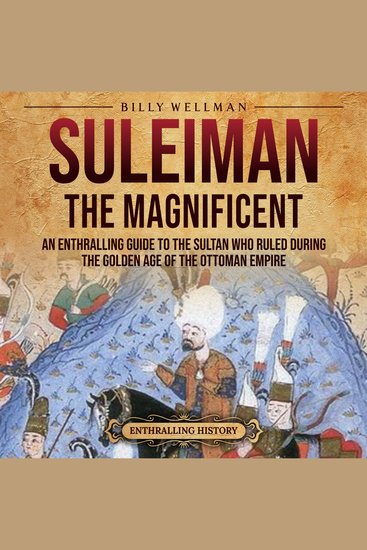
  • Suleiman the Magnificent: An Enthralling Guide to the Sultan Who Ruled during the Golden Age of the Ottoman Empire - cover

    Suleiman the Magnificent: An...

    Billy Wellman

    • 0
    • 0
    • 0
    Suleiman the Magnificent is regarded as the greatest ruler of the Ottoman Empire. 
    Suleiman the Magnificent certainly earned his name. He not only had a huge impact on the history of Turkey and the Middle East but also on the European politics of his day, allying himself with France against the Habsburgs of Spain. He is also known for his life-long love affair with Roxelana, a slave girl who became his wife and, some say, co-ruler of the empire. 
    The exploits of this legendary ruler come to life in this audiobook. Enjoy a thrilling story of a man who changed history and brought the Ottoman Empire to new heights. 
    In this audiobook, you will find out:Why Suleiman was a master goldsmith as well as a sultanHow he became a major patron of the arts, employing the famous architect Sinan and changing the skyline of IstanbulWhy he is known to the Turks as “Suleiman the Law Maker (Kanuni)”How close he came to taking Vienna—twice!—and why he failedHow the Ottoman Empire was run almost exclusively by former Christian slavesHow Suleiman’s faithful slave Ibrahim rose to be Grand Vizier—and how he fell from favorHow Suleiman was responsible for the execution of two of his sonsWhy Egypt was so important to the Ottoman EmpireAnd how Suleiman may have been ultimately responsible for the creation of the croissant! 
    Scroll up and click the “add to cart” button to begin learning about Suleiman today!
    Mostra libro
  • Still Hopeful - Lessons from a Lifetime of Activism - cover

    Still Hopeful - Lessons from a...

    Maude Barlow

    • 0
    • 0
    • 0
    “Canada’s best-known voice of dissent.” — CBC
    		 
    “It’s time we listened to the Maude Barlows of the world.” — CNN
    		 
    In this timely book, Barlow counters the prevailing atmosphere of pessimism that surrounds us and offers lessons of hope that she has learned from a lifetime of activism. She has been a linchpin in three major movements in her life: second-wave feminism, the battle against free trade and globalization, and the global fight for water justice. From each of these she draws her lessons of hope, emphasizing that effective activism is not really about the goal, rather it is about building a movement and finding like-minded people to carry the load with you. Barlow knows firsthand how hard fighting for change can be. But she also knows that change does happen and that hope is the essential ingredient.
    Mostra libro
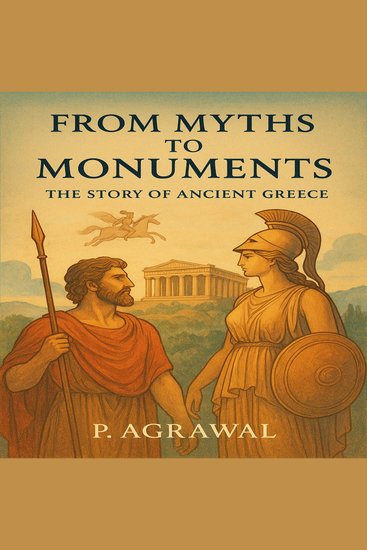
  • From Myths to Monuments - The Story of Ancient Greece - cover

    From Myths to Monuments - The...

    P Agrawal

    • 0
    • 0
    • 0
    This audiobook is narrated by an AI Voice.   
    From Myths to Monuments: The Story of Ancient Greece offers a captivating journey through the heart of one of the most influential civilizations in history. This book explores the profound legacy of Ancient Greece, tracing its origins from the mythic tales of gods and heroes to the lasting monuments of philosophy, art, and democracy that continue to shape our modern world. 
    In this richly illustrated and thoughtfully researched narrative, readers will discover the ancient myths that formed the bedrock of Greek culture, the rise of the city-state, and the flourishing of democracy in Athens. The book delves into the lives of everyday Greeks, the architectural wonders they created, and the philosophical inquiries that revolutionized Western thought. From the spectacular temples of Delphi and Olympia to the intellectual legacy of Socrates, Plato, and Aristotle, From Myths to Monuments illuminates how the Greeks' exploration of human nature, morality, and governance laid the groundwork for much of Western civilization. 
    This work also takes readers through the tumultuous wars and the sweeping conquests of Alexander the Great, culminating in the Hellenistic Age—a time of cross-cultural exchange that forever altered the course of history. Through vivid storytelling and in-depth analysis, this book reveals how Ancient Greece’s artistic, political, and intellectual achievements continue to influence contemporary thought, culture, and society. 
    From Myths to Monuments is an essential read for anyone interested in the enduring legacy of Ancient Greece and its indelible mark on the modern world.
    Mostra libro
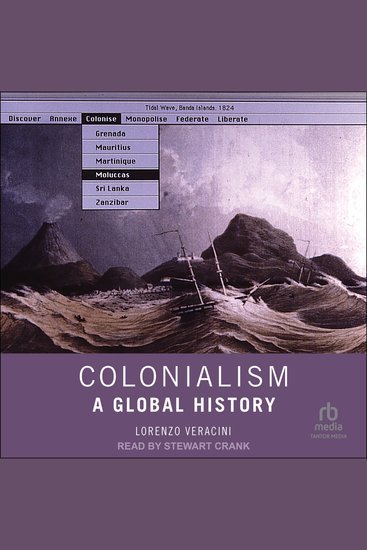
  • Colonialism - A Global History - cover

    Colonialism - A Global History

    Lorenzo Veracini

    • 0
    • 0
    • 0
    Colonialism: A Global History interprets colonialism as an unequal relationship characterized by displacement and domination and reveals the ways in which this relationship has been constitutive of global modernity. 


    The volume focuses on colonialism's dynamism, adaptability, and resilience. It appraises a number of successive global colonial 'waves', each constituting a specific form of colonial domination, each different from the previous ones, each affecting different locales at different times, and each characterized by a particular method of exploiting colonized populations and territories. Outlining a succession of distinct colonizing conjunctures, and the ways in which they 'washed over' what is today understood as the 'Global South', shaping and reshaping institutions and prompting diverse responses from colonized communities, Colonialism: A Global History also outlines the contemporary relevance of this unequal relation. Overall, it provides an original definition of colonialism and tells the global history of this mode of domination’s evolution and reach. 


    The broad chronological and geographical scope makes this volume the ideal resource for all students and scholars interested in globalization, colonialism, and empire.
    Mostra libro