Unisciti a noi in un viaggio nel mondo dei libri!
Aggiungi questo libro allo scaffale
Grey
Scrivi un nuovo commento Default profile 50px
Grey
Iscriviti per leggere l'intero libro o leggi le prime pagine gratuitamente!
All characters reduced
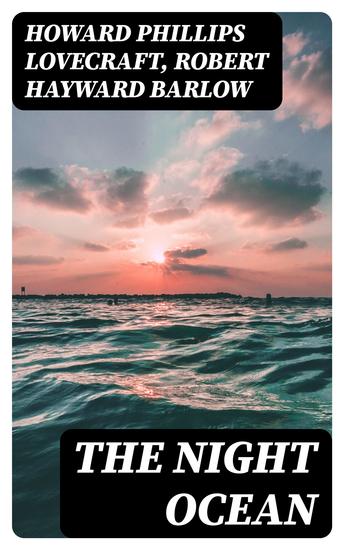
The Night Ocean - cover

The Night Ocean

Howard Phillips Lovecraft, Robert Hayward Barlow

Casa editrice: DigiCat

  • 0
  • 0
  • 0

Sinossi

The Night Ocean is a fascinating anthology that navigates the depths of cosmic horror and the chilling mysteries of the sea, echoing the grandeur and terror characteristic of both Lovecraftian and maritime literature. The collection spans an array of literary forms, including short stories, letters, and speculative essays, each immersing readers into a world where reality blurs with the surreal and the unimaginable lurks beneath the waves. The narratives, characterized by their brooding atmospheres and intricate mythos, are unified by themes of isolation, existential dread, and the sublime indifference of the universe. Highlighted pieces delve into ancient myths reimagined for a modern audience, inviting readers to ponder what lies beyond the veil of known reality. Curated by the formidable minds of Howard Phillips Lovecraft and his close literary confidant Robert Hayward Barlow, The Night Ocean brings together a compelling blend of early 20th-century speculative fiction. Lovecraft, often hailed as the architect of contemporary horror, alongside Barlow—whose keen interest in anthropology and folklore enriches the collection—craft narratives that are as insightful as they are unsettling. Drawing from the cultural and literary zeitgeist of their time, these authors weave narratives that echo with the philosophical concerns of modernity, making this collection a testament to their literary legacies and influence on speculative fiction. The Night Ocean offers readers an unparalleled journey through a mosaic of hauntings and wonder, masterfully bringing together multiple perspectives and approaches within a single volume. The anthology invites both seasoned enthusiasts and new explorers of the genre to immerse themselves in its pages, appreciating its educational value and the complex dialogues it initiates. By engaging with the works within, readers encounter a synthesis of terror and beauty, guided by voices that continue to resonate within the ever-expanding universe of speculative fiction, making it a must-read for those looking to deepen their understanding of horror's rich, multifaceted landscape.
Disponibile da: 13/06/2022.
Lunghezza di stampa: 24 pagine.
Altri libri che potrebbero interessarti

  • The Dunwich Horror — Part 1 of 10 - cover

    The Dunwich Horror — Part 1 of 10

    H. P. Lovecraft

    • 0
    • 0
    • 0
    Title: The Dunwich Horror — Part 1 of 10 
    Author: H. P. Lovecraft 
    Narrator: Jonathan Dunne 
    Original Publication: 1929 
    Public Domain: Yes 
    Series Placement: Timeless Terrors No. 62 — Part 1 of 10 
    Description: 
    Welcome to Timeless Terrors No. 62, featuring one of H. P. Lovecraft’s most infamous works of cosmic dread: The Dunwich Horror. 
    In the remote Massachusetts village of Dunwich, something is terribly wrong. The Whateley family — feared, shunned, whispered about — has welcomed a child into the world… but Wilbur Whateley is no ordinary boy. He grows unnaturally fast, speaks strange languages, and seeks forbidden knowledge from the Necronomicon itself. 
    Locked away in their decaying farmhouse, Wilbur and his occult-obsessed grandfather nurture a monstrous secret — a presence too large, too hungry, and too alien to remain hidden much longer. 
    As livestock vanish, the hills tremble, and the air fills with unholy sounds, the truth becomes undeniable: 
    an unseen horror is waiting to break free. 
    Narrated by Amazon-bestselling horror author Jonathan Dunne, this fresh performance resurrects a groundbreaking tale of ancient gods, corrupted bloodlines, and the terrifying thinness of reality. 
    This is Part 1 of a 10-part complete audiobook. Stay tuned — the nightmare has only begun.
    Mostra libro
  • Museum of the Omniverse: Dragon Exhibit - cover

    Museum of the Omniverse: Dragon...

    David Lee Summers, Patrick...

    • 0
    • 0
    • 0
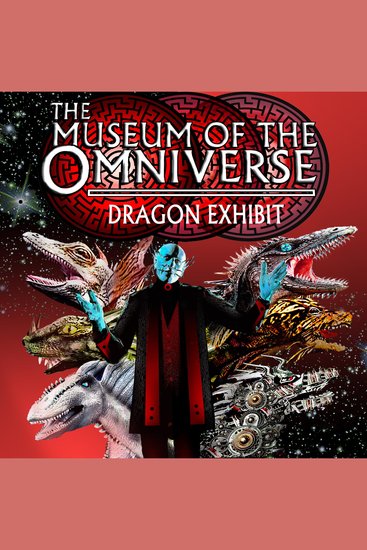
    Welcome to the Museum of the Omniverse where you can safely experience actual events from every possible part of time and space. The museum is having some technical difficulties, however. Space time rifts have been opening throughout the museum and everyone has disappeared except for Mirandum, an exhibit curator. When a small group of visitors appears, Mirandum gives them a tour of the museum's Dragon Exhibit while searching for clues to the museum's ultimate fate.
    This full cast cinematic audio experience features an original musical soundtrack by Nashville recording artist Jeff Moon and an immersive soundscape.
    Stories include:
    
    - Curator at the Rift's Edge by David Lee Summers (Space Pirates' Legacy series, Scarlet Order Vampires series): Mirandum searches for answers to the Museum's technical issues. Everything will be fine… probably.
    - Stone and Fire by Timothy Zahn (Star Wars Thrawn trilogy, Quadrail series): Dax the Dragon and the young human Katrina investigate the alleged crimes of a nearly unstoppable stone troll.
    - The Slayers by David Lee Summers: Rado, a young man looking to find his fortune, joins the dragon hunting airship The Slayer.
    - The Dragon's Keepers by David Lee Summers: Captain Tawnos, a former dragon hunter, and his crew accompany young conservationist Maelyn on a quest to save a dragon from nearby villagers.
    - The Banks of the City Thames by Patrick Thomas (Murphy's Lore series, Mystic Investigators series): A thief and a huge mechanical dragon rob the banks in the City Thames. Steam Table knights Lady Thistle, and her mentor Sir Bult, are called to stop them.
    - Heart of the Dragon by Carol Hightshoe (Chaos Reigns Fantasy series, Omega series): The great goddess of the dragons sends young warrior Andrinor on a quest to test his heart and learn his true dragon nature.
    - The Dragons by Jeremiah Lynch: A young woman who lives in a group home struggles to overcome her "delusional" dragon visions until she meets an old man in a park who asks if she can see dragons.
    Mostra libro
  • Aloysha the Pot - From their pens to your ears genius in every story - cover

    Aloysha the Pot - From their...

    Leo Tolstoy

    • 0
    • 0
    • 0
    Leo Tolstoy was born in 1828 in the Russian province of Tula to a wealthy noble family. As a child, he had private tutors but he showed little interest in any formal education. When he went to the University of Kazan in 1843 to study oriental languages and law, he left without completing his courses.  Life now was relaxed and idle but with some writing also taking place.  Gambling debts forced an abrupt change of path and he joined the army to fight in the Crimean War.  He was commended for his bravery and promoted but was appalled at the brutality and loss of life.  He recorded these and other earlier experiences in his diaries which formed the basis of several of his works. 
    In 1852 ‘Childhood’ was published to immediate success and was followed by ‘Boyhood’ and ‘Youth’. 
    His experience in the army and the horrors he witnessed resulted in ‘The Cossacks’ in 1862 and the trilogy ‘Sevastopol Tales’. After the war he travelled around Europe, visiting London and Paris and meeting such luminaries as Victor Hugo and Charles Darwin.  
    It was now that Tolstoy began his masterpiece, ‘War and Peace’. Published in 1869 it was an epic work that changed literature. He quickly followed this with ‘Anna Karenina’.  
    These successes made Tolstoy rich and helped him accomplish many of his dreams but also brought problems as he grappled with his faith and the lot of the oppressed poor. These revolutionary views became so popular that the authorities now kept him under surveillance.  
    He led a life of asceticism and vegetarianism and put his socialist ideals into practice by establishing numerous schools for the poor and food programmes. He also believed in giving away his wealth, which caused much discord with his wife.  
    His writing continued to bring forth classics such as ‘The Death of Ivan Ilyich’ and many brilliant and incisive short stories such as ‘How Much Land Does A Man Need’.  
    In 1901 Tolstoy was excommunicated from the Church and controversially deselected for the Nobel Prize for Literature. 
    Whilst undertaking a pilgrimage by train in October 1910 with his daughter Aleksandra he caught pneumonia in the nearby town of Astapovo.  Leo Tolstoy died on November 9th, 1910, he was 82.
    Mostra libro
  • The Marquise of O and Other Works - The Earthquake in Chile The Foundling and Michael Kohlhaas - cover

    The Marquise of O and Other...

    Heinrich von Kleist

    • 0
    • 0
    • 0
    A respectable young widow and mother of two children, the Marquise of O— finds herself inexplicably pregnant after being rescued by a Russian officer from the attentions of his soldiers during the storming of her town’s citadel. Convinced of her own innocence and wishing to vindicate her own integrity, the Marquise places an advert in the newspapers, appealing for the father to come forward and promising to marry him. But will this be enough to quench her family’s doubts and the derision of the society around her? Will this help her solve the mystery and urge the perpetrator to acknowledge paternity of the child? 
     
    One of the great classics of German literature, Heinrich von Kleist’s sexually charged novella is as edgy today as it was when it was first published in 1808, and is accompanied here by two other celebrated stories, ‘The Earthquake in Chile’ and ‘The Foundling’, showcasing the range of their author’s narrative abilities and his taste for the ambiguous and the paradoxical.
    Mostra libro
  • Gooseberries - From their pens to your ears genius in every story - cover

    Gooseberries - From their pens...

    Anton Chekhov

    • 0
    • 0
    • 0
    Anton Pavlovich Chekhov was born on 29th January 1860 in Taganrog, on the south coast of Russia.  
    His family life was difficult; his father was strict and over-bearing but his mother was a passionate story-teller, a subject Chekhov warmed to. As he later said; ‘our talents we got from our father, but our soul from our mother’.  
    At school Chekhov was distinctly average. At 16 his father mis-managed his finances and was declared bankrupt. His family fled to Moscow. Chekhov remained and eked out a living by various means, including writing and selling short sketches to newspapers, to finish his schooling. That completed and with a scholarship to Moscow University obtained he rejoined his family. 
    He was able to help support them by selling satirical sketches and vignettes of Russian lifestyles and gradually obtained further commissions. In 1884, he qualified as a physician and, although it earned him little, he often treated the poor for free, he was fond of saying ‘Medicine is my lawful wife, and literature is my mistress.’ 
    His own health was now an issue as he began to cough up blood, a symptom of tuberculosis.  Despite this his writing success enabled him to move the family into more comfortable accommodation.  
    Chekhov wrote over 500 short stories which included many, many classics including ‘The Kiss’ and ‘The Lady with a Dog’.  His collection ‘At Dusk’ won him the coveted Pushkin Prize when was only 26.  
    He was also a major playwright beginning with the huge success of ‘Ivanov’ in 1887.   
    In 1892 Chekhov bought a country estate north of Moscow. Here his medical skills and money helped the peasants tackle outbreaks of cholera and bouts of famine. He also built three schools, a fire station and a clinic.  It left him with less time for writing but the interactions with real people gained him detailed knowledge about the peasantry and their living conditions for his stories.  
    His most famous work, ‘The Seagull’ was received disastrously at its premiere in St Petersburg. It was later restaged in Moscow to highlight its psychological aspects and was a huge success. It led to ‘Uncle Vanya’, ‘The Three Sisters’ and ‘The Cherry Orchard’.  
    Chekhov suffered a major lung hemorrhage in 1897 while visiting Moscow. A formal diagnosis confirmed tuberculosis and the doctors ordered changes to his lifestyle.  
    Despite a dread of weddings the elusive literary bachelor quietly married the actress Olga Knipper, whom he had met at rehearsals for ‘The Seagull’, on 25th May 1901. 
    By May 1904 with his tuberculosis worsening and death imminent he set off for the German town of Badenweiler writing cheerful, witty letters to his family and assuring them his health was improving.  
    On 15th July 1904 Anton Chekhov died at Badenweiler.  He was 44.
    Mostra libro
  • Skin Hunger - A Good Women Story - cover

    Skin Hunger - A Good Women Story

    Halle Hill

    • 0
    • 0
    • 0
    A newlywed Christian couple is “trying” to have a baby when the wife books a solo vacation. In a cabin far from home, she contemplates if she wants a baby with her husband, considering the way his white family and friends treat her. When she encounters an attractive stranger, she lets him take her out for a drink.Skin Hunger is a short story from Halle Hill’s Good Women, which delves into the lives of twelve Black women across the Appalachian South. Darkly funny and deeply human, Good Women observes how place, blood ties, generational trauma, obsession, and boundaries―or lack thereof―influence how we navigate our small worlds, and how those worlds so often collide in ways we don’t expect.
    Mostra libro