Unisciti a noi in un viaggio nel mondo dei libri!
Aggiungi questo libro allo scaffale
Grey
Scrivi un nuovo commento Default profile 50px
Grey
Iscriviti per leggere l'intero libro o leggi le prime pagine gratuitamente!
All characters reduced
The Satires Epistles and Art of Poetry of Horace - cover

The Satires Epistles and Art of Poetry of Horace

Horace

Traduttore John Conington

Casa editrice: DigiCat

  • 0
  • 0
  • 0

Sinossi

In 'The Satires, Epistles, and Art of Poetry,' Horace emerges as a masterful voice of the Augustan age, blending humor with philosophical insight. This compilation showcases his sharp wit and keen observations of Roman society, particularly through the satirical lens that critiques human folly and moral failings. The elegance of his Latin prose and verse is interlaced with a refined, didactic tone, inviting readers into a world where personal reflection meets societal critique. Horace's literary style is characterized by a seamless integration of lyrical beauty with ethical considerations, highlighting the tensions between individual desires and communal expectations in a rapidly changing Rome. Born in 65 BCE, Horace was not just a poet but a keen observer of the socio-political climate of his time, shaped by the aftermath of civil war and the consolidation of imperial power under Augustus. His personal experiences, from his freedman status to his education in the culturally vibrant cities of Athens and Rome, deeply influenced his poetic voice. Through his works, Horace sought to communicate the essence of self-improvement, the value of moderation, and the art of living—tenets that reflect both personal and philosophical journeys. Readers are invited to delve into the profound layers of irony, wisdom, and charm embedded in Horace's writings. This anthology not only provides a glimpse into the complexities of human nature and societal norms but also serves as a timeless guide on governance of self and an appreciation of art. Ideal for scholars and casual readers alike, Horace's reflections remain strikingly relevant, making this collection an essential addition to any literary canon.
Disponibile da: 10/11/2023.
Lunghezza di stampa: 209 pagine.

Altri libri che potrebbero interessarti

  • Little Bunny's Book of Friends - cover

    Little Bunny's Book of Friends

    Steve Smallman

    • 0
    • 1
    • 0
    When it feels like your ears are beginning to flop and all of the bounce has gone out of your hop, when everything’s driving you right round the bend, you know what you need? What you need is…a friend.
    
    Little Bunny returns with a host of friends big and small. Follow Little Bunny as he discovers how important friends can be, how they can help you tackle some of the more complex emotions, as well as how to be a good friend to others.
    Mostra libro
  • Like This - More Poems of Rumi - cover

    Like This - More Poems of Rumi

    Rumi

    • 0
    • 0
    • 0
    Jalaluddin Rumi, a spiritual mystic of the Islamic world, is recognized as one of the most influential poets in history. His words are charged with an unequalled blend of literary genius and spiritual wisdom. No matter how often we listen to Rumi, each time is always the first time. Like This is a compilation of more than twenty of the beloved Persian poet's most beautiful verses. Narrator Coleman Barks' warm and sensitive reading combines with the world-renowned musicianship of Hamza El Din and Steve Coughlin to create an enthralling listening experience.
    Mostra libro
  • A Whistling of Birds - cover

    A Whistling of Birds

    Isobel Dixon

    • 0
    • 0
    • 0
    Elizabeth Bishop's hawkweed, John Berryman's hummingbirds, Ted Hughes's burnt fox – the birds, beasts and flowers of Isobel Dixon's new collection are at times kin to D.H. Lawrence, whose essay 'Whistling of Birds' lends this book its name, though each poem here is its own vivid testament to the natural world, and our often troubled and troubling place in it. Lyrical, vigorous, inventive, A Whistling of Birds is at times in conversation with Lawrence's iconic collection, Birds, Beasts and Flowers, but also ranges widely through the worlds of other writers and makers – from the Venerable Bede to Emily Dickinson, Georgia O'Keeffe to Glenn Gould, and a wealth of other connections closely examined and delicately drawn. With its resonant elegies and notes of celebration, this is a collection that flexes, hums and brims with energy, yet surely draws you in to its quiet, reflective heart.
    Mostra libro
  • The War Poems of Siegfried Sassoon - cover

    The War Poems of Siegfried Sassoon

    Siegfried Sassoon

    • 0
    • 0
    • 0
    Unlike his more famous fellow war poets, Wilfred Owen and Rupert Brooke, Siegfried Sassoon survived the First World War.   In this collection of 64 poems, first published in 1920,  Sassoon portrays the dehumanizing horror of modern warfare with its staggering death toll, while also satiring the jingoistic fervour of politicians and armchair strategists.   
    Sassoon's own war service fell into two distinct periods.  The first was marked by a number of heroic actions on the battlefield which earned him the Military Cross.  However, after a period of convalescence in 1917, Sasson became a pacifist and refused to return to active duty.  This change of attitude was diagnosed as a psychological disorder and he was posted to Ireland where he trained new recruits.  By the end of the war he had been promoted to captain. For the rest of his long life he remained staunchly anti-war. 
    Production copyright 2024 Voices of Today
    Mostra libro
  • Patient History - cover

    Patient History

    Tricia Tan

    • 0
    • 0
    • 0
    “Patient history” is a medical term describing the method by which doctors gather information about a patient’s past and present conditions. Yet, how much of a patient’s history do doctors really know, and how much agency do we have in determining our own histories? 
    Patient History is a whimsical exploration of the typically grim world of sickness and death. Woven from pop culture, fairytales, and East-meets-West childhood memories of growing up in Singapore, these fantasies are cotton candy sweet—osteoporosis becomes Singapore’s signature Chili Crab, a fistula transfigures into fairy, and organs are commemorated as a theme park.
    Mostra libro
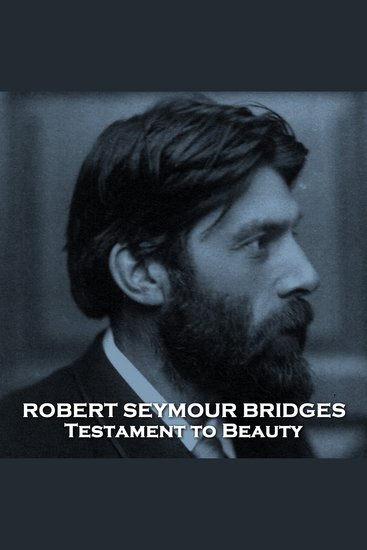
  • Testament to Beauty - A former Poet Laureate demonstrates his poetic talents in this tender and beautiful verse - cover

    Testament to Beauty - A former...

    Robert Seymour Bridges

    • 0
    • 0
    • 0
    Robert Seymour Bridges, OM was born on 23rd October 1844 at Walmer in Kent where he spent his early childhood in a house overlooking the anchoring ground of the British fleet.  
    His father died aged only 47 in 1853. A year later his mother remarried and the family relocated to Rochdale, where his stepfather was the vicar.  
    In 1854 Bridges was sent to Eton College and attended until 1863.  After Eton he went to Corpus Christi College at Oxford. There he became good friends with Gerard Manley Hopkins and would later compile an edition of his poems that is now considered a major contribution to English literature. 
    He graduated from Oxford, in 1867, with a second-class degree in literae humaniores.  Initially he planned to join the Church of England and travelled to the Middle East to broaden his religious horizons.  However, he soon decided that life as a physician would be a better path and, after 8 months studying German (that being the language of many scientific papers at the time) he began his study of medicine at St. Bartholomew's Hospital in 1869.  His long-term ambition was that by the age of forty he could retire from medicine to devote himself to writing. 
    Unfortunately Bridges failed his final medical examinations in 1873 and, as unable to immediately retake the papers, spent six months in Italy learning Italian as well as immersing himself in its art. In July 1874 he went to Dublin to continue his medical studies. Re-examined in December he passed and became a house physician at St Bartholomew's Hospital. It was whilst here that he engaged in a series of highly critical remarks about the Victorian medical establishment. One such was his claim that whilst working as a young doctor he saw a staggering 30,940 patients in one year. 
    A bout of severe pneumonia and lung disease forced his retirement from the medical profession in 1882 and so, slightly ahead of schedule, he began his literary career in earnest.  He already been writing for several years and had published his first poetry collection in 1873.  
    After his illness and a trip to Italy, Bridges moved, with his mother, to Yattendon in Berkshire.  It was during this time, from 1882 to 1904, that Bridges wrote most of his best-known lyrics as well as eight plays and two masques, all in verse.  
    It was also here, in 1884, that he married Monica Waterhouse. They would go on to have three children and spend the rest of their lives in rural seclusion, in an idyllic marriage, first at Yattendon, then at Boars Hill, Oxford. 
    Bridges made an important contribution to hymnody with the publication in 1899 of his Yattendon Hymnal. This collection of hymns became a bridge between the Victorian hymnody of the late 19th century and the modern hymnody of the early 20th century. He was also a chorister at Yattendon church for 18 years. 
    In 1902 Monica and his daughter Margaret became seriously ill with tuberculosis, and a move from Yattendon to a healthier climate was in order. After several temporary homes they moved abroad to spend a year in Switzerland before returning to settle again in England at Chilswell House, which Bridges had designed, and built on Boar's Hill overlooking Oxford University.   
    His greatest achievement though was still some years ahead of him.  The office of Poet Laureate was held by Alfred Austin but with his death it was offered first to Rudyard Kipling, who refused it, and then to Bridges. He was appointed Poet Laureate in 1913 by George V, the only medical graduate to have ever held the office. Bridges, at this time, was neither highly regarded nor well known but a safe pair of hands in a World rapidly being overshadowed by the storms about to erupt over Europe and the First World War. 
    The events of this War, including the wounding of his son, Edward, had a sobering effect on Bridges' poetry. His work became fiercely patriotic. In 1915 edited a volume of prose and poetry, The Spirit of Man, intended to appeal to readers living in war time
    Mostra libro