Junte-se a nós em uma viagem ao mundo dos livros!
Adicionar este livro à prateleira
Grey
Deixe um novo comentário Default profile 50px
Grey
Assine para ler o livro completo ou leia as primeiras páginas de graça!
All characters reduced
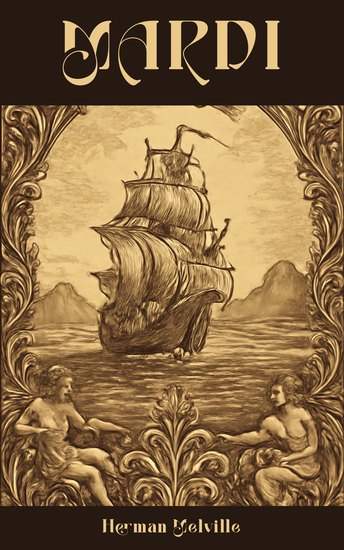
Mardi - cover
LER

Mardi

Herman Melville

Editora: CLXBX

  • 0
  • 0
  • 0

Sinopse

Mardi is Herman Melville's bold and imaginative novel that blends adventure, romance, philosophy, and satire into a vast allegorical journey across the Pacific. One of Melville's most ambitious and unconventional works, the novel moves beyond realism into a dreamlike exploration of ideas, identity, and human longing.

The story begins with a dramatic escape from a whaling ship, as the narrator and his companion flee into the open sea. Their flight leads them to the mysterious archipelago of Mardi, a fantastical realm composed of countless islands, each embodying distinct cultures, beliefs, and political systems. As the narrator journeys from island to island, the narrative transforms into a sweeping meditation on love, truth, power, and the nature of civilization.

At the emotional center of the novel is the narrator's obsessive search for Yillah, a beautiful and elusive woman who becomes a symbol of idealized love and spiritual longing. This quest propels him deeper into Mardi's surreal landscapes, where poetic reflection, philosophical debate, and sharp social criticism intertwine.

Melville uses the imaginative freedom of the setting to satirize religion, monarchy, democracy, and intellectual dogma, while also probing the limits of reason and the burden of human desire. His lush, experimental prose challenges conventional storytelling, inviting readers into a world where meaning is fluid and interpretation essential.

Visionary, demanding, and deeply original, Mardi stands as a key work in Melville's development as a writer. It is a novel for adventurous readers—an expansive allegory that rewards patience with its intellectual depth and poetic ambition.
Disponível desde: 07/02/2026.
Comprimento de impressão: 733 páginas.

Outros livros que poderiam interessá-lo

  • The Namesake - From their pens to your ears genius in every story - cover

    The Namesake - From their pens...

    Willa Cather

    • 0
    • 0
    • 0
    Willa Sibert Cather had Welsh ancestry but like her parents Charles and Mary, was born in Virginia, on 7th December 1873.  Despite strong roots in the community, Willa was 9, when the family moved to Nebraska, to work the rich soil and avoid TB of which there were numerous outbreaks in Virginia.   
    The vastness and drama of the Nebraska prairie and its’ extreme weather conditions as well as the many diverse cultures of the local families proved to be a major influence on her and can be evidenced in much of her later writing.   
    Her first writing was for the local journal when she was at the University of Nebraska and later became the managing editor of the student newspaper.    
    In 1896 she obtained work for a woman’s magazine in Pittsburgh and soon after became a regular contributor to the Pittsburgh Leader and wrote poetry and short stories for the Library, another local publication.   
    Her first collection of short stories, ‘The Troll Garden’, was published in 1905 and contains several of her most famous including ‘A Wagner Matinee’ and ‘Paul's Case.’ As a writer Cather was now taking immense strides forward.   
    Between 1913 and 1918 Cather wrote her Prairie Trilogy: ‘O Pioneers!’, ‘The Song of the Lark’, and ‘My Ántonia’ and in 1922 the Pulitizer Prize was hers for her novel ‘One of Ours’ set during WWI.  
    Acknowledged as one of America's greatest writers’ further honours flowed. In 1943 she was elected a Fellow of the American Academy of Arts and Sciences. The following year Cather received the gold medal for fiction from the National Institute of Arts and Letters.  
    A determinedly private person, Cather destroyed many old drafts, personal papers, and letters. Her will would also restrict the ability of scholars to quote from personal papers that remained. 
    On 24th April 1947, Willa Siebert Cather died of a cerebral haemorrhage at her Manhattan home. She was 73.
    Ver livro
  • The Haunted Baronet - cover

    The Haunted Baronet

    Joseph Sheridan Le Fanu

    • 0
    • 0
    • 0
    "The lake does not give up its dead easily, and the House of Mardykes has a long memory."
    
    Sir Bale Mardykes is a man of iron will and a cold heart, living in the ancestral home of Mardykes Hall near the secluded village of Golden Friars. He believes he is the master of his own fate, but he is haunted by a centuries-old prophecy of doom. When he cruelly causes the death of his secretary and distant relative, Philip Feltram, Sir Bale believes he has cleared a nuisance from his path. But when Feltram returns—changed, silent, and carrying the chill of the lake—Sir Bale realizes that the dead have a way of reclaiming what is theirs. It is a slow-burn masterpiece of Gothic tension, where the environment itself seems to conspire against the living.
    
    The Environment as Antagonist: Le Fanu utilizes the "Atmospheric Gothic" to its fullest potential here. The swirling mists of the Lake District, the echoes in the mountain passes, and the bottomless depths of the lake serve as metaphors for Sir Bale's mounting paranoia. The house and the land are not just settings; they are active participants in the baronet's downfall.
    
    A Study in Psychological Ruin: Unlike many contemporary ghost stories, the horror in The Haunted Baronet is deeply internal. We watch Sir Bale's skepticism slowly erode as the supernatural elements become undeniable. The figure of the "Returned" Feltram is one of Le Fanu's most effective creations—a ghost that doesn't just haunt, but inhabits the social space of the living.
    
    The Weight of Ancestry: Le Fanu explores the idea that we are never truly free from the actions of our forefathers. Sir Bale is a victim of his own bloodline as much as his own choices. The novella builds to a tragic and inevitable climax that proves that some debts can only be paid in lifeblood.
    
    Beware the calm waters of Golden Friars. Purchase "The Haunted Baronet" today.
    Ver livro
  • Juvenilia – Volume I - cover

    Juvenilia – Volume I

    Jane Austen

    • 0
    • 0
    • 0
    Before she wrote her masterpieces, she wrote these—wild, witty stories bursting with youthful brilliance.
    In Juvenilia – Volume I, a teenage Jane Austen unleashes a world of outrageous heroines, absurd romances, sudden scandals, and wicked humor. These early sketches—bold, mischievous, and delightfully unpolished—reveal the sharp mind and sparkling wit that would later define her legendary novels. Every page offers a glimpse of Austen discovering her voice and having tremendous fun doing it.
    
    Celebrated as "a rare window into the making of a literary genius," this collection charms readers with its energy, parody, and fearless storytelling.
    
    If you love Austen's humor, clever characters, and sharp observations, these early works will make you smile, surprise you, and deepen your appreciation for her craft.
    
    Open the book—and meet Jane Austen before the world knew her name.
    Ver livro
  • The Phantom of the Opera - cover

    The Phantom of the Opera

    Gaston Leroux

    • 0
    • 0
    • 0
    A baffling series of incidents at the majestic Paris Opera sparks frightening rumors about a mysterious opera ghost. Performers are ill-at-ease when they sit alone in their dressing rooms, alleging to have seen the enigma in evening clothes moving about in the shadows. Then a young and beautiful prima donna is visited by a masked "Angel of Music" who teaches her to sing and jealously demands her devotion— but with a price. With an increasing pattern of fear and violence, the phantom of the opera begins to strike, but always with a beautiful young performer at the center of his deadly desires. Is he a man, an angel, or a ghost? And what does his mask conceal?
    Ver livro
  • Morella - cover

    Morella

    Edgar Allan Poe

    • 0
    • 0
    • 0
    An unnamed narrator marries Morella, a woman who delves into mysticism. As a result of her experimentations her soul can never die, but her physical form continues to deteriorate. She spends her time in bed and teaches her husband the black arts. Realizing her curse, her husband, the narrator, becomes frightened and wishes for his wife's death and eternal peace. She dies in childbirth but her soul passes into the new baby. As the daughter gets older the narrator notices she bears an uncanny resemblance to her mother, but he refuses to give the child a name. By her tenth birthday the resemblance to Morella is frightening. Her father decides to have her baptized to release any evil from her, but this event brings the mother's soul back into her daughter. At the ceremony, the priest asks the daughter's name, to which the narrator replies, "Morella." Immediately, the daughter replies, "I am here!" and dies. The narrator himself bears her body to the tomb and finds no trace of the first Morella where he lays the second.
    Ver livro
  • Wireless - A rare Kipling venture into sci fi about a technological leap - cover

    Wireless - A rare Kipling...

    Rudyard Kipling

    • 0
    • 0
    • 0
    Joseph Rudyard Kipling was born in Mumbai, India on 30th December 1865.   
     
    As was the custom in those days, he and his sister were sent back to England when he was 5.  The ill-treatment and cruelty by the Portsmouth couple they boarded with Kipling said contributed to the onset of his literary life.  
     
    At 16 he returned to India to work on a local paper where he was soon contributing and writing.  It also exposed him to the issues of identity and national allegiance which pervade much of his work.  
     
    In 1886, his ‘Departmental Ditties’, collection of verse appeared in print followed by 39 short stories for his newspaper over only 8 months.  These were then published as ‘Plain Tales from the Hills’, shortly after his 22nd birthday.  
     
    He continued his prolific pace of writing before being dismissed in a dispute and, taking his pay-off and the profits from the sale of some publishing rights, decided to return to London, travelling via Rangoon, Hong Kong, Japan and the United States, all the while writing articles, and arriving at Liverpool in October 1889. 
     
    Over the next two years he saw further works published as books and in magazines, as well as a nervous breakdown for which he was prescribed a sea voyage, to South Africa, Australia, New Zealand and India.  
     
    Happier times came with marriage to Caroline Starr Balestier in January 1892.  The honeymoon began in Vermont and ended in Yokahama where they heard their bank had failed.  They returned to Vermont and settled.  Caroline was now pregnant and he was planning the ‘Jungle Books’.  
     
    A failed arbitration between the US and England resulted in an argument between Caroline’s brother and Kipling, and then his arrest.  At the hearing he was mortified by the exposure of his private life and after settling the matter they returned to England and life in Torquay.  ‘Kim’ was published in 1902, and ‘Just So Stories for Little Children’, a year later.  
     
    In 1907 he was awarded the Nobel Prize for Literature with the citation “in consideration of the power of observation, originality of imagination, virility of ideas and remarkable talent for narration which characterise the creations of this world-famous author”.   
     
    When the Great War erupted, he scorned those who refused conscription.  His son enlisted and was killed at the Battle of Loos in September 1915, at 18, an exploding shell had ripped his face apart.  This death inspired Kipling’s writing thereafter, but the tragedy broke his life and by 1930 his prolific pen had almost ceased. 
     
    Rudyard Kipling died on 18th January 1936 from a perforated duodenal ulcer.  He was 70.  His ashes are buried at Poets’ Corner in Westminster Abbey.
    Ver livro