Unisciti a noi in un viaggio nel mondo dei libri!
Aggiungi questo libro allo scaffale
Grey
Scrivi un nuovo commento Default profile 50px
Grey
Iscriviti per leggere l'intero libro o leggi le prime pagine gratuitamente!
All characters reduced
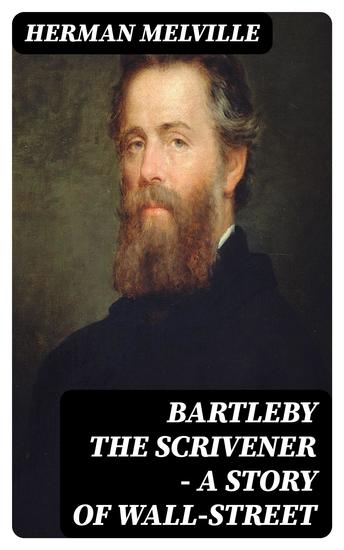
Bartleby the Scrivener — A Story of Wall-Street - cover

Bartleby the Scrivener — A Story of Wall-Street

Herman Melville

Casa editrice: DigiCat

  • 0
  • 0
  • 0

Sinossi

In "Bartleby the Scrivener: A Story of Wall-Street," Herman Melville crafts a profound narrative that explores themes of isolation, passive resistance, and the dehumanizing effects of modern capitalism. Through the character of Bartleby, a scrivener whose refrain of "I would prefer not to" encapsulates his profound disengagement from societal expectations, Melville employs a minimalist yet poignant style that reflects both the starkness of Wall Street and the complexity of human nature. The story's setting against the backdrop of 19th-century New York serves as a critical commentary on the economic ambitions and moral dissonance of the time, echoing the existential concerns that arise in a rapidly industrializing world. Herman Melville, an author underscored by the struggles with his own identity and societal roles, draws from his experiences and observations in an era marked by economic upheaval. Despite initial obscurity, Melville's later recognition as a key figure in American literature was bolstered by his exploration of complex themes in works like "Moby-Dick" and "Billy Budd." His engagement with the contradictions of human ambition and individualism is evident in Bartleby's enigmatic presence, reflecting Melville's own ambivalence toward capitalism and modernity. "Bartleby the Scrivener" is highly recommended for readers interested in existential literature, economic critique, and the profound implications of passive resistance. This text remains a seminal work in understanding the human condition, raising questions about free will, societal expectations, and the individual's struggle within the mechanisms of commerce. Melville's rich prose and intricate character exploration invite readers to reflect deeply on their own existence and the nature of work in a modern society.
Disponibile da: 29/05/2022.
Lunghezza di stampa: 36 pagine.

Altri libri che potrebbero interessarti

  • War and Peace (Book Eight: 1811-12) - cover

    War and Peace (Book Eight: 1811-12)

    Leo Tolstoy

    • 0
    • 0
    • 0
    War and Peace is a literary work mixed with chapters on history and philosophy by the Russian author Leo Tolstoy. It was first published serially, then published in its entirety in 1869. It is regarded as one of Tolstoy's finest literary achievements and remains an internationally praised classic of world literature.
    Book 8: 1811-12: After Prince Andrew’s engagement to Natásha, Pierre without any apparent cause suddenly felt it impossible to go on living as before. Firmly convinced as he was of the truths revealed to him by his benefactor, and happy as he had been in perfecting his inner man, to which he had devoted himself with such ardor—all the zest of such a life vanished after the engagement of Andrew and Natásha and the death of Joseph Alexéevich.
    Mostra libro
  • Arrowsmith - cover

    Arrowsmith

    Sinclair Lewis

    • 0
    • 0
    • 0
    Arrowsmith is a novel by American author Sinclair Lewis, first published in 1925. It won the 1926 Pulitzer Prize (which Lewis declined). Lewis was greatly assisted in its preparation by science writer Paul de Kruif, who received 25% of the royalties on sales, although Lewis was listed as the sole author.
    Arrowsmith is an early major novel dealing with the culture of science. It was written in the period after the reforms of medical education flowing from the Flexner Report on Medical Education in the United States and Canada: A Report to the Carnegie Foundation for the Advancement of Teaching, 1910, which had called on medical schools in the United States to adhere to mainstream science in their teaching and research.
    The book was adapted by Hollywood as Arrowsmith in 1931, featuring Ronald Colman and Helen Hayes. It was nominated for four Academy Awards, including Best Adapted Screenplay.
    Mostra libro
  • Monument of French Folly A (Unabridged) - cover

    Monument of French Folly A...

    Charles Dickens

    • 0
    • 0
    • 0
    Charles Dickens was a writer and social critic who created some of the world's best-known fictional characters and is regarded as the greatest novelist of the Victorian era. His works enjoyed unprecedented popularity during his lifetime, and by the twentieth century critics and scholars had recognised him as a literary genius. His novels and short stories enjoy lasting popularity.
    A MONUMENT OF FRENCH FOLLY: It was profoundly observed by a witty member of the Court of Common Council, in Council assembled in the City of London, in the year of our Lord one thousand eight hundred and fifty, that the French are a frog-eating people, who wear wooden shoes.
    Mostra libro
  • Tess of the D'Urbevilles - cover

    Tess of the D'Urbevilles

    Thomas Hardy

    • 0
    • 0
    • 0
    When Tess Durbeyfield is driven by family poverty to claim kinship with the wealthy D'Urbervilles and seek a portion of their family fortune, meeting her 'cousin' Alec proves to be her downfall.
    
    A very different man, Angel Clare, seems to offer her love and salvation, but Tess must choose whether to reveal her past or remain silent in the hope of a peaceful future.
    Mostra libro
  • If I Forget Thee Oh Earth… - cover

    If I Forget Thee Oh Earth…

    Arthur C. Clarke

    • 0
    • 0
    • 0
    "If I Forget Thee, O Earth" is a post-apocalyptic fiction short story by English writer Arthur C. Clarke and first published in 1951 in the magazine Future SF It was subsequently published as part of a short story collection in Expedition to Earth (1953).
    Mostra libro
  • Fading Voices - From their pens to your ears genius in every story - cover

    Fading Voices - From their pens...

    Boleslaw Prus

    • 0
    • 0
    • 0
    Aleksander Głowacki who wrote under the nom de plume Boleslaw Prus was born on 20th August 1847 at Hrubieszów in the Kingdom of Poland, at that time, controlled by the Russian Empire. 
    At three his mother died and then at nine his father.  Female relatives helped raise him but at 15 he joined the Polish uprising against the might of Imperial Russia.  Wounded on the battlefield, arrested and imprisoned, he was later released into the care of a relative and resumed secondary school and then Warsaw University but poverty forced him to leave after two years.  At some point he developed agoraphobia which often caused problems. 
    In 1869, he enrolled in the Forestry Department at Puławy but was soon sacked and so he began a system of self-education that led to work as a newspaper columnist on a wide-ranging series of topics that eventually became the ‘Weekly Chronicles’ and spanned 40 years. 
    With his finances now stabilized he married and then adopted his late brother-in-law’s son.  
    It seems he had doubts as to the scale of his talents and early on adopted the name ‘Boleslaw Prus’ for both his journalistic and literary offerings. 
    His work as a short-story writer met with much acclaim. He wrote several dozen of them, originally published in newspapers and ranging in length from micro-story to novella. His keen observation of everyday life and sense of humor are evident in them.  
    During his career he also wrote novels. After ‘Pharoah’, in 1895, he embarked on a four-month journey taking in Berlin, Dresden, Nuremberg, Rapperswil in Switzerland, where he stayed for two months, and his final destination, Paris.  Here his agoraphobia was so bad he couldn’t cross the Seine.  
    However, his writing continued and in 1911 his novel ‘Changes’, though uncompleted, began to be serialised.  It was never finished. 
    Boleslaw Prus died on 19th May 1912, at his Warsaw apartment.  He was 64.  A National Hero, thousands attended both his funeral service and interment.
    Mostra libro