¡Acompáñanos a viajar por el mundo de los libros!
Añadir este libro a la estantería
Grey
Escribe un nuevo comentario Default profile 50px
Grey
Suscríbete para leer el libro completo o lee las primeras páginas gratis.
All characters reduced
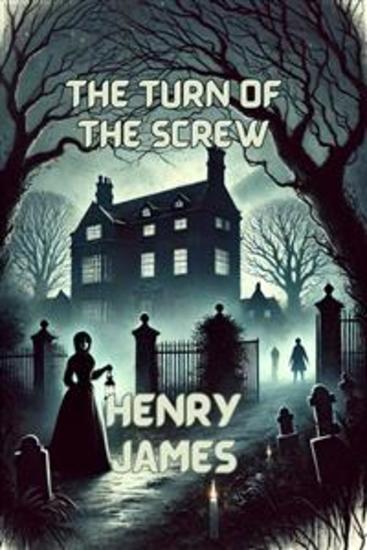
The Turn Of The Screw(Illustrated) - cover

The Turn Of The Screw(Illustrated)

Henry James

Editorial: Swish

  • 0
  • 0
  • 0

Sinopsis

Illustrated Edition with 20 Unique Illustrations
	Includes a Detailed Summary
	Comprehensive Characters List
	Author Biography of Henry James

The Turn of the Screw by Henry James is a gripping tale of psychological suspense that blurs the lines between the supernatural and the mind's darker corners. Set in a sprawling, isolated estate, the story follows a young governess tasked with caring for two seemingly innocent children. But soon, she begins to encounter strange apparitions—ghostly figures who may have sinister designs on the children under her care.
As the governess battles with growing dread and suspicion, readers are left questioning whether the spirits are real or mere figments of her unraveling sanity. James masterfully weaves an atmosphere of creeping fear and ambiguity, leaving readers haunted long after the final page.
This special illustrated edition enhances the eerie experience with 20 vivid illustrations that bring key scenes to life. Along with a detailed summary, character list, and an insightful biography of Henry James, this edition offers readers both new and returning a deeper connection to one of the most celebrated and mysterious stories in Gothic literature.
Perfect for fans of psychological thrillers, ghost stories, and classic fiction, The Turn of the Screw remains a timeless exploration of innocence, corruption, and the mind's fragile grasp on reality.
 
Disponible desde: 04/11/2024.

Otros libros que te pueden interesar

  • God Rest Ye Merry Gentlemen - cover

    God Rest Ye Merry Gentlemen

    Rachel Lawson

    • 0
    • 0
    • 0
    God Rest Ye Merry Gentlemen It's Christmas again and everything is crazy again and Blake Alexander is suffering from it's madness again the Necromancer gives his dad a present a black T shirt with the Grinch on saying I hate Christmas on it from the Deject shop. Gabriel is giving out cute fuzzy Santa hats again and the hospital is gone mad with Christmas.In the afterlife Blake's boss Argent has decided to bring back the Christmas spirit again with the Jack Skellingtons are making a comeback everywhere. How far will this madness go? Will the police get what they want for Christmas the serial killer the Necromancer's name or will the miss their present the living reaper Mortimer signed seal and delivered to them by Argent himself. "You need Brandy," said Argent making a glass of it appear in his hand and handed it Mortimer. "But I don't drink," said Mortimer. "You can and must it's Christmas," said Argent. "Okay it's your party," said Mortimer, "Salute!" Mortimer said and drank. He ended up in wet Santa suit. "Why are you covered in drink that's not in the spirit of the season," said Argent. "I said I don't drink I'm a skeleton! What did you expect to happen?" Moaned Mortimer. 
    The Manchurian Candidate It was a strange day when Blake Alexander found out about this odd case everyone at his hospital wanted to decorate the hospital for Christmas drunk on the Christmas cheer. But that was nothing the reapers were trying to get the after life business in line with fate's decree that they celebrate Christmas with reapers collecting people as Santa Clauses which Blake was totally against. To him it was an anathema. He felt like scrooge It was getting so Christmasy the people at the hospital had stopped calling him Dr Death on the upside but on the downside they called him the Grinch.He was in a bad mood when he visited the police station which was trimmed for Christmas too.
    Ver libro
  • HorrorBabble's The Boats of the "Glen Carrig" - cover

    HorrorBabble's The Boats of the...

    William Hope Hodgson

    • 0
    • 0
    • 0
    The Boats of the "Glen Carrig" is a horror novel by English writer William Hope Hodgson, first published in 1907. 
    Presented as a true account, the novel tells of the survivors of a shipwreck, whose journey back to civilisation is beset by strangeness. 
    This is a recording of the original, unabridged text.
    Ver libro
  • The Middle Toe of the Right Foot - A true classic of revenge beyond the grave - cover

    The Middle Toe of the Right Foot...

    Ambrose Bierce

    • 0
    • 0
    • 0
    Ambrose Gwinnett Bierce was born on 24th June 1842 at Horse Cave Creek in Meigs County, Ohio. His parents were poor but they introduced him to literature at an early age, instilling in him a deep appreciation of books, the written word and the elegance of language.  
     
    Growing up in Koscuisko County, Indiana poverty and religion were defining features of his childhood, and he would later describe his parents as “unwashed savages” and fanatically religious, showing him little affection but always quick to punish. He came to resent religion, and his introduction to literature appears to be their only positive effect. 
     
    At age 15 Bierce left home to become a printer’s devil, mixing ink and fetching type at The Northern Indian, a small Ohio paper. Falsely accused of theft he returned to his farm and spent time sending out work in the hopes of being published. 
     
    His Uncle Lucius advised he be sent to the Kentucky Military Institute. A year later he was commissioned as an Officer.  As the Civil War started Bierce enlisted in the 9th Indiana Infantry Regiment.  
     
    In April 1862 Bierce fought at the Battle of Shiloh, an experience which, though terrifying, became the source of several short stories. Two years later he sustained a serious head wound and was off duty for several months. He was discharged in early 1865.  
     
    A later expedition to inspect military outposts across the Great Plains took him all the way to San Francisco. He remained there to become involved with publishing and editing and to marry, Mary Ellen on Christmas Day 1871.  They had a child, Day, the following year.  
     
    In 1872 the family moved to England for 3 years where he wrote for Fun magazine. His son, Leigh, was born, and first book, ‘The Fiend’s Delight’, was published. 
    They returned to San Francisco and to work for a number of papers where he gained admiration for his crime reporting. In 1887 he began a column at the William Randolph Hearst’s San Francisco Examiner.  
     
    Bierce’s marriage fell apart when he discovered compromising letters to his wife from a secret admirer. The following year, 1889 his son Day committed suicide, depressed by romantic rejection. 
     
    In 1891 Bierce wrote and published the collection of 26 short stories which included ‘An Occurrence at Owl Creek Bridge’.  Success and further works including poetry followed.  
     
    Bierce with Hearst’s resources helped uncover a financial plot by a railroad to turn 130 million dollars of loans into a handout. Confronted by the railroad and asked to name his price Bierce answered “my price is $130 million dollars. If, when you are ready to pay, I happen to be out of town, you may hand it over to my friend, the Treasurer of the United States”.  
     
    He now began his first foray as a fabulist, publishing ‘Fantastic Fables’ in 1899.  But tragedy again struck two years later when his second son Leigh died of pneumonia relating to his alcoholism. 
     
    He continued to write short stories and poetry and also published ‘The Devil’s Dictionary’.  
     
    At the age of 71, in 1913 Bierce departed from Washington, D.C., for a tour of the battlefields where he had fought during the civil war. At the city of Chihuahua he wrote his last known communication, a letter to a friend. It’s closing words were “as to me, I leave here tomorrow for an unknown destination,” Ambrose Bierce then vanished without trace.
    Ver libro
  • Fae - cover

    Fae

    Mace Styx

    • 0
    • 0
    • 0
    Enjoy this short story by Mace Styx. 
    George heaved a great sigh, dragging a hand over his face. 
    “Rebecca…do you recall when your mother was pregnant with Orin?” he asked. “I don’t suppose you do.” 
    Rebecca frowned in thought, then shook her head. 
    “Not very well,” she said. “I would have only been around eight years old at the time. But I remembered she was bedridden during the last couple of months, wasn’t she?” 
    “She nearly died.” George replied, and Amelia visibly flinched. Clearly, she remembered that time far better than Rebecca did. “She would have died, and perhaps Orin too… if I had not made a bargain with the fae.” 
    Rebecca gasped. 
    “The fae?” she said, her face going white. “But that’s – father, they’re so dangerous! You can’t trust them!”
    Ver libro
  • Ghost In The Noise - Spooky Ham Radio Entertainment - cover

    Ghost In The Noise - Spooky Ham...

    Lonnie Webb

    • 0
    • 0
    • 0
    Thibodeaux Ray, a storm spotter in a tow truck, drives through heavy weather and is drawn into a desperate search for a child in the hurricane-pounded landscape of the southern United States. He does not realize that he is driving into a Lovecraftian horror.
    Ver libro
  • The Unnamable - cover

    The Unnamable

    H. P. Lovecraft

    • 0
    • 0
    • 0
    Brought to you by Altrusian Grace Media and narrated by Matthew Schmitz. 
    "The Unnamable" is a horror short story by American author H. P. Lovecraft. It was written in September 1923, first published in the July 1925 issue of Weird Tales, and first collected in Beyond the Wall of Sleep in 1943. 
    Carter, a weird fiction writer (likely Randolph Carter who features in some of Lovecraft's other tales such as "The Statement of Randolph Carter") meets with his close friend, Joel Manton, in a cemetery near an old, dilapidated house on Meadow Hill in the town of Arkham, Massachusetts. As the two sit upon a weathered tomb, Carter tells Manton the tale of an indescribable entity that allegedly haunts the house and surrounding area. He contends that because such an entity cannot be perceived by the five senses, it becomes impossible to quantify and accurately describe, thus earning itself the term unnamable. 
    As the narration closes, this unnamable presence attacks both Carter and Manton. Both men survive and awaken later at St. Mary's hospital. They suffer from various lacerations, including scarring from a large horn-shaped object and bruises in the shape of hoof-prints on their backs. 
    Ver libro