Junte-se a nós em uma viagem ao mundo dos livros!
Adicionar este livro à prateleira
Grey
Deixe um novo comentário Default profile 50px
Grey
Assine para ler o livro completo ou leia as primeiras páginas de graça!
All characters reduced
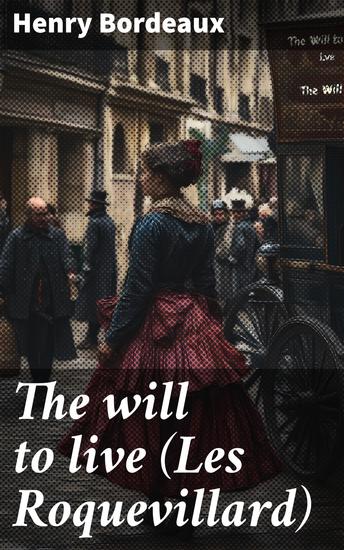
The will to live (Les Roquevillard) - A novel - cover
LER

The will to live (Les Roquevillard) - A novel

Henry Bordeaux

Editora: Good Press

  • 0
  • 0
  • 0

Sinopse

In "The Will to Live" (Les Roquevillard), Henry Bordeaux intricately weaves a narrative that explores the complex fabric of human resilience and the relentless pursuit of existence amidst adversity. Set against the backdrop of early 20th-century France, Bordeaux employs a lyrical and evocative prose style that mirrors the emotional depth of his characters, delving into their profound struggles and desires. The novel grapples with themes of identity, familial ties, and the philosophical underpinnings of life's meaning, positioning itself within the broader context of literary exploration of existentialism that was gaining prominence during this era. Henry Bordeaux, a prominent French novelist, was deeply influenced by the socio-political upheavals of his time, which is clearly reflected in his work. His rich literary career, marked by an acute awareness of the human condition and societal dynamics, encouraged him to examine the dichotomy of desire versus reality. Bordeaux's experiences as a soldier during World War I further fueled his understanding of survival and the will to persevere, elements that resonate profoundly within this novel. I highly recommend "The Will to Live" to readers seeking an emotionally charged narrative that thoughtfully examines the intricacies of human existence. Bordeaux's profound insights and masterful storytelling will engage those interested in philosophical literature, as well as anyone who appreciates a nuanced portrayal of the human spirit's indomitable will.
Disponível desde: 02/03/2025.
Comprimento de impressão: 160 páginas.

Outros livros que poderiam interessá-lo

  • The Pilgrim's Progress - cover

    The Pilgrim's Progress

    John Bunyan

    • 0
    • 0
    • 0
    The Pilgrim's Progress from This World to That Which Is to Come is a Christian allegory written by John Bunyan. First published in 1678, it is considered one of the most significant works of English literature and Protestant theology.  
    The story follows Christian, a character representing everyman, as he journeys from the City of Destruction to the Celestial City, which symbolizes Heaven. Burdened by the awareness of his sins, depicted by a physical weight on his back, Christian seeks salvation. He is guided by Evangelist, who directs him to the Wicket Gate. Along his journey, Christian encounters various allegorical characters who either assist or impede his progress. Christian, an everyman character, journeys from the City of Destruction to the Celestial City (representing Heaven). Burdened by the knowledge of his sin (represented by a physical burden on his back), Christian seeks salvation. He is guided by Evangelist, who directs him to the Wicket-gate. Along his path, Christian encounters various allegorical characters who either help or hinder his progress.
    Ver livro
  • De Profundis (Unabridged) - cover

    De Profundis (Unabridged)

    Oscar Wilde

    • 0
    • 0
    • 0
    De Profundis is a 50,000 word letter written by Oscar Wilde during his imprisonment in Reading Gaol, to Lord Alfred Douglas, his lover. Wilde wrote the letter between January and March 1897; he was not allowed to send it, but took it with him upon release. In it he repudiates Lord Alfred for what Wilde finally sees as his arrogance and vanity; he had not forgotten Douglas's remark, when he was ill, "When you are not on your pedestal you are not interesting." He also felt redemption and fulfillment in his ordeal, realizing that his hardship had filled the soul with the fruit of experience, however bitter it tasted at the time.
    Ver livro
  • Little Brother - cover

    Little Brother

    Mary E Mann

    • 0
    • 0
    • 0
    Mary E. Mann does not flinch. In Little Brother, she leads us by the hand into a world where hunger is constant, sorrow is routine, and the arrival of a child is met with neither joy nor mourning—just another mouth, another burden, another resignation. Yet even in this bleakness, life goes on, in ways both unsettling and eerily familiar. A stark, unflinching glimpse into the realities of the forgotten, this story is as haunting as it is quietly devastating.
    Ver livro
  • The Murderer - Bulgakov expertly explores life and death choices set on the backdrop of the Bolshevik Revolution - cover

    The Murderer - Bulgakov expertly...

    Mikhail Bulgakov

    • 0
    • 0
    • 0
    Mikhail Bulgakov was born on 15th May 1891 in Kiev, in the Kiev Governorate of the Russian Empire, into a Russian family.  He was one of seven children. 
     
    In 1901, Bulgakov attended the First Kiev Gymnasium, and developed a keen interest in Russian and European literature, theatre and opera.  After the death of his father in 1907, his mother assumed responsibility for his education.  After graduating Bulgakov entered the Medical Faculty of Kiev University and then took up a post as physician at the Kiev Military Hospital. 
     
    At the outbreak of the First World War, he volunteered as a doctor and was sent directly to the front, where he was badly injured at least twice.  To suppress chronic pain, especially in the abdomen, he injected morphine.  It took years to wean himself off. 
     
    He now took up medical posts in various towns and in 1919, he was mobilised by the Ukrainian People's Army and assigned to the Northern Caucasus.  There, he became seriously ill with typhus and barely survived.  
     
    After this illness, Bulgakov abandoned his medicine to pursue writing.  He moved to Vladikavkaz and had two plays staged there with great success.  He wrote too for various newspapers and other outlets, but his critics were many.  And growing. 
     
    When a Moscow's theatre director severely criticised Bulgakov, Stalin personally protected him, saying that a writer of Bulgakov's quality was above ‘party words’ like ‘left’ and ‘right’.   Indeed, it is said that Stalin watched ‘The Days of the Turbins’ at least 15 times. 
     
    It was not to last and by March 1929, Bulgakov's career was ruined when Government censorship stopped publication of any of his work and plays. 
     
    In despair, Bulgakov wrote a personal letter to Stalin.  He requested permission to emigrate.  He received a phone call from the Soviet leader, who asked the writer whether he really desired to leave. He replied that a Russian writer cannot live outside of his homeland.  Stalin thus gave him permission to continue working. In May 1930, he re-joined the theater, as stage director's assistant.  
     
    During the last stressful decade of his life, and in poor health, Bulgakov continued to work on ‘The Master and Margarita’, wrote plays, critical works, stories, and continued translations and dramatisations of novels.  Many of them were not published, others were derided by critics.  
     
    On 10th March 1940, Mikhail Afanasyevich Bulgakov died from nephrosclerosis.  He was 48. 
     
    ‘The Master and Margarita’ was not published in any form until the mid-1960’s 
     
    Here Bulgakov relates a story as told by a doctor describing the terrible things that humanity is capable of doing in times of war.
    Ver livro
  • Fly Away Paul - cover

    Fly Away Paul

    Victor Canning

    • 0
    • 0
    • 0
    How far could you go living in another’s shoes? 
    In a mid-life moment, Paul Morison travels from America to England to discover his mother’s roots. A chance encounter and uncanny resemblance leads him to agree to assume the identity of a famous singer for a while. But it’s not just the unnerving attentions of the adoring public that he must deal with. 
    Seeking to regain his freedom, Paul flees the length of Britain from Southampton to the Scottish Isles. On the run, he discovers he has let himself in for much more than he bargained. 
    This gentle comic caper and love story was hugely popular on first publication in the 1930s and retains a timeless appeal today.
    Ver livro
  • Travelling Musicians The - Story Time Episode 52 (Unabridged) - cover

    Travelling Musicians The - Story...

    Brothers Grimm

    • 0
    • 0
    • 0
    In a sometimes meandering, intermittently rhyming narrative, Page retells the Brothers Grimm tale about four animals who set out to make a new life for themselves after their masters reject them.
    Ver livro