Unisciti a noi in un viaggio nel mondo dei libri!
Aggiungi questo libro allo scaffale
Grey
Scrivi un nuovo commento Default profile 50px
Grey
Iscriviti per leggere l'intero libro o leggi le prime pagine gratuitamente!
All characters reduced
The Foundations of Science: Science and Hypothesis The Value of Science Science and Method - cover

The Foundations of Science: Science and Hypothesis The Value of Science Science and Method

Henri Poincaré

Traduttore George Bruce Halsted

Casa editrice: DigiCat

  • 0
  • 0
  • 0

Sinossi

Henri Poincaré's "The Foundations of Science: Science and Hypothesis, The Value of Science, Science and Method" is a profound exploration of the philosophical underpinnings of scientific inquiry. Poincaré delves into the nature of scientific theories, emphasizing the role of hypothesis in the scientific method and the interplay between observation and mathematical formulation. His engaging prose—marked by clarity and rigor—situates these discussions within the broader intellectual currents of early 20th-century science, where emerging theories in physics and mathematics challenged traditional epistemologies. This collection seeks to bridge the gap between empirical observations and abstract concepts, encouraging a critical examination of what constitutes scientific knowledge. Henri Poincaré, a formidable mathematician and physicist, is often regarded as a pioneer in various fields, including topology and celestial mechanics. His interdisciplinary approach reflects a deep engagement with both the scientific and philosophical dimensions of existence. Experiences such as challenging the prevailing Newtonian framework likely informed his critical outlook on science, leading him to articulate a broader understanding of its foundations that continues to resonate with contemporary debates about the nature of scientific explanation. "The Foundations of Science" is an essential read for anyone interested in the philosophical implications of scientific thought. Poincaré's insights provide invaluable perspectives for scientists, philosophers, and scholars alike, inviting readers to reflect on the underlying principles that govern our understanding of the natural world.
Disponibile da: 01/08/2022.
Lunghezza di stampa: 505 pagine.

Altri libri che potrebbero interessarti

  • Are You Thinking What I'm Thinking? A Patchwork Journey Through My Life so far - cover

    Are You Thinking What I'm...

    Kenneth Radley

    • 0
    • 0
    • 0
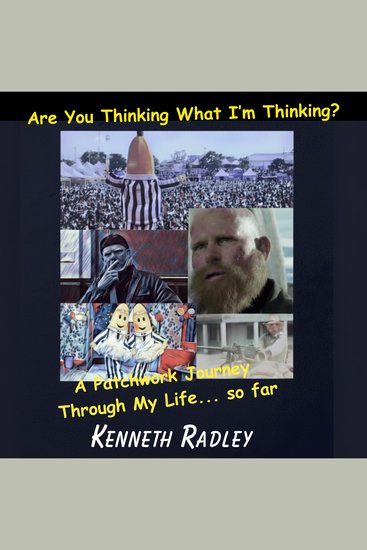
    Kenneth Radley's Are You Thinking What I'm Thinking? A patchwork journey through my life... so far - is a richly layered, deeply personal memoir told in an engaging patchwork style - weaving together reflections from across six decades of an expansive life. 
    From his early life we are taken through some rapid development in the 1960s. Then the tectonic socio-cultural shifts throughout the 1970s. And later appearing in more than 30 feature films, performing as B1 in the highly successful and culturally iconic Bananas in Pyjamas, to selling wine, cab driving, fronting a hard-hitting rock band in the Melbourne pub scene, teaching, building houses, playing and umpiring Australian football and navigating family life within the creative industries - Radley crafts a collection of vivid vignettes that balance wit, philosophical inquiry, and grounded realism. 
    Readers interested in Australian cultural history, performance, and television and film will find rare, behind-the-scenes gems throughout. Anecdotes involving the Bananas years, working on set from an actor's perspective, creative struggles, the joy and passion in his work. The reader is treated to some fascinating encounters with industry characters that offer unique insights and deep reflections. 
    The regular moments of humour feel lived-in rather than performed, full of well-timed understatement and irony. 
    This work offers so much more than a timeline of events; it becomes a meditation on memory, cultural change, identity, work, and the intersections between art, family life and self-discovery. 
    It is a fascinating, authentic and heartfelt piece reflecting the complexity, fun and humour of a man that is truly thankful for his life and filled with genuine love and appreciation of those close to him. 
    it is quite a journey... so far.
    Mostra libro
  • A Slav Soul - From their pens to your ears genius in every story - cover

    A Slav Soul - From their pens to...

    Alexander Kuprin

    • 0
    • 0
    • 0
    Alexander Kuprin was born in Narovchat, Penza in Russia on 7th September 1870. 
    At 3 his Father died and he and mother moved to Moscow. By 10 he was enrolled at the Second Moscow Military High School and there his interest in literature began. The Alexander Military Academy followed and two years later he was a sub-lieutenant and posted to an Infantry Regiment for a further four years. 
    Despite his duties he was a now a keen writer and published his first short story at this time. His military duties also garnered him experiences for his breakthrough work ‘The Duel’.  Leaving the military he left for Kiev to work for local newspapers.  He continued to publish both stories and novels and by 1901 he was in St Petersburg becoming part of a group that included Chekhov, Ivan Bunin, Maxim Gorky and Leonid Andreyev.  
    In the years that followed further controversial works and acclaim followed.  His comments on the regime meant he was also put under secret police surveillance.   
    As World War I erupted, Kuprin opened a military hospital but was then given command of an infantry company in Finland. He was soon discharged on grounds of ill health.  
    The October Revolution saw him praise Lenin, but he warned that the Bolsheviks threatened Russian culture and might cause further widespread suffering to the peasants.  As Civil War raged he took his family to Helsinki and then on to Paris. 
    Exile saw his talents decline further and his succumbing to alcoholism. He became lonely and withdrawn. The family's poverty increased his malaise.   
    In May 1937, the Kuprin’s returned to Moscow.  He now saw his work published but wrote almost nothing new.  In 1938 his health rapidly deteriorated.  Already suffering from a kidney problems and sclerosis, he had now developed cancer of the oesophagus.  
    Alexander Kuprin died on 25th August 1938.
    Mostra libro
  • How Taylor Swift Became Famous - cover

    How Taylor Swift Became Famous

    Céline Claire

    • 0
    • 0
    • 0
    This ebook explains Taylor Swift`s biography and rise to fame. 
    Taylor Swift`s rise to fame is due to many factors. But one thing is certain. She will be remembered as one of the greatest female artists of all time given her numerous musical achievements online and offline. 
    She managed to enter the Guiness World Book of Records because of her exceptional music. 
    Read this e-book for more about Taylor Swift`s rise to fame.
    Mostra libro
  • The Problem of Increasing Human Energy - cover

    The Problem of Increasing Human...

    Nikola Tesla

    • 0
    • 0
    • 0
    In "The Problem of Increasing Human Energy," Nikola Tesla embarks on an intellectual voyage that explores the avenues through which human society could augment its collective energy resources for the betterment of mankind. First published in Century Magazine in 1900, this work showcases Tesla's profound ingenuity and his visionary approach to not only scientific and technological advancements but also to addressing broader existential challenges. Tesla delves into the mechanics of harnessing energy from renewable sources, such as the sun and wind, underscoring the critical importance of sustainable practices long before they entered the mainstream discourse. Moreover, he contemplates the symbiotic relationship between physical vitality, mental clarity, and moral integrity, positing that enhancements in these domains are pivotal for humanity's progress. Through "The Problem of Increasing Human Energy," Tesla offers a glimpse into his extraordinary mind, presenting a blend of technical innovation and philosophical insight aimed at uplifting human existence.
    Mostra libro
  • Summary: Gambler - Secrets from a Life at Risk by Billy Walters: Key Takeaways Summary & Analysis - cover

    Summary: Gambler - Secrets from...

    Brooks Bryant

    • 0
    • 0
    • 0
    Disclaimer: This is not the official book, but a summary & it does not accompany the official. 
    In "Gambler: Secrets from a Life at Risk," legendary sports bettor Billy Walters shares his riveting life story, detailing how he went from a childhood in rural Kentucky marked by severe poverty to become the "Michael Jordan of sports betting." Walters, renowned for his 36-year winning streak, unveils the secrets behind his betting system that has consistently beaten the odds. 
    The book is much more than an autobiography. Walters delves deep into his proprietary betting strategy, offering readers a master class on enhancing their odds in sports betting. He highlights the myriad of variables that go into making an informed bet, from understanding player values and home field advantages to considering stadium quirks and weather forecasts. 
    The narrative also brings to light Walters' relationship with golf legend Phil Mickelson and shares a behind-the-scenes look at his time with the famed Computer Group, which revolutionized sports betting through the use of data analysis and algorithms.
    Mostra libro
  • Freckles - From their pens to your ears genius in every story - cover

    Freckles - From their pens to...

    William Pett Ridge

    • 0
    • 0
    • 0
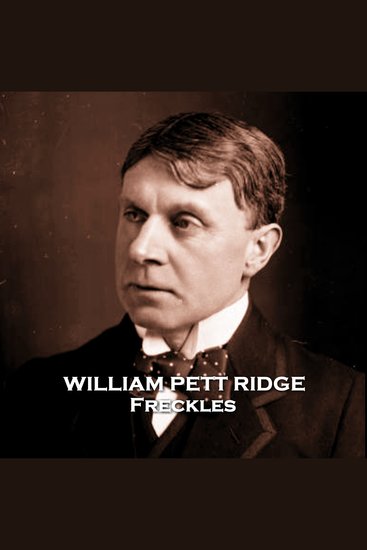
    William Pett Ridge was born at Chartham, near Canterbury, Kent, on 22nd April 1859. 
    His family’s resources were certainly limited. His father was a railway porter, and the young Pett Ridge, after schooling in Marden, Kent became a clerk in a railway clearing-house. The hours were long and arduous, but self-improvement was Pett Ridge’s goal.  After working from nine until seven o’clock he would attend evening classes at Birkbeck Literary and Scientific Institute and then to follow his passion; the ambition to write.  He was heavily influenced by Dickens and several critics thought he had the capability to be his successor. 
    From 1891 many of his humourous sketches were published in the St James's Gazette, the Idler, Windsor Magazine and other literary periodicals of the day. 
    Pett Ridge published his first novel in 1895, A Clever Wife. By the advent of his fifth novel, Mord Em'ly, a mere three years later in 1898, his success was obvious.  His writing was written from the perspective of those born with no privilege and relied on his great talent to find humour and sympathy in his portrayal of working class life. 
    Today Pett Ridge and other East End novelists including Arthur Nevinson, Arthur Morrison and Edwin Pugh are being grouped together as the Cockney Novelists.   
    In 1924, Pugh set out his recollections of Pett Ridge from the 1890s: “I see him most clearly, as he was in those days, through a blue haze of tobacco smoke. We used sometimes to travel together from Waterloo to Worcester Park on our way to spend a Saturday afternoon and evening with H. G. Wells. Pett Ridge does not know it, but it was through watching him fill his pipe, as he sat opposite me in a stuffy little railway compartment, that I completed my own education as a smoker... Pett Ridge had a small, dark, rather spiky moustache in those days, and thick, dark, sleek hair which is perhaps not quite so thick or dark, though hardly less sleek nowadays than it was then”. 
    With his success, on the back of his prolific output and commercial success, Pett Ridge gave generously of both time and money to charity. In 1907 he founded the Babies Home at Hoxton.  This was one of several organisations that he supported that had the welfare of children as their mission.  
    His circle considered Pett Ridge to be one of life's natural bachelors. In 1909 they were rather surprised therefore when he married Olga Hentschel.  
    As the 1920’s arrived Pett Ridge added to his popularity with the movies. Four of his books were adapted into films.  
    Pett Ridge now found the peak of his fame had passed. Although he still managed to produce a book a year he was falling out of fashion and favour with the reading public and his popularity declined rapidly.  His canon runs to over sixty novels and short-story collections as well as many pieces for magazines and periodicals. 
    William Pett Ridge died, on 29th September 1930, at his home, Ampthill, Willow Grove, Chislehurst, at the age of 71. 
    He was cremated at West Norwood on 2nd October 1930.
    Mostra libro