




RIPRODURRE CAMPIONE

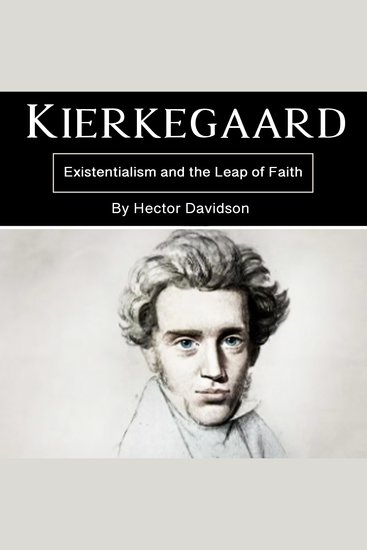
Kierkegaard - Existentialism and the Leap of Faith
Hector Davidson
Narratore Rosa Hallwar
Casa editrice: Dedona Publishing
Sinossi
Søren Kierkegaard, often regarded as the father of existentialism, was born on May 5, 1813, in Copenhagen, Denmark. His early life was marked by tragedy, as his mother died when he was just a child, and his father, a deeply religious man, instilled in him a sense of guilt and the weight of existential questioning. Kierkegaard’s relationship with his father deeply influenced his philosophical development, particularly in his exploration of faith, despair, and the individual's relationship with God.
Kierkegaard’s intellectual journey began at the University of Copenhagen, where he studied theology and philosophy. He was deeply influenced by the works of philosophers such as Immanuel Kant and Friedrich Hegel, yet he sought to diverge from the systematic and rational approaches of these thinkers. Instead, he focused on the subjective aspects of human experience, emphasizing personal choice, individual responsibility, and the need for authentic existence. Kierkegaard believed that philosophy should not merely be an abstract pursuit but should directly address the real, lived experiences of individuals.
One of Kierkegaard's most significant contributions to philosophy was his critique of the established norms of society and religion. He believed that individuals often live in a state of "inauthenticity," blindly following social conventions and doctrines without truly reflecting on their own beliefs. For Kierkegaard, true existence could only be achieved through the individual’s leap of faith—an existential act that transcends reason and embraces the paradoxical nature of human life.
Durata: circa 3 ore (03:01:56)
Data di pubblicazione: 01/02/2025; Unabridged; Copyright Year: — Copyright Statment: —




