Unisciti a noi in un viaggio nel mondo dei libri!
Aggiungi questo libro allo scaffale
Grey
Scrivi un nuovo commento Default profile 50px
Grey
Iscriviti per leggere l'intero libro o leggi le prime pagine gratuitamente!
All characters reduced
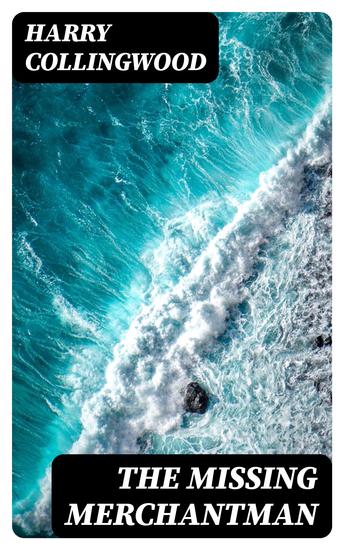
The Missing Merchantman - cover

The Missing Merchantman

Harry Collingwood

Casa editrice: DigiCat

  • 0
  • 0
  • 0

Sinossi

In "The Missing Merchantman," Harry Collingwood weaves an engrossing tale of adventure and intrigue set against the backdrop of maritime life in the late 19th century. The novel masterfully combines elements of mystery and seafaring narrative, showcasing Collingwood's vivid descriptions and attention to nautical detail, which were characteristic of the era's adventure literature. The plot unfolds through the lens of a gripping search for a disappeared merchant ship, revealing complex characters who embody the era's spirit of exploration and commercial ambition. Collingwood's prose captures the excitement and perils of life at sea, reflecting the literary trends that emerged during the Victorian period in England, emphasizing both adventure and moral dilemmas faced by individuals when caught in dire situations. Collingwood, an accomplished author and maritime enthusiast, drew upon his own experiences as a sailor and his profound understanding of nautical practices to bring authenticity to his storytelling. His intimate knowledge of the sea, as well as the social and economic dynamics of maritime trade, likely influenced his desire to craft engaging narratives that intertwine human drama with the vastness of ocean life. His background gives readers insights into the challenges and triumphs encountered by sailors of his time. For readers yearning for an immersive adventure that captures the essence of maritime exploration and intrigue, "The Missing Merchantman" stands out as an exemplary work. The novel is not only an engaging story but also a rich historical document reflecting the zeitgeist of its time. Those with a passion for nautical literature and thrilling mysteries will find Collingwood's storytelling both captivating and thought-provoking.
Disponibile da: 16/09/2022.
Lunghezza di stampa: 263 pagine.

Altri libri che potrebbero interessarti

  • Russian Short Story The - Volume 5 - Anton Chekhov to Alexander Kuprin - cover

    Russian Short Story The - Volume...

    Maxim Gorky, Ivan Bunin,...

    • 0
    • 0
    • 0
    The Russian novel has a reputation that is immense, both in narrative and in length.  Unquestionably though the ideas, themes and characters make many novels rightly revered as world class, as icons of literature. 
     
    Perhaps an easier way to enjoy a wider selection of the Russian heritage, with its varied and glorious literary talents, is with the short story.  These gems sparkle and beguile the mind with their characters and narrative, exploring facets of society and the human condition that more Western authors somehow find more difficult to navigate, or to explore, explain and relate to.   
     
    The Russian short story is, in many respects, in a genre of its own.  It is at its captivating best whether it’s an exploration of real-life experiences, through fantasy and fables and on to total absurdity. 
     
    In a land so vast it is unsurprising that it is a world almost unto itself. Cultures and landscapes of differing hues are packed together bound only by the wilful bonds and force of Empire. 
     
    The stories in this collection traverse the decades where one might be a serf under an absolute monarch, and the reality of that was pretty near to slavery, into an emancipation of sorts in the fields, or towns under the despotic will of landowners and the rich into the upheavals of Empire and then the overthrow of the ruling class and its replacement by the communists, who promised equality for all and delivered a society where the down-trodden remained the lowest yet vital cog of the state machine and its will.  
     
    Whilst Tolstoy, Gogol, Dostoevsky, Pushkin and Chekhov are a given in any Russian collection we also explore and include Andreyev, Korolenko, Turgenev, Blavatsky and many others to create a world rich and dense across a sprawling landscape of diverse people, riddled with the class and unfairness in perhaps some of the most turbulent times that Russia has ever experienced. 
     
    01 - The Russian Short Story - Volume 5 - An Introduction 
    02 - About Love by Anton Chekhov 
    03 - Vanka by Anton Chekhov 
    04 - Hide And Seek or Pliatki by Fyodor Sologub 
    05 - In The Steppe by Maxim Gorky 
    06 - Chelkash - Part 1 by Maxim Gorky 
    07 - Chelkash - Part 2 by Maxim Gorky 
    08 - Chelkash - Part 3 by Maxim Gorky 
    09 - Twenty-Six Men and a Girl by Maxim Gorky 
    10 - One Autumn Night by Maxim Gorky 
    11 - Her Lover by Maxim Gorky 
    12 - The Servant by S T Semyonov 
    13 - Son by Ivan Bunin 
    14 - Kasimir Stanislavovitch by Ivan Bunin 
    15 - Gentle Breathing by Ivan Bunin 
    16 - The Outrage by Alexander Kuprin 
    17 - The Park of Kings by Alexander Kuprin
    Mostra libro
  • Arthur Conan Doyle - Six of the Best - Their legacy in 6 classic stories - cover

    Arthur Conan Doyle - Six of the...

    Arthur Conan Doyle

    • 0
    • 0
    • 0
    Six has always been a number we group things around – Six of the best, six of one half a dozen of another, six feet under, six pack, six degrees of separation and a sixth sense are but a few of the ways we use this number. 
     
    Such is its popularity that we thought it is also a very good way of challenging and investigating an author’s work to give width, brevity, humour and depth across six of their very best. 
     
    In this series we gather together authors whose short stories both rivet the attention and inspire the imagination to visit their gems in a series of six, to roam across an author’s legacy in a few short hours and gain a greater understanding of their writing and, of course, to be lavishly entertained by their ideas, their narrative and their way with words. 
     
    These stories can be surprising and sometimes at a tangent to what we expected, but each is fully formed and a marvellous adventure into the world and words of a literary master. 
     
     1 - Six of the Best - Arthur Conan Doyle - An Introduction 
    2 - Arthur Conan Doyle - An Introduction 
    3 - The Adventure of the Speckled Band by Arthur Conan Doyle 
    4 - The Leather Funnel by Arthur Conan Doyle 
    5 - The Story of B 24 by Arthur Conan Doyle 
    6 - A Pastoral Horror by Arthur Conan Doyle 
    7 - The Horror of the Heights by Arthur Conan Doyle 
    8 - The Final Problem by Arthur Conan Doyle
    Mostra libro
  • The Baron of Coyote River - cover

    The Baron of Coyote River

    L. Ron Hubbard

    • 0
    • 0
    • 0
    Lance Gordon's running out of time. He's killed the man who murdered his father, and now he has a price on his head. Lance wants to live in peace, but he'll have to go through hell to get there. He heads for the one place no lawman will go — into the territory ruled by the feared king of the cattle rustlers. Taking on the Baron is his last chance — as Lance vows to redeem himself... or die trying.
    Mostra libro
  • Unwritten Novel An - From their pens to your ears genius in every story - cover

    Unwritten Novel An - From their...

    Virginia Woolf

    • 0
    • 0
    • 0
    Adeline Virginia Woolf was born on the 25th January 1882 in South Kensington in London. 
    Although lauded as a founder of modernist writing with such classics as ‘Orlando’, ‘Mrs Dalloway’ and ‘To the Lighthouse’ and, of course, many classic short stories, her background is filled with elements of tragedy that she somehow overcame to become such a revered writer.   Her mother died when she was 13, her half-sister Stella two years later and with it her first of several nervous breakdowns.  Appallingly it was later found that three of her half-brothers had sexually abused her so darkness must have seemed ever present.   
    She began writing professionally at age 20 but her father’s death two years later brought a complete mental collapse and she was briefly institutionalised.  Somehow she found within herself a literary career and with it great innovations in writing; she was a pioneer of “stream of consciousness”.    
    Her tight circle of friends were the founders of the Bloomsbury Group, a movement whose legacy still influences across the arts and society in many way to this day.   
    Whilst the dark periods continued to interrupt her emotional state her rate of work never ceased.  Until, on 28th March 1941, Woolf put on her overcoat, filled up its pockets with stones, and walked into the River Ouse, in Lewes, East Sussex and drowned herself.  Her body was not recovered until the 18th April.  She was 59. 
    She left behind a note which read in part “Dearest, I feel certain that I am going mad again.  I feel we can't go through another of those terrible times.  And I shan't recover this time.  I begin to hear voices, and I can't concentrate.  So I am doing what seems the best thing to do”.
    Mostra libro
  • Dracula's Guest - From their pens to your ears genius in every story - cover

    Dracula's Guest - From their...

    Bram Stoker

    • 0
    • 0
    • 0
    Abraham Stoker was born in Dublin, Ireland on the 8th of November 1847, the third of seven children.  
    His early years were plagued with such ill-health that he was unable to start school until the age of seven.  He turned the long periods of recovery into an opportunity for thinking and said “I was naturally thoughtful, and the leisure of long illness gave opportunity for many thoughts which were fruitful according to their kind in later years”.  
    Strikingly at Trinity College, Dublin his health had returned with such vigour that he was named their University Athlete whilst also achieving a BA in Mathematics with honours.  
    At this time his interest in theatre became a job offer to be the Dublin Evening Mail’s theatre critic, co-owned by Sheridan Le Fanu.  He now began to also write short stories and in 1872 ‘The Crystal Cup’ was published.  An interest in art developed and he co-founded the Dublin Sketching Club.  
    In 1878 came marriage to Florence Balcombe.  She had formerly been courted by Stoker’s acquaintance, Oscar Wilde.  The marriage produced one child.   
    Stoker had some years before reviewed Henry Irving’s Hamlet and had dined with him.  That friendship now resulted in a proposal from Irving to move to London and to manage his Lyceum Theatre.  His numerous commercial innovations ensured both he and the theatre thrived.  Irving would also often take Stoker with him when he toured abroad. 
    Despite this busy life Stoker continued to write and these works paved the way for his most famous creation, published in 1897, ‘Dracula’.  It is rightly recognised as one of the greatest horror novels of all time and although not the first with a theme of Vampires, it is undoubtedly the most well-known. 
    Stoker also wrote poetry and many excellent short stories and continued to write novels and other works throughout his career. 
    Politically Stoker supported Home Rule, though only by peaceful means.  He was also keen on following scientific trends particularly in medicine. 
    In 1902 his tenure at the Lyceum Theatre ended and although he continued to write his health was deteriorating, mainly due to a series of debilitating strokes. 
    Bram Stoker died on the 20th April 1912, in Pimlico, London.  He was 64.
    Mostra libro
  • Unwritten Novel An - From their pens to your ears genius in every story - cover

    Unwritten Novel An - From their...

    Virginia Woolf

    • 0
    • 0
    • 0
    Adeline Virginia Woolf was born on the 25th January 1882 in South Kensington in London. 
    Although lauded as a founder of modernist writing with such classics as ‘Orlando’, ‘Mrs Dalloway’ and ‘To the Lighthouse’ and, of course, many classic short stories, her background is filled with elements of tragedy that she somehow overcame to become such a revered writer.   Her mother died when she was 13, her half-sister Stella two years later and with it her first of several nervous breakdowns.  Appallingly it was later found that three of her half-brothers had sexually abused her so darkness must have seemed ever present.   
    She began writing professionally at age 20 but her father’s death two years later brought a complete mental collapse and she was briefly institutionalised.  Somehow she found within herself a literary career and with it great innovations in writing; she was a pioneer of “stream of consciousness”.    
    Her tight circle of friends were the founders of the Bloomsbury Group, a movement whose legacy still influences across the arts and society in many way to this day.   
    Whilst the dark periods continued to interrupt her emotional state her rate of work never ceased.  Until, on 28th March 1941, Woolf put on her overcoat, filled up its pockets with stones, and walked into the River Ouse, in Lewes, East Sussex and drowned herself.  Her body was not recovered until the 18th April.  She was 59. 
    She left behind a note which read in part “Dearest, I feel certain that I am going mad again.  I feel we can't go through another of those terrible times.  And I shan't recover this time.  I begin to hear voices, and I can't concentrate.  So I am doing what seems the best thing to do”.
    Mostra libro