Unisciti a noi in un viaggio nel mondo dei libri!
Aggiungi questo libro allo scaffale
Grey
Scrivi un nuovo commento Default profile 50px
Grey
Iscriviti per leggere l'intero libro o leggi le prime pagine gratuitamente!
All characters reduced
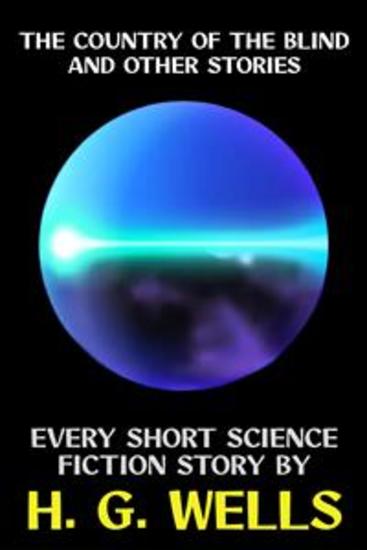
The Country of the Blind and Other Stories - Every Short Science Fiction Story by - cover

The Country of the Blind and Other Stories - Every Short Science Fiction Story by

H. G. Wells

Casa editrice: Diamond Book Publishing

  • 0
  • 0
  • 0

Sinossi

H. G. Wells was perhaps best known as the author of such classic works of science fiction as The Time Machine and War of the Worlds. But it was in his short stories, written when he was a young man embarking on a literary career, that he first explored the enormous potential of the scientific discoveries of the day. He described his stories as "a miscellany of inventions," yet his enthusiasm for science was tempered by an awareness of its horrifying destructive powers and the threat it could pose to the human race. A consummate storyteller, he made fantastic creatures and machines entirely believable; and, by placing ordinary men and women in extraordinary situations, he explored, with humor, what it means to be alive in a century of rapid scientific progress.
Disponibile da: 10/03/2024.

Altri libri che potrebbero interessarti

  • Les Misérables: Volume 1: Fantine - Book 5: The Descent (Unabridged) - cover

    Les Misérables: Volume 1:...

    Victor Hugo

    • 0
    • 0
    • 0
    Victor-Marie Hugo (26 February 1802 - 22 May 1885) was a French poet, novelist, essayist, playwright, and dramatist of the Romantic movement. During a literary career that spanned more than sixty years, he wrote abundantly in an exceptional variety of genres: lyrics, satires, epics, philosophical poems, epigrams, novels, history, critical essays, political speeches, funeral orations, diaries, and letters public and private, as well as dramas in verse and prose.
    BOOK 5: THE DESCENT: And in the meantime, what had become of that mother who according to the people at Montfermeil, seemed to have abandoned her child? Where was she? What was she doing?
    Mostra libro
  • The Haunted Baronet - cover

    The Haunted Baronet

    Joseph Sheridan Le Fanu

    • 0
    • 0
    • 0
    "The lake does not give up its dead easily, and the House of Mardykes has a long memory."
    
    Sir Bale Mardykes is a man of iron will and a cold heart, living in the ancestral home of Mardykes Hall near the secluded village of Golden Friars. He believes he is the master of his own fate, but he is haunted by a centuries-old prophecy of doom. When he cruelly causes the death of his secretary and distant relative, Philip Feltram, Sir Bale believes he has cleared a nuisance from his path. But when Feltram returns—changed, silent, and carrying the chill of the lake—Sir Bale realizes that the dead have a way of reclaiming what is theirs. It is a slow-burn masterpiece of Gothic tension, where the environment itself seems to conspire against the living.
    
    The Environment as Antagonist: Le Fanu utilizes the "Atmospheric Gothic" to its fullest potential here. The swirling mists of the Lake District, the echoes in the mountain passes, and the bottomless depths of the lake serve as metaphors for Sir Bale's mounting paranoia. The house and the land are not just settings; they are active participants in the baronet's downfall.
    
    A Study in Psychological Ruin: Unlike many contemporary ghost stories, the horror in The Haunted Baronet is deeply internal. We watch Sir Bale's skepticism slowly erode as the supernatural elements become undeniable. The figure of the "Returned" Feltram is one of Le Fanu's most effective creations—a ghost that doesn't just haunt, but inhabits the social space of the living.
    
    The Weight of Ancestry: Le Fanu explores the idea that we are never truly free from the actions of our forefathers. Sir Bale is a victim of his own bloodline as much as his own choices. The novella builds to a tragic and inevitable climax that proves that some debts can only be paid in lifeblood.
    
    Beware the calm waters of Golden Friars. Purchase "The Haunted Baronet" today.
    Mostra libro
  • Four Winds - cover

    Four Winds

    Lucy Maud Montgomery

    • 0
    • 0
    • 0
    Lucy Maud Montgomery (November 30, 1874 – April 24, 1942), published as L. M. Montgomery, was a Canadian author best known for a series of novels beginning in 1908 with Anne of Green Gables. The book was an immediate success. The title character, orphan Anne Shirley, made Montgomery famous in her lifetime and gave her an international following.
    Four Winds: Alan Douglas threw down his pen with an impatient exclamation. It was high time his next Sunday's sermon was written, but he could not concentrate his thoughts on his chosen text. For one thing he did not like it and had selected it only because Elder Trewin, in his call of the evening before, had hinted that it was time for a good stiff doctrinal discourse, such as his predecessor in Rexton, the Rev. Jabez Strong, had delighted in.
    Mostra libro
  • The Strange Case of Dr Jekyll and Mr Hyde - cover

    The Strange Case of Dr Jekyll...

    Robert Louis Stevenson

    • 0
    • 0
    • 0
    Dr. Jekyll, a well-respected doctor, concocts a potion to unleash his hidden evil as Mr. Hyde. Initially relishing this dark freedom, Jekyll loses control as Hyde's monstrous nature takes over, leading to a battle for his identity.
    Mostra libro
  • Mary Butts - Six of the Best - Their legacy in 6 classic stories - cover

    Mary Butts - Six of the Best -...

    Mary Butts

    • 0
    • 0
    • 0
    Six has always been a number we group things around – Six of the best, six of one half a dozen of another, six feet under, six pack, six degrees of separation and a sixth sense are but a few of the ways we use this number. 
     
    Such is its popularity that we thought it is also a very good way of challenging and investigating an author’s work to give width, brevity, humour and depth across six of their very best. 
     
    In this series we gather together authors whose short stories both rivet the attention and inspire the imagination to visit their gems in a series of six, to roam across an author’s legacy in a few short hours and gain a greater understanding of their writing and, of course, to be lavishly entertained by their ideas, their narrative and their way with words. 
     
    These stories can be surprising and sometimes at a tangent to what we expected, but each is fully formed and a marvellous adventure into the world and words of a literary master. 
     
    1 - Six of the Best - Mary Butts - An Introduction 
    2 - Mary Butts - An Introduction 
    3 - With & Without Buttons by Mary Butts 
    4 - The Dinner Party by Mary Butts 
    5 - Angele Au Couvent by Mary Butts 
    6 - Brightness Falls by Mary Butts 
    7 - After the Funeral by Mary Butts 
    8 - In Bayswater - Part 1 by Mary Butts 
    9 - In Bayswater - Part 2 by Mary Butts
    Mostra libro
  • Notes from Underground - cover

    Notes from Underground

    Fyodor Dostoyevsky

    • 0
    • 0
    • 0
    Notes from Underground also translated as Notes from the Underground or Letters from the Underworld) is a novella by Fyodor Dostoevsky, first published in the journal Epoch in 1864. It is a first-person narrative in the form of a "confession": the work was originally announced by Dostoevsky in Epoch under the title "A Confession".The novella presents itself as an excerpt from the memoirs of a bitter, isolated, unnamed narrator (generally referred to by critics as the Underground Man), who is a retired civil servant living in St. Petersburg. Although the first part of the novella has the form of a monologue, the narrator's form of address to his reader is acutely dialogized. According to Mikhail Bakhtin, in the Underground Man's confession "there is literally not a single monologically firm, undissociated word". The Underground Man's every word anticipates the words of an other, with whom he enters into an obsessive internal polemic.
    Mostra libro