Unisciti a noi in un viaggio nel mondo dei libri!
Aggiungi questo libro allo scaffale
Grey
Scrivi un nuovo commento Default profile 50px
Grey
Iscriviti per leggere l'intero libro o leggi le prime pagine gratuitamente!
All characters reduced
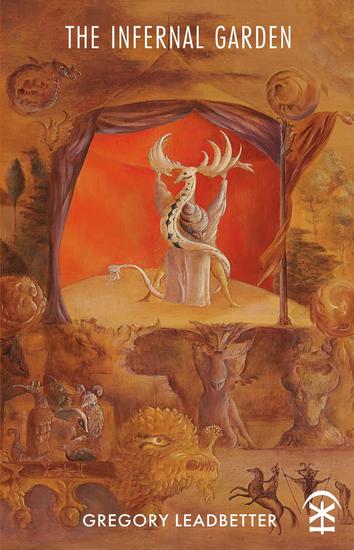
The Infernal Garden - cover

The Infernal Garden

Gregory Leadbetter

Casa editrice: Nine Arches Press

  • 0
  • 0
  • 0

Sinossi

In The Infernal Garden, Gregory Leadbetter's poetry leads us into dark and verdant places of the imagination, the edge of the wild where the human meets the more-than-human in the burning green fuse of the living world. This liminal ground becomes a garden of death and rebirth, of sound and voice, in poems that combine the lyric with the mythic, precision with mystery.
Responding to the intricate crisis in our relationship to our planet and the life around us, the garden here assumes a haunting, otherworldly aspect, as a space of loss, grief and trial, which nonetheless carries within it the energies of regeneration and growth. At the heart of this bewitching book is the force of language itself – at once disquieting and healing – through which we are drawn to the common roots of art, science, and magic, in exquisite poetry of incantatory power.
"This is heavy-metal poetry, dark and decidedly theatrical." - Jeremy Wikeley, 'The best poetry books of 2025 so far', The Telegraph.
Disponibile da: 14/08/2025.
Lunghezza di stampa: 72 pagine.
Altri libri che potrebbero interessarti

  • The Calling of the Heart - Poems Inspired by the Whispering of Each Month - cover

    The Calling of the Heart - Poems...

    Barry Hunt

    • 0
    • 0
    • 0
     The heart is always calling us to listen intently as the seasons turn, listen intently through the wheel of the year, listen intently as each month whispers with divine intent. 
    When listening to these poems, I invite you to find a place where you can listen intently, a place where all things stand still and you feel the whispering of each month. 
    Listening intently is the path to forgiveness, empathy and compassion, the path to seeing ourselves in each other. Listen now, listen intently as each month whispers with divine intent.
    Mostra libro
  • Surface Tension - cover

    Surface Tension

    Derek Beaulieu

    • 0
    • 0
    • 0
    Typography meets poetry at a Pink Floyd laser-light show 
    In Surface Tension, poetry is liquefied. Flowing away from meaning, letters and words gather and pool into puddles of poetry; street signs and logos reflected in the oily sheen of polluted gutters of rainwater. Like a funhouse mirror reflecting the language that surrounds us, the pages drip over the margins, suggesting that Madge was right, we are “soaking in it!” 
    Surface Tension updates visual poetry for our post-pandemic age, asking us rethink the verbiage around us, to imagine letters as images instead of text, to find meaning in their beautiful shapes as Beaulieu stretches, torques, slides, blurs, and melts them into Dali-esque collages. 
    "Not words, letters; not letters, shapes; not shapes, figures; not figures, ciphers; not ciphers, ornaments; not ornaments, decoration; not decoration, semiotics; not semiotics, communicative possibilities; not vagrant potential, slowly forming inflection; not melting deflection, language as dance: in, out, upside down, flapping, flipping, all ways round." – Charles Bernstein, recipient 2019 Bollingen Prize for American Poetry 
    "The striking compositions you’ll find in Surface Tension are being presented sequentially in book form, yet that they wouldn’t be out of place hanging on the wall goes without saying. Beaulieu swerves Gomringer when writing that 'Readibility is the key: like a logo, a poem should be instantly recognizable...' yet, to this reader, these works merit sustained and enthusiastic viewing precisely because they teeter on the edge of legibility. The kinetic, glitchy quality of their 'alphabetic strangeness' keeps them unrecognizable as poems and, here, 'that is poetry as I need it,' to quote Cage. Think of them as anti-advertisings selling you nothing but bountiful manifestations of the irreducible plasticity of numbers, punctuation marks, and letter forms. No logos." – Mónica de la Torre, Madelon Leventhal Rand Endowed Chair in Literature, Brooklyn College; co-editor of Women in Concrete Poetry 1959–1979  
    "With his distinctive visual palindromes and angled axes of symmetry, Derek Beaulieu has developed a signature mastery of Letraset, leveraging the twentieth-century technology as a vehicle for bring concrete poetry into the twenty-first century. With Surface Tension, Beaulieu takes the possibilities of that new idiom even further, unsettling the fixity his symmetries once reinforced and dislodging the set in Letraset as poems distort in fun-house-mirror swerves, sag as if under their own weight, pool and smear in the liquid logic of heated ink, or swoop and blur as if in motion. In the process, these poems make visible the filmic potential of the photocopier, the facture of abraded transfers from brittling stock, and the three-dimensional substrate of the page with its flexible bends in curving space. These are thus poems in part about their own modes of production. They are beautiful products of a self-aware and intelligent process." – Craig Dworkin, author of Radium of the Word: A Poetics of Materiality  
    "'When most of the language we consume is non-poetic, should poetry not attempt to poetically intervene within these spaces that are not traditionally poetic?' The answer to Derek Beaulieu’s question, put forward in his beautiful essay, is surely yes: the ten brilliantly adventurous visual poems in his Surface Tension make a startling case for his fascinating Letraset/photocopier inventions. Beaulieu’s compositions originate in a place of clean design and logical narrative; soon, as in a dream, they open up, ushering in what he calls 'a poetry of difference, chance, eruption.' Marcel Duchamp would have called it the poetry of the infrathin: watch 'Simple Symmetry' or 'Dendrochronology' open up and come alive in their minutely evolving new spaces. This is quite simply an enchanting book – a book producing new pleasures with each turn of the page." – Marjorie Perloff, Sadie Dernham Patek Professor of Humanities, Emerita, Stanford University
    Mostra libro
  • Broken Glass - cover

    Broken Glass

    Arthur Miller

    • 0
    • 0
    • 0
    Set in 1938 Brooklyn, this gripping psychological mystery begins when attractive, level-headed Sylvia Gellburg suddenly loses her ability to walk. The only clue lies in Sylvia’s obsession with news accounts from Germany. Though safe in Brooklyn, Sylvia is terrified by Nazi violence - or is it something closer to home? A Laurence Olivier Award Winnder for Best New Play. 
     
    An L.A. Theatre Works full-cast performance featuring Jane Brucker, David Dukes, Lawrence Pressman, Linda Purl, John Vickery and JoBeth Williams.
    Mostra libro
  • Coffee and Caramel - cover

    Coffee and Caramel

    Adrian Tanase

    • 0
    • 0
    • 0
    Coffee and Caramel is just another free-verse poetry book,  in the "Timeless Adventures" series.   It features 63 original romance, inspirational, and surreal poems,   created to fill your imagination with sweet baked goodies and heartfelt words.
    Mostra libro
  • Which Seeds Will Grow? - Poems - cover

    Which Seeds Will Grow? - Poems

    Andrew Calis

    • 0
    • 0
    • 0
    A new collection of poems by Palestinian-American Catholic poet Andrew Calis, Which Seeds Will Grow? ​finds hope in the Holy Land.
    Grappling with his identity as a Christian Palestinian American, Andrew Calis recalls his father who saw Israeli jets swoop over his house in Jerusalem and a military helicopter fire bullets into his front yard. The same father who wouldn't teach his children Arabic, for fear that they would have accented English, who kept his past close to his chest—unknown to his son. He recounts the death of his grandfather, a grandfather who would beat his father, and for whom he could not fully mourn because Arab men don't cry.
    Andrew Calis digs through the pain of his family and of his homeland to find the fragile seed of contained life and delicate hope for the Holy Land—and reflects on how tenderly that seed must be nurtured.
    Steeped in wonder, Which Seeds Will Grow? explores the past and the present, from ancient Jerusalem to Baltimore's gardens and alleys through the lens of a Palestinian American. The poems are patient, waiting for seasons to end, waiting for space to expand outward, and waiting for light to touch the earth. Despite the difficulty of waiting, readers will find hope in hopelessness and comfort in the contemplation of the world and its sacred mysteries.
    From Which Seeds Will Grow?
    Planting a Garden 
    
    Stealing clippings from neighbors' yards
    
    And smiling as they grew their own blooms
    
    In the safe and hidden rooms where we
    
    Keep watch on them like they are our children.
    
    ***
    
    Nothing grew. We knew this was
    
    A possibility, had read
    
    It sometimes takes two years,
    
    And we hoped in spite of only dirt
    
    For the green that could be anything.
    Perhaps we dug too shallow or too close
    
    To the shade, or stepped where we had already planted,
    
    Either crushing roots or breaking their curled
    
    First shoots before they broke the surface.
    
    ***
    
    So when one survived, wove a green line
    
    Of its own, thinly sprouting something unknowable, I ran
    
    Inside and for a moment felt
    
    What John must have felt
    
    Leaving Peter, old and unsteadily running,
    
    And running breathlessly
    
    To tell everyone —
    
    Everyone
    
    What had happened
    
    And how you wouldn't believe your eyes.
    Mostra libro
  • George Bernard Shaw: Arms And The Man - cover

    George Bernard Shaw: Arms And...

    George Bernard Shaw

    • 0
    • 0
    • 0
    Arms and the Man is a satirical drama play written by George Bernard Shaw published in 1898.  It has become one of the most popular of his plays. Like his other works, Arms and the Man questions conventional values and uses war and love as his satirical targets. He delightfully pops the bubble of the 'brave soldier' always wishing to charge into battle and shows (I think) how people stay the same whether in uniform or not and are not magically changed into different people. A cautious soldier can be just as admirable as a reckless one.
    Mostra libro