Unisciti a noi in un viaggio nel mondo dei libri!
Aggiungi questo libro allo scaffale
Grey
Scrivi un nuovo commento Default profile 50px
Grey
Iscriviti per leggere l'intero libro o leggi le prime pagine gratuitamente!
All characters reduced
On the Ruin of Britain - Enriched edition - cover

On the Ruin of Britain - Enriched edition

Gildas

Traduttore J. A. Giles

Casa editrice: DigiCat

  • 0
  • 0
  • 0

Sinossi

In "On the Ruin of Britain," Gildas presents a poignant and somber reflection on the state of post-Roman Britain, revealing the moral decay and societal fractures that plagued the island during the 6th century. This work is marked by its mix of historical narrative and religious exhortation, employing a rhetorical style that oscillates between prophetic lamentation and admonitory invective. Gildas's prose reveals the tensions of a society grappling with the absence of Roman authority and beset by internal strife, thus providing crucial insights into early medieval culture and the psychological state of a nation in decline. Gildas, a cleric and renowned historian, is often considered a key figure in understanding the transitional period following the Roman withdrawal from Britain. His ecclesiastical background and acute sense of moral duty inform his critique of rulers and laypeople alike, positioning him as both a historian and a moral commentator of his time. Through this work, Gildas articulates the profound disillusionment felt by many and underscores the changing tides of power and belief in a tumultuous era. For readers interested in the interplay of history and morality, "On the Ruin of Britain" offers a compelling narrative that is as relevant today as it was in Gildas's time. This book not only enriches our understanding of early medieval Britain but also provokes reflection on the cyclical nature of civilization, making it an essential read for scholars, historians, and general readers alike.

In this enriched edition, we have carefully created added value for your reading experience:
- A succinct Introduction situates the work's timeless appeal and themes.
- The Synopsis outlines the central plot, highlighting key developments without spoiling critical twists.
- A detailed Historical Context immerses you in the era's events and influences that shaped the writing.
- A thorough Analysis dissects symbols, motifs, and character arcs to unearth underlying meanings.
- Reflection questions prompt you to engage personally with the work's messages, connecting them to modern life.
- Hand‐picked Memorable Quotes shine a spotlight on moments of literary brilliance.
- Interactive footnotes clarify unusual references, historical allusions, and archaic phrases for an effortless, more informed read.
Disponibile da: 29/05/2022.
Lunghezza di stampa: 19 pagine.


Altri libri che potrebbero interessarti

  • On Benefits - cover

    On Benefits

    Lucius Annaeus Seneca

    • 0
    • 0
    • 0
    The original Latin name of this important essay by Seneca, written around 60 CE, was De Beneficiis, which is why it is generally translated as ‘On Benefits’. However, it is more usefully titled ‘On Favours’, because this is what it is essentially about: the giving and receiving of favours, with all the implications of such transactions. Seneca is concerned with demonstrating that while such exchanges can be straightforward and beneficial to both parties, often there are pitfalls and hidden complications that, sooner or later, result in problems. Though some centuries later Shakespeare summed it up concisely with Polonius’s warning: ‘Neither a borrower nor a lender be,’ Seneca is well aware that in all levels and activities of society, benefits or favours play an undoubtedly crucial role. This was certainly true of Roman society, but little has changed since. Seneca deals with the subject in detail, considering the purposes of role of the giver, of which ‘kindness’, he says, is an important aspect – but not the only one by any means. Similarly, the role and attitude of the receiver, plays its part – and ‘gratitude’ is again only one response. Seneca’s background as a Stoic underpins his approach, so he warns against the inappropriate giving and receiving of benefits, which extend far beyond just material goods: it includes influence, wives, patronage and all manner of vice and immorality. In short, Seneca points out that the giving and receiving of favours can be, and often is a pernicious and dangerous affair, resulting in later disaster. Something to be exercised with caution.
    Mostra libro
  • Echoes From the Deep - The Lusitania Disaster Between Wartime Actions And Wrong Decisions - cover

    Echoes From the Deep - The...

    Davis Truman

    • 0
    • 0
    • 0
    On May 1, 1915, the majestic RMS Lusitania departed from New York, bound for Liverpool, navigating through the escalating tensions of a war-torn Europe. Just six days later, the Cunard liner met a tragic fate, sinking into the depths of the Atlantic after being struck by a German torpedo. The catastrophe claimed the lives of over a thousand passengers, sending shockwaves across the world and profoundly influencing the American stance on World War I. 
    At the heart of this investigation lies a provocative thesis: the tragic loss of life on the Lusitania was not merely a consequence of wartime hostilities but was exacerbated by decisions and actions that could have been averted. Through detailed analysis, the book questions the accountability of the captain and crew, challenging readers to reconsider the extent to which their actions — or inactions — contributed to the disaster. 
    But this story is not confined to the ill-fated ship alone. "Echoes From the Deep" also examines the broader ramifications of the Lusitania's sinking on American public opinion. The tragedy stirred a powerful emotional response, turning the tide of sentiment and drawing the United States closer to joining the global conflict.  
    Blending historical rigor with compelling storytelling, "Echoes From the Deep" explores tragedy, responsibility, and the complex interplay between individual actions and larger historical forces. This book is essential for history enthusiasts, maritime scholars, and anyone intrigued by the profound impact of the Lusitania disaster on the American war effort.
    Mostra libro
  • Yoga for Creative Minds - Unlocking Your Creative Potential with Mindful Movement - cover

    Yoga for Creative Minds -...

    Clarice Bendleton

    • 0
    • 0
    • 0
    Yoga and creativity are inherently intertwined, both relying on the flow of energy within the body and mind. Creativity, in its purest form, is the ability to generate new ideas, to solve problems in innovative ways, and to express oneself authentically. Yet, many people struggle with accessing this creative potential, often encountering mental blocks or feelings of uncertainty. Yoga offers a path to unlock this potential, creating the ideal environment for the mind and body to collaborate in creative expression. 
    At its core, yoga is about cultivating mindfulness and presence. When we practice yoga, we learn to become deeply aware of our breath, our body, and our mind. This heightened awareness allows us to clear the clutter from our thoughts, creating space for creativity to flourish. Yoga encourages us to be present in the moment, removing distractions that may otherwise stifle creative thinking. As we move through the poses, we tap into a state of flow, where the body and mind work in perfect harmony. This state of flow is closely linked to the creative process, as it fosters a sense of ease, focus, and openness to new ideas. 
    The connection between yoga and creativity is also rooted in the principle of balance. In yoga, we seek to find equilibrium within ourselves, whether through balancing poses or through the integration of breath and movement. Similarly, creativity thrives when we find balance between structure and freedom, discipline and spontaneity. Just as a yoga practice requires both strength and flexibility, creative work demands both the ability to stay grounded and the freedom to explore new possibilities. The balance cultivated on the mat can be translated into the creative process, allowing individuals to stay focused while remaining open to new insights and ideas.
    Mostra libro
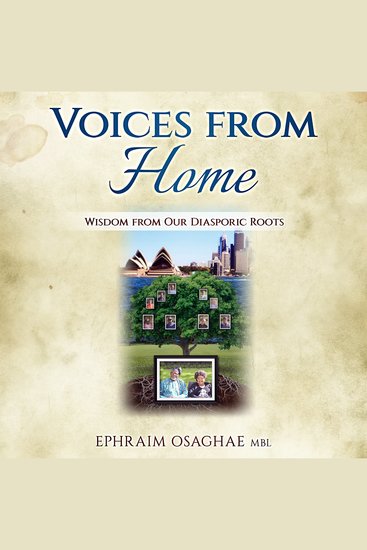
  • Voices from Home - Wisdom from Our Diasporic Roots - cover

    Voices from Home - Wisdom from...

    Ephraim Osaghae

    • 0
    • 0
    • 0
    Every human being is part of a bigger family, which is figuratively represented by the family tree. We have roots that extend beyond places and cultures of our current residences. This is particularly true for people in diaspora. Our roots still weigh a lot into our everyday living irrespective of geographical distance and time. Thus, would it not be beneficial to know and explore the advantages in our roots and avoid losing out, and losing deep? This is the main message of this book, "Voices from Home: Wisdom from our Diasporic Roots." 
    •This book will provide inspiration, some incentives, and a compass for teachable minds to explore and tap into the wealth of their roots. 
    •It provides insights on the key dynamics and interplay of cultures, underpinning motivations, and extended family structures of typical first-generation migrants. 
    •It informs global audiences about lived experiences of people of migrant backgrounds starting with the Australian context. 
    •It contributes to the value-adding conversations around the themes of identity, cross-cultural intelligence, sustainable migration, etc. 
    •It provides hints and tips for relevant policy makers, service providers, and other government officials, especially in the areas of sustainable migration. 
    •It is a resource material for intending, new, and emerging migrants as part of preparations for their migration journeys, as well as references for lessons learnt so they can position themselves for more meaningful experiences.
    Mostra libro
  • Yamnaya Culture The: The History of the Steppe Nomads in the Bronze Age - cover

    Yamnaya Culture The: The History...

    Editors Charles River

    • 0
    • 0
    • 0
    After the Mongols rode across the steppes of Asia and Eastern Europe and steppe nomads like the Magyars and Cumans became major military and cultural forces in Europe, the steppe nomads became notorious as foreign marauders who rode the steppes looking for plunder and riches, but they rarely stayed long after they got what they wanted. In reality, these groups represented vanguards of a massive nomadic horde that grew in ferocity and effectiveness as the centuries passed, and they were far more than mindless barbarians interested in violence alone – in fact, contemporary sources reveal they were also interested in diplomacy and eventually integrated with their sedentary neighbors. 
    	The actual history of these groups makes sense considering there were steppe nomads like them that lived in the region thousands of years earlier, back to around the time the Copper Age transitioned into the Bronze Age. The Fertile Crescent of Mesopotamia and the Levant are often referred to as the “cradle of civilization” because those lands hosted some of the world’s earliest complex societies began, but several hundred miles to the north, equally important advances in civilization were happening at the same time. North of the Caucus Mountains near the shores of the Black Sea on the Ukrainian-Russian steppes, the ancestors of Indo-European peoples were domesticating horses, dogs, and inventing the wheel in the late 5th and early 4th millennia BCE. A number of different localized ‘proto’ Indo-European cultures formed at this time that eventually coalesced into the larger culture that is today known as the Yamnaya culture. 
    	From about 3400-2600 BCE, the Yamnaya culture stretched from southeastern Europe into central Asia, greatly affecting other contemporary cultures in Europe and the Near East. The hallmarks of Yamnaya culture adopted by other cultures in the Near East and Europe include the use of metal tools and weapons.
    Mostra libro
  • Twice Told Tales - cover

    Twice Told Tales

    Nathaniel Hawthorne

    • 0
    • 0
    • 0
    Enter the captivating world of Nathaniel Hawthorne's "Twice Told Tales." This collection of short stories takes listeners on a journey through the mysterious and dark corners of the human psyche. Hawthorne's masterful storytelling skillfully weaves together elements of the supernatural, romance, and allegory, creating a rich tapestry of narratives that explore the complexities of human nature. Each tale is beautifully crafted, immersing the listener in atmospheric settings and thought-provoking themes. With its timeless allure and enduring relevance, "Twice Told Tales" invites you to unravel the secrets and delve into the depths of Hawthorne's imaginative storytelling.
    Mostra libro