Unisciti a noi in un viaggio nel mondo dei libri!
Aggiungi questo libro allo scaffale
Grey
Scrivi un nuovo commento Default profile 50px
Grey
Iscriviti per leggere l'intero libro o leggi le prime pagine gratuitamente!
All characters reduced
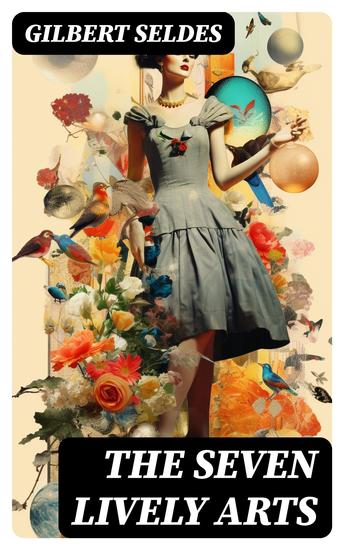
The Seven Lively Arts - Enriched edition - cover

The Seven Lively Arts - Enriched edition

Gilbert Seldes

Casa editrice: DigiCat

  • 0
  • 0
  • 0

Sinossi

In "The Seven Lively Arts," Gilbert Seldes crafts a compelling narrative that explores the significance of popular culture and entertainment in early 20th-century America. Written with a mix of critical analysis and accessible prose, Seldes examines the interplay between fine art and mass media, delving into performance, film, music, and more. His acute observations are interspersed with personal anecdotes and cultural critique, situating his work within the broader context of the American arts scene during a period of rapid change and modernization. Seldes effectively nuances the relationship between artistic merit and commercial success, thus challenging preconceived hierarchies in art appreciation. Gilbert Seldes was a pivotal figure in American cultural criticism, serving as both a writer and a public intellectual dedicated to elevating popular discourse around the arts. His upbringing in a vibrant, artistic environment and his engagement with avant-garde movements influenced his perspective—championing an inclusive view of art that resonated with a burgeoning mass audience. Seldes's advocacy for appreciating diverse forms of expression allows readers a window into the socio-cultural landscape of his time. Readers seeking a thought-provoking examination of art and its role in society will find "The Seven Lively Arts" an invaluable resource. With its keen insights into the intersection of culture and commerce, it remains relevant for those interested in understanding the dynamics of art in contemporary society. Seldes's work is essential for anyone wishing to grapple with the complexities of artistic expression and its broader cultural implications.

In this enriched edition, we have carefully created added value for your reading experience:
- A comprehensive Introduction outlines these selected works' unifying features, themes, or stylistic evolutions.
- A Historical Context section situates the works in their broader era—social currents, cultural trends, and key events that underpin their creation.
- A concise Synopsis (Selection) offers an accessible overview of the included texts, helping readers navigate plotlines and main ideas without revealing critical twists.
- A unified Analysis examines recurring motifs and stylistic hallmarks across the collection, tying the stories together while spotlighting the different work's strengths.
- Reflection questions inspire deeper contemplation of the author's overarching message, inviting readers to draw connections among different texts and relate them to modern contexts.
- Lastly, our hand‐picked Memorable Quotes distill pivotal lines and turning points, serving as touchstones for the collection's central themes.
Disponibile da: 21/11/2023.
Lunghezza di stampa: 228 pagine.
Altri libri che potrebbero interessarti

  • Little Women Podcast Q&A Your Questions Answered - cover

    Little Women Podcast Q&A Your...

    Niina Niskanen

    • 0
    • 0
    • 0
    How did I get started in Louisa May Alcott's research? Is Beth really just part of the sick girl trope or is there more in her? and why is Friedrich from Germany? Why did the film-makers erase Laurie's backstory? What is Amy's relationship with Catholicism? was Louisa May Alcott religious? Did she want to get married? are Fritz and Laurie really based on men in her life? I've got so many questions from you guys that I will answer them in this excellent Little Women Q&A. One thing that surprised me was that it was really difficult to find studies on Laurie. I was interested in Laurie as an individual, and why he behaves the way he does. I was expecting to find a lot about him because Laurie is a popular character, at least according to the filmmakers, a lot more popular than Friedrich, and I didn't find anything about him. Nothing about him being an orphan. The tricky relationship that he has with his grandfather or why he's hanging in Jo´s apron strings. There are scenes in Little Women where Laurie is annoyed when Jo is lecturing him, but he's still addicted to her care. Maybe Amy's screen portrayals are the reason why there hasn't been that much research made on May Alcott by scholars .I think the same applies to Laurie and Friedrich in films. Laurie is this pretty guy who Jo rejects. Then in a lot of the studies that I read, the writer was asking why did Louisa May Alcott marry Jo to an old German and not to the rich and handsome young Laurie? Okay. Friedrich is not old. He's 39. If you read letters between Louisa and her publisher, Thomas Niles, Louisa was the one who came up with all the marriages.When I was reading these essays, it was so frustrating because the book doesn't show Laurie as this manic pixie dream boy, as the movies do, but more as a seriously troubled young man.
    Mostra libro
  • Riding - cover

    Riding

    Pardis Mahdavi

    • 0
    • 0
    • 0
    In Riding, Pardis Mahdavi meditates on the lessons learned over a lifetime of horseback riding and the falling, failing, and joy it brings. At once a history of Caspian horses, an exploration of Mahdavi's Iranian-American identity and family history, and a consideration of the capacity for self-reflection and self-compassion through human-animal relationships, Riding offers a roadmap for learning to live in harmony with the self and the environment around us. Mahdavi shows how her relationship with horses gives her insights into intergenerational strength and tools for healing intergenerational trauma. Riding from the mountains of Iran to the beaches of California, Mahdavi shares her love affair with horses, rediscovers a homeland she longs for, and ultimately finds her strength.
    Mostra libro
  • Why War? - cover

    Why War?

    Richard Overy

    • 0
    • 0
    • 0
    Why has war been such a consistent presence throughout the human past? A leading historian explains, drawing on rich examples and keen insight. 


    Richard Overy is not the first scholar to take up the title question. In 1931, at the request of the League of Nations, Albert Einstein asked Sigmund Freud to collaborate on a short work examining whether there was "a way of delivering mankind from the menace of war." Published the next year as a pamphlet entitled Why War?, it conveyed Freud's conclusion that the "death drive" made any deliverance impossible—the psychological impulse to destruction was universal in the animal kingdom. The global wars of the later 1930s and 1940s seemed ample evidence of the dismal conclusion. 


    A preeminent historian of those wars, Overy brings vast knowledge to the title question and years of experience unraveling the knotted motivations of war. His approach is to separate the major drivers and motivations, and consider the ways each has contributed to organized conflict. They range from the impulses embedded in human biology and psychology, to the incentives to conflict developed through cultural evolution, to competition for resources. The discussions show remarkable range, delving deep into the Neolithic past, through the twentieth-century world wars, and up to the current conflict in Ukraine.
    Mostra libro
  • The Abolitionist’s Journal - Memories of an American Antislavery Family - cover

    The Abolitionist’s Journal -...

    James D. Richardson

    • 0
    • 0
    • 0
    Over the course of more than twenty years, James D. Richardson and his wife, Lori, retraced the steps of his ancestor, George Richardson (1824–1911), across nine states, uncovering letters, diaries, and more memoirs hidden away. Their journey brought them to the brink of the racial divide in America, revealing how his great-great-grandfather Richardson played a role in the Underground Railroad, served as a chaplain to a Black Union regiment in the Civil War, and founded a college in Texas for the formerly enslaved. 


    In narrating this compelling life, The Abolitionist's Journal explores the weight of the past as well as the pull of one's ancestral history. The author raises questions about why this fervent commitment to the emancipation of African Americans was nearly forgotten by his family, exploring the racial attitudes in the author's upbringing and the ingrained racism that still plagues our nation today. 


    As America confronts a generational reckoning on race, these important perspectives add a layer to our larger national story.
    Mostra libro
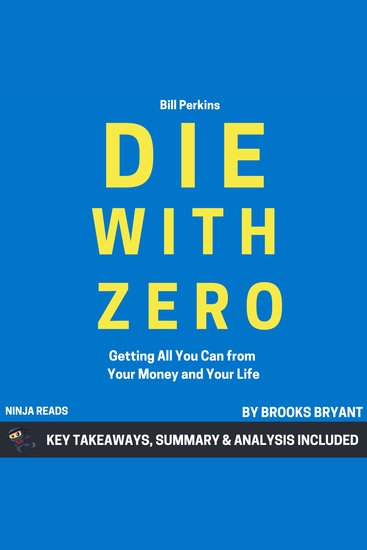
  • Summary: Die With Zero - Getting All You Can from Your Money and Your Life by Bill Perkins: Key Takeaways Summary & Analysis - cover

    Summary: Die With Zero - Getting...

    Brooks Bryant

    • 0
    • 0
    • 0
    Disclaimer: This is not the official book, but a summary & it does not accompany the official. 
    Step into the transformative philosophy of 'Die With Zero' by Bill Perkins. This isn't your traditional finance book; it's a call to action to optimize life's experiences and ensure that your wealth aligns with life's most fulfilling moments. Through engaging anecdotes and persuasive arguments, Perkins challenges the notion of accumulating wealth for a distant future, urging readers to spend, experience, and truly live in the present. 
    This summary distills Perkins' radical approach, guiding you through the fundamental shifts in mindset necessary to enrich your life journey. Discover how to balance accumulating wealth with spending on experiences that matter, ensuring you reach the end of life with zero regrets and memories to cherish. 'Die With Zero' is more than just a financial blueprint—it's a manifesto for living a life brimming with purpose, passion, and unforgettable moments
    Mostra libro
  • It's Too Late Now - The Autobiography of a Writer - cover

    It's Too Late Now - The...

    A. A. Milne

    • 0
    • 0
    • 0
    With characteristic self-deprecating humour, A.A. Milne recalls the formative events of his life: from a blissfully happy childhood to the writing of Winnie-the-Pooh and Christopher Robin. 
     
    ––––––––––––– 
     
    In his classic memoirs A. A. Milne, with his characteristic self-deprecating humour, recalls a blissfully happy childhood in the company of his brothers, and writes with touching affection about his father whom he adored. 
     
    From Westminster School he won a scholarship to Cambridge University where he edited the university magazine, Granta. He then went out into the world, determined to be a writer. He was assistant editor at Punch Magazine and enjoyed great success with his novels, plays and stories. And of course he is best remembered for his children's novels and verses featuring Winnie-the-Pooh and Christopher Robin. 
     
    This is both an account of how a writer was formed and a charming period piece on literary life – Milne met countless famous authors including H. G. Wells, J. M Barrie of Peter Pan fame and Rudyard Kipling. 
     
    ––––––––––––– 
     
    * Praise for It’s Too Late Now * 
     
    ‘A funny book, beautifully written’ NEIL GAIMAN 
     
    ‘A fascinating and insightful read into one of the greatest authors’ INDEPENDENT 
     
    ‘Warm and candid’ NEW YORK TIMES
    Mostra libro