Unisciti a noi in un viaggio nel mondo dei libri!
Aggiungi questo libro allo scaffale
Grey
Scrivi un nuovo commento Default profile 50px
Grey
Iscriviti per leggere l'intero libro o leggi le prime pagine gratuitamente!
All characters reduced
Psychological Warfare - cover

Psychological Warfare

Gideon Blackwood

Traduttore A AI

Casa editrice: Publifye

  • 0
  • 0
  • 0

Sinossi

Psychological Warfare explores the often-underestimated role of the human mind in military strategy and conflict. It examines how psychological tactics, such as propaganda and deception, have been used throughout history to influence the outcomes of battles and wars. The book highlights how understanding cognitive biases and leveraging vulnerabilities can be as decisive as physical force.For example, manipulating enemy morale has proven to be a potent tool, demonstrating that mental fortitude is as critical as military might. The book progresses from foundational concepts of psychological manipulation to detailed case studies drawn from military history. It showcases instances where misinformation campaigns and the exploitation of cognitive biases significantly altered the course of events.By synthesizing historical examples with psychological principles, Psychological Warfare provides a framework for understanding strategic operations. This approach shows how psychological tactics are integral to military success, offering valuable insights applicable beyond military strategy, such as in negotiation and crisis management.
Disponibile da: 10/03/2025.
Lunghezza di stampa: 81 pagine.
Altri libri che potrebbero interessarti

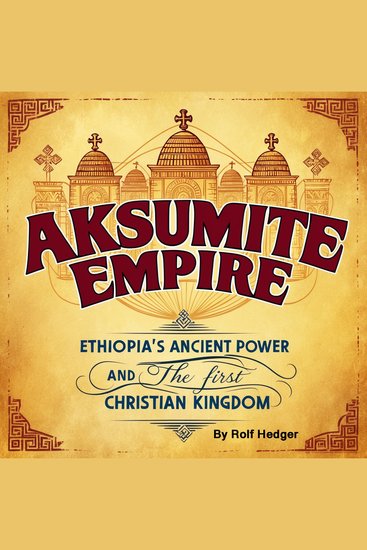
  • Aksumite Empire - Ethiopia's Ancient Power and the First Christian Kingdom - cover

    Aksumite Empire - Ethiopia's...

    Rolf Hedger

    • 0
    • 0
    • 0
    The Aksumite Empire was one of the most significant and influential civilizations of ancient Africa. Emerging around the first century AD, it became a powerful and sophisticated state that played a crucial role in connecting diverse cultures and trade networks across continents. Its strategic location, bridging the Red Sea and the interior of the African continent, allowed Aksum to flourish as both a political and economic hub, facilitating exchanges between the Mediterranean world, the Arabian Peninsula, and beyond. 
    At the heart of Aksum’s success was its remarkable ability to integrate various cultural and economic influences. The empire was not only a center for commerce but also a melting pot of traditions, languages, and beliefs. This rich cultural mosaic is reflected in its unique art, architecture, and inscriptions, which have provided modern scholars with invaluable insights into the life and achievements of this ancient society. The monuments and stelae scattered across the landscape serve as enduring testaments to the empire's power and its sophisticated understanding of both artistry and engineering. 
    The rise of Aksum was deeply intertwined with the development of its political structures and the establishment of a centralized administration. Early rulers of the empire forged alliances through both diplomacy and military might, thereby securing their territories against external threats and internal discord. As the state grew in power, it adopted innovative approaches to governance that balanced traditional practices with the demands of a rapidly expanding empire. These innovations laid the groundwork for what would later be recognized as the first Christian kingdom in Africa.
    Mostra libro
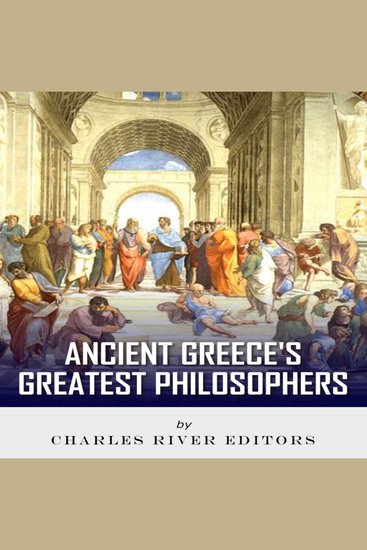
  • Ancient Greece’s Most Influential Philosophers - cover

    Ancient Greece’s Most...

    Editors Charles River

    • 0
    • 0
    • 0
    In virtually all fields of human endeavor, ancient Greece was so much at the forefront of dynamism and innovation that the products of its most brilliant minds remain not only influential but entirely relevant to this day. The great philosophers of Athens, men like Aristotle, Socrates, and Plato, interrogated themselves with startling complexity about the nature of good and evil, questioned the existence of divinity, advocated intelligent design, and went so far as to argue that all life was composed of infinitesimal particles.  
    	Although the school of philosophy started by Socrates and championed by Plato and Aristotle continues to be the most famous, other schools of thought began to branch, including the Epicureans and Cynics. In the 3rd century B.C., Stoicism arose in response to and under the influence of these older schools, combining many of the best theories from each into a more cohesive whole. With a greater flexibility and more practical application to everyday life, Stoicism quickly became a very popular school of thought, a growth made exponential by its introduction to the Romans.  
    Today, very few have heard of him, but he became a major philosophical and religious figure through the publication of his thoughts, travels, and miracles by Philostratus the Elder (c. 170-247 A.D.), written about a century after Apollonius of Tyana’s death. Philostratus the Elder’s works were based on the works of other writers (Maximus of Aegae, Damis, and Moeragenes), and miracles attributed to Apollonius were often compared to those of Jesus, who lived around the same time. Apollonius’s cult was important throughout the whole of the Pagan era and even carried on into the Middle Ages. Why such an important philosopher has been so forgotten by modern historians is in itself an interesting issue, and it is just as crucial to understand what Apollonius preached and the information he provided about his contemporary world. 
    Mostra libro
  • Christianity and the Qur'an - The Rise of Islam in Christian Arabia - cover

    Christianity and the Qur'an -...

    Gabriel Said Reynolds

    • 0
    • 0
    • 0
    A leading Qur'anic scholar's revisionary account of how Islam emerged in dialogue with Christian traditions Challenging the dominant narrative about the history of the Qur'an and the emergence of Islam in a predominantly pagan context, Gabriel Said Reynolds presents the Qur'an as a text born within a largely Christian culture. As he examines the ways the Qur'an engages with Christian traditions—not only those of the New Testament but also those of late antique Christian literature—and with Christians themselves, Reynolds also draws on recent scholarship on pre-Islamic Arabic inscriptions suggesting that monotheism, Christianity in particular, was a significant presence in the pre-Islamic Hijaz, the region in which Muhammad preached. This study resituates the Qur'an as a text thoroughly concerned with Christianity, not just the longer narratives of individuals such as Mary and Jesus but also passages that do not mention Christians explicitly. The Qur'an's stance toward Christianity is on occasion controversial, aiming to advance Islamic theology and undermine Christian apologetical arguments, yet the Qur'an is not always polemical. At times, the text makes use of the audience's knowledge of the Bible to advance its own vision of God and God's relationship with humanity.
    Mostra libro
  • Trauma Bonding - How to Stop Heartache Feeling Stuck and Rediscovering Yourself after Emotional Abuse - cover

    Trauma Bonding - How to Stop...

    Jane Gibson

    • 0
    • 0
    • 0
    Do you feel worthless, unimportant and unworthy of love? 
      
    Are you having difficulties living with your partner, but feel that you cannot make it without them? 
      
    Do you understand, deep down inside, that you deserve better; but just can’t seem to walk away from your partner? Does your partner regularly hurt you and then apologize? Does this make you feel overwhelmed and confused? 
      
    The answer to the above questions, although complex and often confusing, can be given in two words: Trauma Bonding. 
      
    Have you ever heard of Stockholm Syndrome? 
    This is a specific type of traumatic bond. 
      
    While this term typically refers to someone who is captive and develops positive feelings for their captor, this dynamic can occur in other situations and relationships. 
      
    Trauma Bonding is the worst of all hellish prisons. If you break the relationship, the toxic bond will make you want to beg for them back. 
      
    Specifically, this book will help you to:Recognize the dangerous stages of Trauma Bonding.Recognize when and why Trauma Bonding happens (Trauma Bonding within a family, friends or peers).Defuse toxic bonds in romantic relationships.Recognize things that strengthen a Trauma Bond.Use tools and exercises to break Trauma Bonds.Make a safe exit planHeal from a Trauma Bond 
      
    What should you do now? 
      
    Break the Trauma Bond! 
    This manual will take you step by step and help you to break through the combination of abuse and positive reinforcement that keeps you trapped in guilt, anxiety and emotional pain.
    Mostra libro
  • Rare Recording of Joan Didion Reading Her Novel A Book of Common Prayer A - Part 1 - cover

    Rare Recording of Joan Didion...

    Joan Didion

    • 0
    • 0
    • 0
    Joan Didion (December 5, 1934 - December 23, 2021), born in Sacramento, California, was an American author, screenwriter, and journalist. Her writing during the 1960s through the late 1970s engaged audiences in the realities of the counterculture of the 1960s, the Hollywood lifestyle, and the history and culture of California. She is considered one of the pioneers of New Journalism, along with Gay Talese, Truman Capote, Norman Mailer, Hunter S. Thompson, and Tom Wolfe. In the following audio recording, Didion reads from her novel, A Book of Common Prayer.
    Mostra libro
  • Chronic Pain Reset - 30 Days of Activities Practices and Skills to Help You Thrive - cover

    Chronic Pain Reset - 30 Days of...

    PsyD Afton L. Hassett, Barbara...

    • 0
    • 0
    • 0
    Build a plan to reclaim your life with this easy-to-follow program designed by a leading pain expert. 


    This indispensable guide explores the key role that your brain plays in processing pain and how small, simple actions can make profound changes in how you experience chronic pain. Chronic Pain Reset will help you evaluate your pain and its triggers, offering straightforward and often fun strategies to improve it. Using the principles of cognitive-behavioral therapy, you'll try one new evidence-based strategy each day for thirty days, from paced breathing and healthy sleep hacks to mindful walking and acts of kindness. The accessible strategies require as little as fifteen minutes a day and apply to all fitness levels. Step-by-step instructions guide you with humor and compassion to make learning and practicing the strategies more engaging. The ones that work best and that you like most will go into your Thriving Plan, a personalized pain-management tool kit that you design to help you lead a life with less pain, greater purpose, and more joy.
    Mostra libro