Unisciti a noi in un viaggio nel mondo dei libri!
Aggiungi questo libro allo scaffale
Grey
Scrivi un nuovo commento Default profile 50px
Grey
Iscriviti per leggere l'intero libro o leggi le prime pagine gratuitamente!
All characters reduced
Overcoming Planetary Ungovernability Now - An Invitation to a UN 20 - cover

Siamo spiacenti, non è possibile leggere questo libro nel Paese da cui ti connetti.

Overcoming Planetary Ungovernability Now - An Invitation to a UN 20

Georgios Zervas, Claudio Weiss

Casa editrice: WeQ Institute Horizonte Verlag

  • 0
  • 0
  • 0

Sinossi

The authors of this book describe the necessary steps to a substantially new quality of peace, security, and sustainable well-being for humanity in a simple yet convincing way. The action steps they propose are highly visionary and yet extremely realistic in a sense that they can actually create and secure planetary peace, security and sustainable fairness, justice and welfare for all.
The United Nations with the Security Council and other global organizations such as the World Trade Organization were once set up to achieve these goals. Although these organizations represented very valuable progress compared to the previous world situation, they are now in urgent need of appropriate adaptation. They need to be freed from veto rights and generally from too strong an orientation towards national interests - towards the preservation of peace, security and well-being for humanity as a whole. 
The Chinese philosopher Zhao Tingyang put it in a nutshell: "World order can only be the order of world sovereignty, guided by the common good of the world." Albert Einstein remarked as early as 1932: "The way to international security is that states unconditionally give up some of their freedom of action or sovereignty, and is should be unquestionable that there is no other way to achieve security."
Do we really need another World War to finally overcome planetary ungovernability at its root in clearly vital matters such as world peace and the preservation of ecosystems? How long do we wait to rethink the concept of national interest politics applied to issues that undeniably have a global, a human dimension, and which can only be managed with concepts to planetary sovereignty and the ability to act in a respectful way to the world?
The authors of this book propose two new UN ministries on the basis of the new principle of global effectiveness through global validity: The "World Peace Ministry" and "The World Trade Ministry". 
Today's Security Council should be transformed into a world peace ministry with clear rules for preventive conflict avoidance and a highly effective enforcement capability for effectively ending hot conflicts quickly.
The WTO is to be transformed into a strong world trade ministry, which is to lay down globally binding trade rules and ensure compliance with them with the corresponding sanctions.
The authors explain what both UN 2.0 facilities could look like in detail so that a global public discussion can be held on this basis.
Disponibile da: 08/01/2024.
Lunghezza di stampa: 116 pagine.
Altri libri che potrebbero interessarti

  • A Light in the Tower - A New Reckoning with Mental Health in Higher Education - cover

    A Light in the Tower - A New...

    Katie Rose Guest Pryal

    • 0
    • 0
    • 0
    With evocative storytelling and incisive research, Katie Rose Guest Pryal brings a new eye to the mental health crisis that higher education has faced for decades. Written from the perspective of a bipolar-autistic professor, A Light in the Tower is both a bracing account of the mental health crisis in higher education and a passionate and informed proposal for how to teach with mental health in mind. 


    Pryal contends that higher education's mental health crisis is the result of long-term systemic problems in education that demand nothing short of a revolution. She examines the anxiety that plagues campuses as a result of exploited and overworked contingent faculty and students, the shock events like COVID-19 and campus shootings that traumatize communities, the systemic and institutional burnout that affects higher education at every level, and the market-driven culture of toxic overwork. These are large-scale problems that need large-scale solutions. Addressing the stigma that haunts mental disability on campus, the ableism that hounds our teaching, and the cascade of mental health struggles that far too many faculty and students face, Pryal provides straightforward solutions to these complex challenges.
    Mostra libro
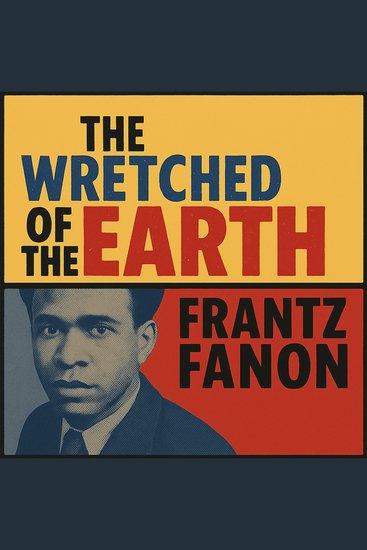
  • The Wretched of the Earth - cover

    The Wretched of the Earth

    Frantz Fanon

    • 0
    • 0
    • 0
    The Wretched of the Earth by Frantz Fanon is a powerful and provocative examination of the dehumanizing effects of colonization and the revolutionary paths toward liberation. Drawing from his experiences as a psychiatrist during the Algerian War of Independence, Fanon explores the psychological trauma inflicted by colonial rule and the violent upheaval necessary to reclaim dignity and self-determination. With passionate clarity, he critiques the failures of postcolonial leadership and urges a radical restructuring of society led by the oppressed. Originally published in 1961 with a preface by Jean-Paul Sartre, this landmark work has influenced generations of activists, scholars, and freedom fighters, making it an enduring cornerstone of anti-colonial thought and global liberation movements.
    Mostra libro
  • How We Think - Digital Media and Contemporary Technogenesis - cover

    How We Think - Digital Media and...

    N. Katherine Hayles

    • 0
    • 0
    • 0
    “How do we think?” N. Katherine Hayles poses this question at the beginning of this bracing exploration of the idea that we think through, with, and alongside media. As the age of print passes and new technologies appear every day, this proposition has become far more complicated, particularly for the traditionally print-based disciplines in the humanities and qualitative social sciences. With a rift growing between digital scholarship and its print-based counterpart, Hayles argues for contemporary technogenesis—the belief that humans and technics are coevolving—and advocates for what she calls comparative media studies, a new approach to locating digital work within print traditions and vice versa.Hayles examines the evolution of the field from the traditional humanities and how the digital humanities are changing academic scholarship, research, teaching, and publication. She goes on to depict the neurological consequences of working in digital media, where skimming and scanning, or “hyper reading,” and analysis through machine algorithms are forms of reading as valid as close reading once was. Hayles contends that we must recognize all three types of reading and understand the limitations and possibilities of each. In addition to illustrating what a comparative media perspective entails, Hayles explores the technogenesis spiral in its full complexity. She considers the effects of early databases such as telegraph code books and confronts our changing perceptions of time and space in the digital age, illustrating this through three innovative digital productions—Steve Tomasula’s electronic novel, TOC; Steven Hall’s The Raw Shark Texts; and Mark Z. Danielewski’s Only Revolutions. Deepening our understanding of the extraordinary transformative powers digital technologies have placed in the hands of humanists, How We Think presents a cogent rationale for tackling the challenges facing the humanities today.
    Mostra libro
  • Invested - How Three Centuries of Stock Market Advice Reshaped Our Money Markets and Minds - cover

    Invested - How Three Centuries...

    Paul Crosthwaite, Peter Knight,...

    • 0
    • 0
    • 0
    Invested examines the perennial and nefarious appeal of financial advice manuals. Who hasn’t wished for a surefire formula for riches and a ticket to the good life? For three centuries, investment advisers of all kinds, legit and otherwise, have guaranteed that they alone can illuminate the golden pathway to prosperity—despite strong evidence to the contrary. In fact, too often, they are singing a siren song of devastation. And yet we keep listening. Invested tells the story of how the genre of investment advice developed and grew in the United Kingdom and the United States, from its origins in the eighteenth century through today, as it saturates our world. The authors analyze centuries of books, TV shows, blogs, and more, all promising techniques for amateur investors to master the ways of the market: from Thomas Mortimer’s pathbreaking 1761 work, Every Man His Own Broker, through the Gilded Age explosion of sensationalist investment manuals, the early twentieth-century emergence of a vernacular financial science, and the more recent convergence of self-help and personal finance. Invested asks why, in the absence of evidence that such advice reliably works, guides to the stock market have remained perennially popular. The authors argue that the appeal of popular investment advice lies in its promise to level the playing field, giving outsiders the privileged information of insiders. As Invested persuasively shows, the fantasies sold by these writings are damaging and deceptive, peddling unrealistic visions of easy profits and the certainty of success, while trying to hide the fact that there is no formula for avoiding life’s economic uncertainties and calamities.
    Mostra libro
  • The Crimean War - 1853-1856 - cover

    The Crimean War - 1853-1856

    History Nerds

    • 0
    • 0
    • 0
    The Crimean War was a major conflict that took place between 1853 and 1856, involving Russia, the Ottoman Empire, France, and the United Kingdom. In this concise history book, you will delve into the causes, events, and consequences of this brutal war. From the Charge of the Light Brigade to the Siege of Sevastopol, this book provides a comprehensive overview of the key battles and turning points that defined the conflict. With vivid descriptions and insightful analysis, this book is a must-read for anyone interested in the history of warfare and international relations.
    Mostra libro
  • Life Is Short - An Appropriately Brief Guide to Making It More Meaningful - cover

    Life Is Short - An Appropriately...

    Dean Rickles

    • 0
    • 0
    • 0
    Why life's shortness—more than anything else—is what makes it meaningful 


    Death might seem to render pointless all our attempts to create a meaningful life. Doesn't meaning require transcending death through an afterlife or in some other way? On the contrary, Dean Rickles argues, life without death would be like playing tennis without a net. Only constraints—and death is the ultimate constraint—make our actions meaningful. In Life Is Short, Rickles explains why the finiteness and shortness of life is the essence of its meaning—and how this insight is the key to making the most of the time we do have. 


    Life Is Short explores how death limits our options and forces us to make choices that forge a life and give the world meaning. But people often live in a state of indecision, in a misguided attempt to keep their options open. This provisional way of living—always looking elsewhere, to the future, to other people, to other ways of being, and never committing to what one has or, alternatively, putting in the time and energy to achieve what one wants—is a big mistake, and Life Is Short tells listeners how to avoid this trap. By reminding us how extraordinary it is that we have any time to live at all, Life Is Short challenges us to rethink what gives life meaning and how to make the most of it.
    Mostra libro