Unisciti a noi in un viaggio nel mondo dei libri!
Aggiungi questo libro allo scaffale
Grey
Scrivi un nuovo commento Default profile 50px
Grey
Iscriviti per leggere l'intero libro o leggi le prime pagine gratuitamente!
All characters reduced
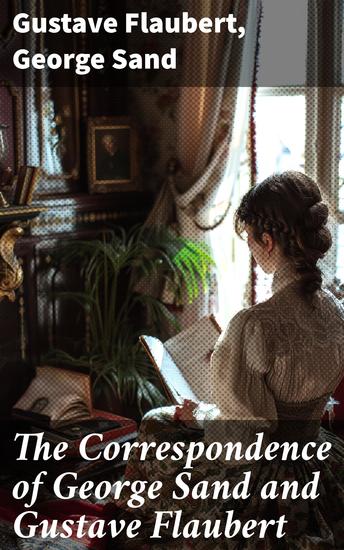
The Correspondence of George Sand and Gustave Flaubert - Collected Letters of the Most Influential French Authors - cover

The Correspondence of George Sand and Gustave Flaubert - Collected Letters of the Most Influential French Authors

George Sand, Gustave Flaubert

Casa editrice: Good Press

  • 0
  • 0
  • 0

Sinossi

The Correspondence of George Sand and Gustave Flaubert delves into the intricate, layered dialogues between two towering figures of French literature. The collection reveals a rich tapestry of themes that navigate the intricacies of the human condition, the tumultuous political landscape of 19th-century France, and the philosophical musings on art and society. Through a series of letters, the collection encapsulates a unique blend of literary styles'Äîfrom the realism of Flaubert to the social activism of Sand. This correspondence offers a treasure trove of insights, showcasing the diversity of thought and expression that characterizes their era, and highlighting notable excerpts that illuminate the transformative power of their epistolary exchange. Sand and Flaubert were literary giants each in their own right, yet their interaction reveals the profound mutual respect and intellectual curiosity that defined their exchanges. Sand, known for her pioneering feminist vision, and Flaubert, heralded for his meticulous commitment to narrative artistry, bring perspectives that are both contrasting and complementary. These correspondences are steeped in the historical and cultural milieu of their time, threading together the strands of Romanticism and Realism, and inviting readers to explore the dynamic intersection of these literary movements. This collection is a compelling portal into the vibrant dialogue and intellectual symbiosis between Sand and Flaubert. Readers are invited to immerse themselves in the nuances of these exchanges, gaining unparalleled access to the thoughts and emotions of two seminal writers. The Correspondence of George Sand and Gustave Flaubert stands as both a scholarly resource and an engaging read, offering a multifaceted exploration of 19th-century literary discourse and the timeless conversation between divergent yet intertwined literary minds.
Disponibile da: 06/01/2024.
Lunghezza di stampa: 420 pagine.


Altri libri che potrebbero interessarti

  • Company - Stories - cover

    Company - Stories

    Shannon Sanders

    • 0
    • 0
    • 0
    A richly detailed, brilliantly woven debut collection about the lives and lore of one Black family 
     
    Shannon Sanders’s sparkling debut brings us into the company of the Collins family and their acquaintances as they meet, bicker, compete, celebrate, worry, keep and reveal secrets, build lives and careers, and endure. Moving from Atlantic City to New York to DC, from the 1960s to the 2000s, from law students to drag performers to violinists to matriarchs, Company tells a multifaceted, multigenerational saga in thirteen stories. 
     
    Each piece includes a moment when a guest arrives at someone’s home. In “The Good, Good Men,” two brothers reunite to oust a “deadbeat” boyfriend from their mother’s house. In “The Everest Society,” the brothers’ sister anxiously prepares for a home visit from a social worker before adopting a child. In “Birds of Paradise,” their aunt, newly promoted to university provost, navigates a minefield of microaggressions at her own welcome party. And in the haunting title story, the provost’s sister finds her solitary life disrupted when her late sister’s daughter comes calling. 
     
    These are stories about intimacy, societal and familial obligations, and the ways inheritances shape our fates. Buoyant, somber, sharp, and affectionate, this collection announces a remarkable new voice in fiction.
    Mostra libro
  • Writing - Articles Blog Posts EBooks Messages And PLR - cover

    Writing - Articles Blog Posts...

    Owen Jones

    • 0
    • 0
    • 0
    I hope that you will find the information helpful, useful and profitable. 
    More people are writing now than at any time in the history of civilisation. This is mainly down to education and more free time. The generation of the parents of the Baby Boomers was the first generation of mass readers – certainly in the West, and probably globally. Their parents could read, usually, but had no tradition of reading books. Instead, they read mostly newspapers. Their children had a better education, and picked up the reading habit from their parents. They were also encouraged to read books at school. The first generation where this happened. 
    Their children, the post World War II Baby Boomers, continued the progression and became avid readers. In those days, not so long ago, say, between seventy and thirty years ago, people wrote letters by hand. It was a long, but very pleasant, personal experience. Then the home computer, email, and the Internet began to spread among the masses, and pen and ink gradually became replaced with message boards, posting to forums and email. 
    Before this point, writing had been a special event for most people... thank you letters, postcards, birthday cards, and the odd personal letter home or to a friend. The home computer made it easy to dash off a quick note to someone. It took far less time to write and deliver, or have delivered by the post office. Suddenly, everyone began writing and posting to family, friends, strangers and even enemies. A barrier had been lifted – barriers of time and formality, perhaps. 
    A high percentage of those Boomers, compared with other generations, have gone on to write some kind of book, or ebook. So, the Boomers are the first generation of working-class writers, and their parents were the first working-class generation of readers.
    Mostra libro
  • Growing Old Growing Cold - Notes on Swimming Aging and Finishing Last - cover

    Growing Old Growing Cold - Notes...

    Kathleen McDonnell

    • 0
    • 0
    • 0
    What is it about freezing cold water that draws people in? Throughout history, humans have gravitated to cold water swimming and celebrated its healing properties, calling it the secret to good health and serenity. Today, cold water swimmers gather in groups from Galway to Georgian Bay to jump into frigid waters for fun, competition, and even as a form of activism and protest.
    		 
    Kathleen McDonnell started swimming in Lake Ontario, infamous for its chilly depths, because it was close to home. As time went on she began to rely on a daily dip, even breaking through winter ice to raise her spirits and refresh her body. In this wide-ranging memoir, McDonnell shares her love of cold water swimming and the lessons she has learned from a slow and steady commitment to the waves.
    Mostra libro
  • The Shakespeare Conundrum - Examining the True Identity of the Literary Genius - cover

    The Shakespeare Conundrum -...

    John Harpoon

    • 0
    • 0
    • 0
    The question of who wrote the works attributed to William Shakespeare has intrigued scholars, historians, and literary enthusiasts for centuries. Despite being one of the most celebrated figures in the world of literature, Shakespeare’s true identity remains a subject of mystery. The sheer volume of his works, their profound depth, and the complexity of their themes have led many to wonder whether the man from Stratford-upon-Avon was truly the author of the plays and sonnets that bear his name. This uncertainty has given rise to one of the most enduring and controversial debates in literary history: the Shakespeare authorship question. 
      
    The core of this mystery lies in the limited biographical information available about Shakespeare’s life. Born in 1564 in Stratford-upon-Avon, Shakespeare’s early years remain largely undocumented, with no personal manuscripts or letters bearing his signature. The surviving records of his life mainly consist of legal documents, such as his marriage license, business transactions, and his will. While these historical artifacts confirm his existence and some of his professional endeavors, they provide little insight into his intellectual and literary development. For a figure of his stature, this absence of personal evidence is startling, leading some to question whether the “Stratford man” could have truly written the works attributed to him. 
      
    In the absence of definitive evidence, a number of alternative theories have emerged, suggesting that another writer, or group of writers, may have been responsible for Shakespeare’s remarkable body of work. These theories have ranged from the claim that the works were penned by an aristocrat such as Francis Bacon, to the suggestion that the true author was the playwright Christopher Marlowe, whose death in 1593 has been disputed by some.
    Mostra libro
  • Crisis Convoy - The Story of HX231 A Turning Point in the Battle of the Atlantic - cover

    Crisis Convoy - The Story of...

    Sir Peter Gretton

    • 0
    • 0
    • 0
    In April 1943, Commander Peter Gretton was in charge of escorting a vital Allied trade convoy from New York to Great Britain across the North Atlantic. Over the course of the voyage, the sixty-one merchant ships of convoy HX231, along with the six ships of B7 Escort Group, were continuously shadowed and attacked by a German wolf pack of twenty U-boats. 


    With the aid of air support, the convoy and defending escort fought valiantly across hundreds of miles of ocean and, despite poor weather conditions, managed to sink and severely damage several enemy submarines. Tragically six merchant ships were torpedoed and with no rescue vessel any survivors were left stranded in the freezing waters of the Atlantic as the convoy continued on its journey. 


    Drawing on reports from both sides, Gretton details the sequence of events as convoy HX231 battled its way through a large wolf pack and offers an authoritative post-battle analysis of the strategies, decisions, and actions taken that would ultimately see the tide of war turn in favor of victory for the Allies. 


    Crisis Convoy takes the listener to the heart of the action and is a thrilling account of naval warfare during World War II.
    Mostra libro
  • The Radical Potter - The Life and Times of Josiah Wedgwood - cover

    The Radical Potter - The Life...

    Tristram Hunt

    • 0
    • 0
    • 0
    From one of Britain's leading historians and the director of the Victoria & Albert Museum, a scintillating biography of Josiah Wedgwood, the celebrated eighteenth-century potter, entrepreneur, and abolitionist 


    Wedgwood's pottery, such as his celebrated light-blue jasperware, is famous worldwide. Jane Austen bought it and wrote of it in her novels; Empress Catherine II of Russia ordered hundreds of pieces for her palace. But the life of Josiah Wedgwood is far richer than just his accomplishments in ceramics. He was a leader of the Industrial Revolution, a pioneering businessman, a cultural tastemaker, and a tireless scientific experimenter whose inventions made him a fellow of the Royal Society. He was also an ardent abolitionist, whose Emancipation Badge medallion—depicting an enslaved African and inscribed "Am I Not a Man and a Brother?"—became the most popular symbol of the antislavery movement on both sides of the Atlantic. And he did it all in the face of chronic disability and relentless pain: a childhood bout with smallpox eventually led to the amputation of his right leg. 


    Drawing on a rich array of letters, journals, and historical documents, The Radical Potter brings us the story of a singular man, his dazzling contributions to design and innovation, and his remarkable global impact.
    Mostra libro