Unisciti a noi in un viaggio nel mondo dei libri!
Aggiungi questo libro allo scaffale
Grey
Scrivi un nuovo commento Default profile 50px
Grey
Iscriviti per leggere l'intero libro o leggi le prime pagine gratuitamente!
All characters reduced
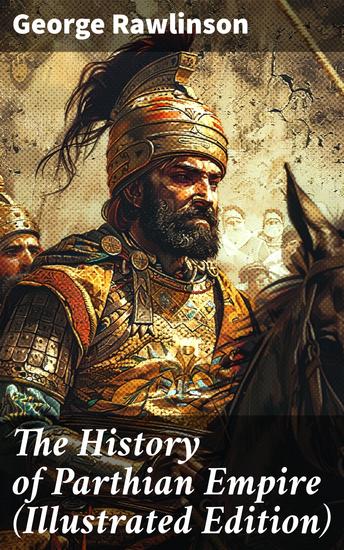
The History of Parthian Empire (Illustrated Edition) - Unveiling the Ancient Parthian Empire: Insights Illustrations and Impact - cover

The History of Parthian Empire (Illustrated Edition) - Unveiling the Ancient Parthian Empire: Insights Illustrations and Impact

George Rawlinson

Casa editrice: Good Press

  • 0
  • 0
  • 0

Sinossi

In "The History of the Parthian Empire (Illustrated Edition)," George Rawlinson presents a meticulously researched and vividly narrated account of one of the ancient world's most influential civilizations. Combining rigorous historical analysis with engaging prose, Rawlinson explores the rise and fall of the Parthian Empire, delving into its cultural, political, and military dimensions. The illustrated edition enhances the reading experience, providing visual context that enriches comprehension of this lesser-known empire's intricate tapestry of governance, warfare, and diplomacy, set against the backdrop of major ancient powers. George Rawlinson, a renowned 19th-century historian and Assyriologist, dedicated his academic career to uncovering the complexities of ancient history. His expertise in ancient languages and cultures significantly informed his scholarship, allowing him to access primary sources that other historians might overlook. His fascination with the Parthian Empire stemmed from its pivotal role in the dynamics of the ancient world, particularly in its interactions with Rome and the Seleucid Empire, making his insights both significant and timely. For those intrigued by ancient history and the legacies of powerful empires, Rawlinson's "The History of the Parthian Empire" is an essential read. It invites readers to appreciate the nuances of Parthian civilization and its broader implications for understanding historical geopolitics, revealing a landscape that continues to resonate through time.
Disponibile da: 29/12/2023.
Lunghezza di stampa: 254 pagine.

Altri libri che potrebbero interessarti

  • The Mandela Effect - Exploring the Phenomenon of False Collective Memories - cover

    The Mandela Effect - Exploring...

    John Harpoon

    • 0
    • 0
    • 0
    The Mandela Effect is a psychological phenomenon in which large groups of people remember an event, fact, or detail differently from documented reality. The term originates from a widespread belief that Nelson Mandela died in prison during the 1980s, despite historical records confirming his release in 1990 and later presidency of South Africa. Since then, the Mandela Effect has come to describe various collective false memories, ranging from misremembered movie quotes to altered brand logos and even significant historical events. While some view it as mere confusion or misinformation, others see it as evidence of alternate realities or shifts in consciousness.  
    The phenomenon gained widespread recognition through the internet, where individuals began sharing their experiences of remembering things differently than historical records suggest. Social media platforms, online forums, and viral discussions have amplified these false memories, making them more widespread and reinforcing the belief that something unusual is occurring. Many people report feeling unsettled upon discovering that their memories do not align with reality, further fueling speculation about the cause. Some theories suggest that quantum physics, parallel universes, or glitches in reality could be responsible. Others argue that the Mandela Effect is a result of how human memory works, shaped by cognitive biases and external influences.  
    Memory is not a perfect recording of past events; rather, it is a reconstructive process that can be influenced by suggestion, misinformation, and group reinforcement. Psychological research has shown that memories can be distorted over time, leading to the formation of collective false memories.
    Mostra libro
  • Black Power and the American Myth - 50th Anniversary Edition - cover

    Black Power and the American...

    C.T. Vivian

    • 0
    • 0
    • 0
    In 1970, C. T. Vivian, a close colleague of Martin Luther King, Jr. and a member of his executive staff, sat down to take stock of the civil rights movement and the progress it had made. His assessment was that it failed, and that the blame lay in the existence of myths about America. 


    As prophetic today as it was fifty years ago, Vivian's voice rings out as a critique and a call to action for a society in deep need of justice and peace. 


    The civil rights struggle that began when Rosa Parks, a seamstress in Montgomery, Alabama, decided to sit in the front of a bus has deeply altered American society and the American conscience. Yet from several perspectives, that movement has resulted in failure. The Black struggle for independence is more of an uphill climb than ever. Why? C. T. Vivian asserts that the civil rights movement failed because it was built on certain myths about America: 


    ● the myth that Americans will do what is right as soon as they know what is right. 


    ● the myth that legislation leads to justice. 


    ● the myth that America is an open society where any minority group can advance. 


    ● the myth that an ethic of love forms the core of the American conscience.
    Mostra libro
  • Asian Immigration in the United States: The History and Legacy of Asian Immigrants in the United States Over the Last 200 Years - cover

    Asian Immigration in the United...

    Editors Charles River

    • 0
    • 0
    • 0
    One of the most important and memorable events of the United States’ westward push across the frontier came with the discovery of gold in the lands that became California in January 1848. Located thousands of miles away from the country’s power centers on the east coast at the time, the announcement came a month before the Mexican-American War had ended, and among the very few Americans that were near the region at the time, many of them were Army soldiers who were participating in the war and garrisoned there. San Francisco was still best known for being a Spanish military and missionary outpost during the colonial era, and only a few hundred called it home. Mexico’s independence, and its possession of those lands, had come only a generation earlier. 
    The flow of Chinese immigrants increased dramatically in 1852, sparked in large part by a crop failure in southern China that caused the custom houses in San Francisco to swell with 20,026 Chinese arrivals. Even more Chinese came as news reached China about the apparent ease of mining in California. By the end of the decade, ⅕ of the population of the Southern Mines consisted of Chinese miners. Chinese miners would become known as the most industrious and tireless of the miners, finding gold in claims that previous owners had thought depleted and persisting in mining an area far longer than others who eventually left the fields altogether. 
    In many ways, this represented the start of an influx of immigrants coming from Asia to the United States, kicking off an often turbulent relationship and history that would lead to alienation, conflicts, immigration quotas, and more. This book looks at that history from the start, and how it affected those who came from Asia in the 19th century.
    Mostra libro
  • Voting in a Time of Change - cover

    Voting in a Time of Change

    Kevin YL Tan, Terrence Lee

    • 0
    • 0
    • 0
    GE2020: an election that should not be forgotten for yielding startling outcomes, including the appointment of the first Leader of the Opposition. 
     
     
    Voting in a Time of Change is part of a longitudinal study by editors Kevin YL Tan and Terence Lee, who have been assembling trenchant analyses of each General Election by leading academics and commentators since GE2011. Their long game makes possible specific and unique insights. Of GE2020, this is what they have to say: 
     
     
    “The major political shift in Singapore that started in 2011 is marching on, even amidst a Covid-19 pandemic that was to have been a great disrupter. Whether we call this a ‘New Normal’ – as many did back in 2011 – or otherwise is not as important as the momentum for change that has built up since then. Covid-19 thus became a political backdrop to a social and political shift that was merely searching for a catalyst.” 
     
     
    What insights and lessons can we carry forward to the next General Elections? This is an indispensable milestone publication for citizens who wish to commit to even more informed choices, and for political observers who are keeping close tabs on the evolution of our political landscape.
    Mostra libro
  • Reeling in the Queers - Tales of Ireland's LGBTQ Past - cover

    Reeling in the Queers - Tales of...

    Páraic Kerrigan

    • 0
    • 0
    • 0
    Marking fifty years of the founding of an LGBTQ rights movement in Ireland, Reeling in the Queers explores the lesser-known stories of the fight for LGBTQ rights since 1974, beyond decriminalisation and Marriage Equality. From 1990s boy bands to the AIDS priest, Fr Bernárd Lynch, from the Belfast Lesbian Line to proud parenting, from the earliest Pride events to the last days of Alternative Miss Ireland, fourteen distinct moments map the changing social and cultural landscape of Ireland.
    These stories, from across the island of Ireland – and further afield – celebrate a strong community and its allies, and speak across the generations. Together, they tell a new story of the gains, losses, devastation and community rising from the ashes of defeat. It is a hugely enjoyable and insightful read for both those who lived through this movement and for those who enjoy its benefits today.
    Drawing from oral history as well as archives, Reeling in the Queers brings even more to life the great big queer tapestry in Ireland. Queer history in Ireland is Irish history and acknowledging and celebrating the light and the dark of it protects all of our futures as much as our pasts.
     
    Mostra libro
  • Olmec Civilization - The First American Empire and Giant Stone Heads of Mesoamerica - cover

    Olmec Civilization - The First...

    Rolf Hedger

    • 0
    • 0
    • 0
    The Olmec civilization, often regarded as the "Mother Culture" of Mesoamerica, emerged around 1200 BCE in the tropical lowlands of present-day southern Mexico, specifically in the Gulf Coast region. This area, rich in natural resources, served as the cradle for one of the earliest and most influential cultures in the Americas. The Olmec are best known for their monumental stone heads, intricate artwork, and the development of many foundational aspects of Mesoamerican civilization. 
    The origins of the Olmec civilization can be traced back to a combination of environmental factors, agricultural innovations, and the development of social structures. The region’s fertile lands provided an abundant supply of food, particularly maize, which became the cornerstone of Olmec agriculture. The availability of other crops, such as beans, squash, and cassava, further supported the growth of a settled society. The Olmec were skilled farmers, and their ability to adapt to the challenging conditions of the tropical lowlands allowed them to create surplus food, leading to population growth and the emergence of more complex social and political systems. 
    One of the defining features of the Olmec civilization was the rise of their urban centers, most notably San Lorenzo, La Venta, and Tres Zapotes. These cities became hubs of political and religious activity, with powerful rulers who controlled vast territories. The creation of these urban centers marked a shift from small, scattered villages to larger, more centralized societies. The Olmec rulers established authority through both political power and religious influence, often associating themselves with divine figures and acting as intermediaries between the gods and the people. This centralization of power allowed for the coordination of large-scale construction projects, such as the creation of the colossal stone heads and other monumental sculptures.
    Mostra libro