Unisciti a noi in un viaggio nel mondo dei libri!
Aggiungi questo libro allo scaffale
Grey
Scrivi un nuovo commento Default profile 50px
Grey
Iscriviti per leggere l'intero libro o leggi le prime pagine gratuitamente!
All characters reduced
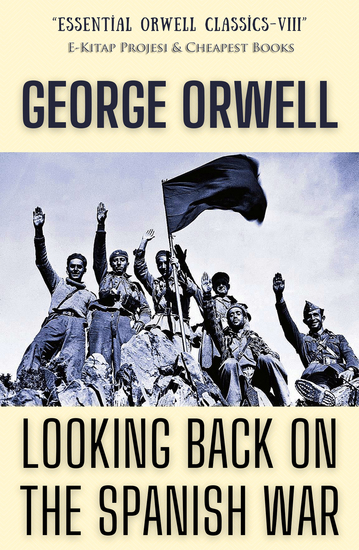
Looking Back on the Spanish War - cover

Looking Back on the Spanish War

George Orwell

Casa editrice: E-Kitap Projesi & Cheapest Books

  • 0
  • 0
  • 0

Sinossi

First of all the physical memories,The sounds, the smells and the surfaces of things. It is curious that more vividly than anything that came afterwards in the Spanish war I remember the week of so-called training that we received before being sent to the front - the huge cavalry barracks in Barcelona with its draughty stables and cobbled yards, the icy cold of the pump where one washed, the filthy meals made tolerable by pannikins of wine, the Trousered militia-women chopping firewood, and the roll-call in the early mornings where my prosaic English name made a sort of comic interlude among the resounding Spanish ones, Manuel Gonzalez, Pedro Aguilar, Ramon Fenellosa, Roque Ballaster, Jaime Domenech, Sebastian Viltron, Ramon Nuvo Bosch. I name those particular men because I remember the faces of all of them. Except for two who were mere riff-raff and have doubtless become good Falangists by this time, it is probable that all of them are dead. Two of them I know to be dead. The eldest would have been about twenty-five, the youngest sixteen. One of the essential experiences of war is never being able to escape from disgusting smells of human origin. Latrines are an overworked subject in war literature, and I would not mention them if it were not that the latrine in our barracks did its necessary bit towards puncturing my own illusions about the Spanish civil war. The Latin type of latrine, at which you have to squat, is bad enough at its best, but these were made of some kind of polished stone so slippery that it was all you could do to keep on your feet. In addition they were always blocked. Now I have plenty of other disgusting things in my memory, but I believe it was these latrines that first brought home to me the thought, so often to recur: 'Here we are, soldiers of a revolutionary army, defending Democracy against Fascism, fighting a war which is about something, and the detail of our lives is just as sordid and degrading as it could be in prison, let alone in a bourgeois army.' Many other things reinforced this impression later; for instance, the boredom and animal hunger of trench life, the squalid intrigues over scraps of food, the mean, nagging quarrels which people exhausted by lack of sleep indulge in.
Disponibile da: 27/11/2023.
Lunghezza di stampa: 75 pagine.
Altri libri che potrebbero interessarti

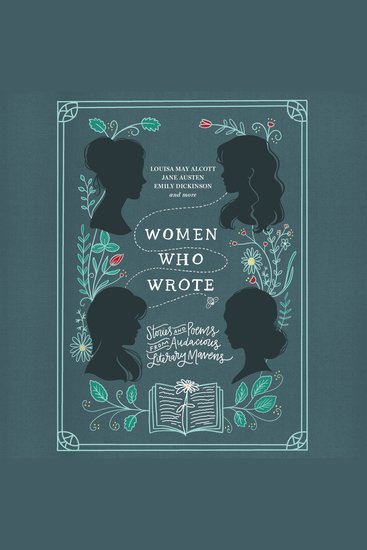
  • Women Who Wrote - Stories and Poems from Audacious Literary Mavens - cover

    Women Who Wrote - Stories and...

    Louisa May Alcott, Jane Austen,...

    • 0
    • 0
    • 0
    Meet the women who wrote.   
    They wrote against all odds. Some wrote defiantly; some wrote desperately. Some wrote while trapped within the confines of status and wealth. Some wrote hand-to-mouth in abject poverty. Some wrote trapped in a room of their father’s house, and some went in search of a room of their own. They had lovers and families. They were sometimes lonely. Many wrote anonymously or under a pseudonym for a world not yet ready for their genius and talent.   
    We know many of their names—Austen and Alcott, Brontë and Browning, Wheatley and Woolf—though some may be less familiar.  They are here, waiting to introduce themselves.  
    They marched through the world one by one or in small sisterhoods, speaking to each other and to us over distances of place and time. Pushing back against the boundaries meant to keep us in our place, they carved enough space for themselves to write. They made space for us to follow. Here they are gathered together, an army of women who wrote and an arsenal of words to inspire us. They walk with us as we forge our own paths forward.     
    These women wrote to change the world. The perfect keepsake gift for the reader in your lifeAnthology of stories and poemsBook length: approximately 90,000 words
    Mostra libro
  • Richard Bruce - Burglar - Former soldier and journalist that became a revered author and screenwriter - cover

    Richard Bruce - Burglar - Former...

    Edgar Wallace

    • 0
    • 0
    • 0
    Richard Horatio Edgar Wallace was born on the 1st April 1875 in Greenwich, London.  Leaving school at 12 because of truancy, by the age of fifteen he had experience; selling newspapers, as a worker in a rubber factory, as a shoe shop assistant, as a milk delivery boy and as a ship’s cook.  
     
    By 1894 he was engaged but broke it off to join the Infantry being posted to South Africa. He also changed his name to Edgar Wallace which he took from Lew Wallace, the author of Ben-Hur.  
     
    In Cape Town in 1898 he met Rudyard Kipling and was inspired to begin writing. His first collection of ballads, The Mission that Failed! was enough of a success that in 1899 he paid his way out of the armed forces in order to turn to writing full time.  
     
    By 1904 he had completed his first thriller, The Four Just Men. Since nobody would publish it he resorted to setting up his own publishing company which he called Tallis Press. 
      
    In 1911 his Congolese stories were published in a collection called Sanders of the River, which became a bestseller. He also started his own racing papers, Bibury’s and R. E. Walton’s Weekly, eventually buying his own racehorses and losing thousands gambling.  A life of exceptionally high income was also mirrored with exceptionally large spending and debts.  
     
    Wallace now began to take his career as a fiction writer more seriously, signing with Hodder and Stoughton in 1921. He was marketed as the ‘King of Thrillers’ and they gave him the trademark image of a trilby, a cigarette holder and a yellow Rolls Royce. He was truly prolific, capable not only of producing a 70,000 word novel in three days but of doing three novels in a row in such a manner. It was estimated that by 1928 one in four books being read was written by Wallace, for alongside his famous thrillers he wrote variously in other genres, including science fiction, non-fiction accounts of WWI which amounted to ten volumes and screen plays. Eventually he would reach the remarkable total of 170 novels, 18 stage plays and 957 short stories. 
     
    Wallace became chairman of the Press Club which to this day holds an annual Edgar Wallace Award, rewarding ‘excellence in writing’.  
     
    Diagnosed with diabetes his health deteriorated and he soon entered a coma and died of his condition and double pneumonia on the 7th of February 1932 in North Maple Drive, Beverly Hills. He was buried near his home in England at Chalklands, Bourne End, in Buckinghamshire.
    Mostra libro
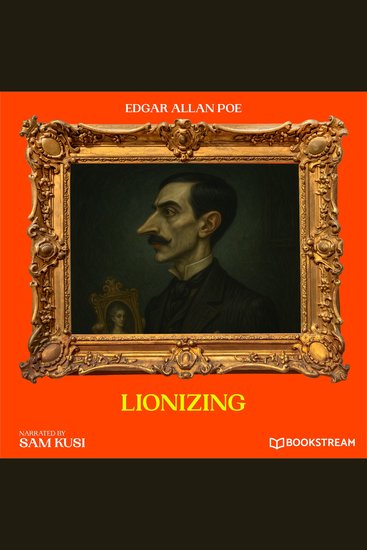
  • Lionizing - cover

    Lionizing

    Edgar Allan Poe

    • 0
    • 0
    • 0
    Lion-izing (A Tale): I am — that is to say, I was, a great man. But I am neither the author of Junius, nor the man in the mask — for my name is Thomas Smith, and I was born somewhere in the city of Fum-Fudge. The first action of my life was the taking hold of my nose with both hands. My mother saw this and called me a genius. My father wept for joy, and bought me a treatise on Nosology.
    Mostra libro
  • The Island of Doctor Moreau - cover

    The Island of Doctor Moreau

    H. G. Wells

    • 0
    • 0
    • 0
    Edward Prendick finds himself floating perilously in the ocean after having been shipwrecked. He is picked up and his life saved by the curious Dr Montgomery, a medical man travelling with a cargo of various wild animals. Prendick soon finds himself once again adrift at sea after an argument with a hostile and drunken captain. 
    For a second time Montgomery appears as his saviour and he is hauled ashore on the Island of Dr Moreau, Montgomery’s mysterious colleague and mentor. 
    As he encounters some of the deformed and bestial inhabitants on the island, Prendick soon comes to realise that he has heard of this infamous Dr Moreau before. Now begins a nightmarish existence as the full truth of Moreau’s scientific ambitions become horribly apparent. 
    Head StoriesAudio presents "The Island of Dr Moreau" by H.G. Wells. Narrated by Simon Hester. With original music.
    Mostra libro
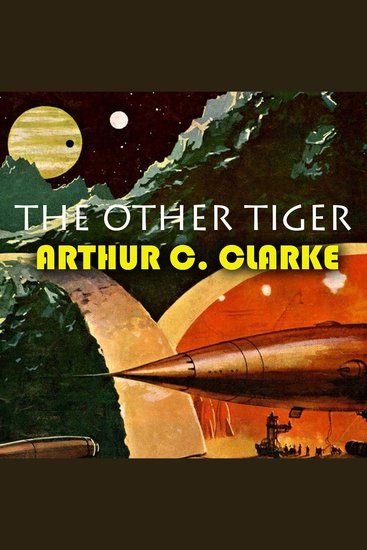
  • The Other Tiger - cover

    The Other Tiger

    Arthur C. Clarke

    • 0
    • 0
    • 0
    "The Other Tiger" was first published in the June/July 1953 issue of Fantastic Universe.Sir Arthur C. Clarke (1917-2008) is regarded as one of the most-influential science fiction writers of all time. He was named a Grand Master by the Science Fiction and Fantasy Writers of America, and was inducted into the Science Fiction and Fantasy Hall of Fame.Two English friends enjoy a stroll when one starts a conversation that if there are an infinite number of planets in the universe, then everything possible must happen. All of a sudden, the two men die at the hands of a mysterious monster.
    Mostra libro
  • The Tell-Tale Heart - cover

    The Tell-Tale Heart

    Edgar Allan Poe

    • 0
    • 0
    • 0
    The anonymous narrator is suffering from a strange hyper-sensitivity to everything around him.  He lives with an old man who has a clouded bluish eye, an abnormality that fascinates and disturbs him.  Resolving to kill the man and dispose of his body, he soon realizes in horror, however, his innocent victim may never let him forget what he has done.
    Mostra libro