Unisciti a noi in un viaggio nel mondo dei libri!
Aggiungi questo libro allo scaffale
Grey
Scrivi un nuovo commento Default profile 50px
Grey
Iscriviti per leggere l'intero libro o leggi le prime pagine gratuitamente!
All characters reduced
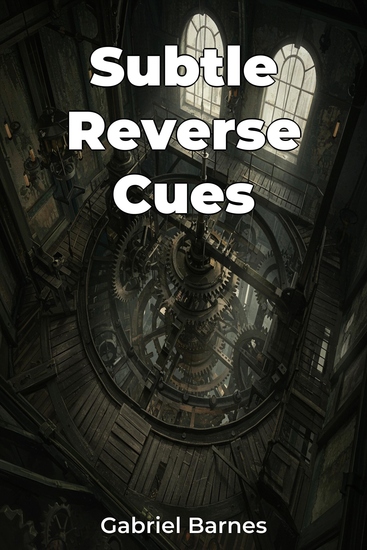
Subtle Reverse Cues - cover

Subtle Reverse Cues

Gabriel Barnes

Traduttore A AI

Casa editrice: Publifye

  • 0
  • 0
  • 0

Sinossi

Subtle Reverse Cues explores the hidden world of reverse psychology, revealing the subtle cues and psychological triggers that influence our daily decisions. It examines how understanding these almost invisible signals can empower you in social dynamics, enhance your influence ethically, and deepen your self-awareness. The book highlights the importance of recognizing these cues, as human behavior is often less rational than we think. For example, subtle social pressures, as demonstrated in historical experiments like the Milgram experiment, can significantly sway individual actions. This self-help guide focuses on identifying covert triggers, understanding the mechanics of reverse psychology, and applying these techniques ethically.

 
The book progresses from introducing core concepts to exploring the psychological principles behind reverse psychology, such as reactance theory. Major sections cover identifying verbal and non-verbal cues, practical techniques for applying reverse psychology in negotiation and relationships, and a detailed examination of ethical considerations.

 
Providing unique value, Subtle Reverse Cues hones in on the almost invisible signals that prime individuals for influence, rather than overt manipulation tactics.
Disponibile da: 27/02/2025.
Lunghezza di stampa: 88 pagine.

Altri libri che potrebbero interessarti

  • The Father - The completely gripping crime thriller from John Nicholl - cover

    The Father - The completely...

    John Nicholl

    • 0
    • 0
    • 0
    A completely gripping crime thriller that will have you hooked, from UK Top 50 bestselling author of The Bride  
    'A dark and devastating story that grips you from the very first page' T. J. Emerson, author of The Perfect Holiday. 
    What you don’t know can hurt you. 
    Thirty years ago Anthony Mailer was a seven-year-old boy trapped in Dr Galbraith’s basement. Now he’s a journalist, a husband and a father. But no matter how far he’s come, at times he’s still that scared little boy. 
    In order to save his marriage, he has to stop hiding from what happened and deal with it once and for all. 
    But digging into the past holds dangers Anthony never imagined . . . 
    A note from the author: While fictional, this book was inspired by true events. It draws on the author’s experiences as a police officer and child protection social worker. The story contains content that some readers may find upsetting. It is dedicated to survivors everywhere. 
    Get ready to be gripping onto your seat during this twisty, dark thriller. If you loved The Housemaid, The Girl on the Train, and The Couple at No.9 you'll love The Father. 
    Praise for The Father: 
    'The chill is tangible' Owen Mullen 
    'Dark, disturbing, and brilliant. Kept me up all night!' Diana Wilkinson 
    'A frightening book that lures us into the darkness where monsters live. John Nicholl's knowledge of this world from his years of police work makes his characters ring true' Billy Hayes 
    'An emotional roller coaster... I couldn't stop reading until I reached the end' McGarvey Black 
    'Dark and disturbing. One to really get your pulse racing. This is a story you won't forget' Ross Greenwood 
    ‘An outstanding piece of work by a truly masterful storyteller’ Anita Waller 
    'Disturbing and gripping . . . John Nicholl’s experience of police and child protection work adds truth and reality to Anthony’s search for closure' Phil Rowlands
    Mostra libro
  • Reforming Criminal Justice - A Christian Proposal - cover

    Reforming Criminal Justice - A...

    Matthew T. Martens

    • 0
    • 0
    • 0
    Noted Attorney and Seminary Graduate Matthew T. Martens Answers the Question: Does the Design and Operation of the American Criminal Justice System Reflect Christian Love of Neighbor? 
    Jesus told his followers that the entirety of the Old Testament's law is encapsulated in the commands to love God and to love their neighbors as themselves. In Reforming Criminal Justice: A Christian Proposal, Matthew T. Martens argues that love of neighbor must be the animating force for true reformation of the criminal justice system, obligating us to seek the best for both the criminally victimized and the criminally accused. 
    Using his theological training Martens reveals how Scripture provides several guideposts (accuracy, due process, accountability, impartiality, and proportionality) for loving our neighbors as it relates to criminal justice. Then, drawing on his near quarter century practicing criminal law, he examines how America's justice system falls short of the biblical standard. By understanding how our current system operates and considering how love of neighbor relates to issues of crime and justice, we will be better equipped to seek true Christian reform of the justice system.
    
    - A Biblical Perspective on Criminal Justice: Offers a biblical framework for thinking about the concept of justice for both the victim and the perpetrator
    - Examines the History of the American Criminal Justice System: Surveys the evolution of the criminal justice system in the United States with a focus on its misuse from the time of the Civil War to the civil rights movement
    - Assesses the Criminal Justice System: Examines the operation of the American justice system today, including plea bargains, assistance of counsel, the death penalty, and more
    - Foreword by Derwin L. Gray: Pastor of Transformation Church in Indian Land, South Carolina, and the author of How to Heal Our Racial Divide and Building a Multiethnic Church
    Mostra libro
  • Stories from Kathasaritasagara series -1 - From Various sources - cover

    Stories from Kathasaritasagara...

    Anusha HS

    • 0
    • 0
    • 0
    The book Kathasaritsagara has been created by Soma Deva. It consists of 21,500 shlokas. 
     This book Kathasaritsagara has been divided into 18 lambakaas, and those 18 lambakaas are still more divided into 125 Tharanga's. 
     Some lambakaas are very big, while some are very small. 
     If there are 115 Shlokas in the 11th Lambaka, there are around 4925 Shlokas in 12th Lambaka. 
     During ancient times from the mouth of Lord Shiva, this story got birth. Those who listen to this story will experience all sorts of worldly pleasures. They will be blessed by Lord Shiva and at last reach jnana Loka by the blessings of lord shiva.
    Mostra libro
  • How to Interpret the Constitution - cover

    How to Interpret the Constitution

    Cass R. Sunstein

    • 0
    • 0
    • 0
    From New York Times bestselling author Cass Sunstein, a timely and powerful argument for rethinking how the U.S. Constitution is interpreted 
     
    The U.S. Supreme Court has eliminated the right to abortion and is revisiting other fundamental questions today—about voting rights, affirmative action, gun laws, and much more. Once-arcane theories of constitutional interpretation are profoundly affecting the lives of all Americans.  
    In this brief and urgent book, Harvard Law School professor Cass Sunstein provides a lively introduction to competing approaches to interpreting the Constitution—and argues that the only way to choose one is to ask whether it would change American life for the better or worse. If a  
    method of interpretation would eliminate the right of privacy, allow racial segregation, or obliterate free speech, it would be unacceptable for that reason. 
     
    But some Supreme Court justices are committed to “originalism,” arguing that the meaning of the Constitution is settled by how it was publicly understood when it was ratified.  
     
    Originalists insist that their approach is dictated by the Constitution. That, Sunstein argues, is a big mistake. The Constitution doesn’t contain instructions for its own interpretation.  
     
    Any approach to constitutional interpretation needs to be defended in terms of its broad effects—what it does to our rights and our institutions. It must respect those rights and institutions—and safeguard the conditions for democracy itself. 
     
    Passionate and compelling, How to Interpret the Constitution is essential reading for anyone who is concerned about how the Supreme Court is changing the rights and lives of Americans today.
    Mostra libro
  • Beyond Measure - The Hidden History of Measurement from Cubits to Quantum Constants - cover

    Beyond Measure - The Hidden...

    James Vincent

    • 0
    • 0
    • 0
    A vibrant account of how measurement has invisibly shaped our world, from ancient civilizations to the modern day. 


    From the cubit to the kilogram, the humble inch to the speed of light, measurement is a powerful tool that humans invented to make sense of the world. In this revelatory work of science and social history, James Vincent dives into its hidden world, taking listeners from ancient Egypt, where measuring the annual depth of the Nile was an essential task, to the intellectual origins of the metric system in the French Revolution, and from the surprisingly animated rivalry between metric and imperial, to our current age of the "quantified self." At every turn, Vincent is keenly attuned to the political consequences of measurement, exploring how it has also been used as a tool for oppression and control. 


    Beyond Measure reveals how measurement is not only deeply entwined with our experience of the world, but also how its history encompasses and shapes the human quest for knowledge.
    Mostra libro
  • The Library of Alexandria - When Knowledge Nearly Disappeared - cover

    The Library of Alexandria - When...

    Aayush Agarawal

    • 0
    • 0
    • 0
    The Library of Alexandria: When Knowledge Nearly Disappeared is a comprehensive historical narrative that chronicles the rise and tragic fall of humanity's greatest repository of ancient knowledge. This meticulously researched work traces the Library's journey from Alexander the Great's ambitious vision through the Ptolemaic golden age to its ultimate destruction across multiple catastrophic events. 
    The book is structured in five distinct parts: The Birth of Wonder explores Alexander's dream and the Ptolemies' grand project to create the world's first universal library; The Golden Age of Knowledge celebrates the revolutionary discoveries in mathematics, astronomy, medicine, and literature that emerged from this intellectual paradise; The Seeds of Decline examines how political upheaval and religious transformation gradually undermined the institution; What Was Lost catalogs the irreplaceable treasures of human knowledge that vanished forever; and Lessons for the Digital Age draws urgent parallels between ancient Alexandria and our contemporary digital knowledge infrastructure. 
    Written in an engaging, accessible style that brings ancient scholars like Euclid, Eratosthenes, and Hypatia vividly to life, the book serves as both a celebration of human intellectual achievement and a sobering warning about the fragility of knowledge preservation. It demonstrates how the Library's destruction was not a single catastrophic event but a series of tragic episodes spanning centuries—from Julius Caesar's fire to Christian destruction of pagan learning to the final Arab conquest.
    Mostra libro