Unisciti a noi in un viaggio nel mondo dei libri!
Aggiungi questo libro allo scaffale
Grey
Scrivi un nuovo commento Default profile 50px
Grey
Iscriviti per leggere l'intero libro o leggi le prime pagine gratuitamente!
All characters reduced
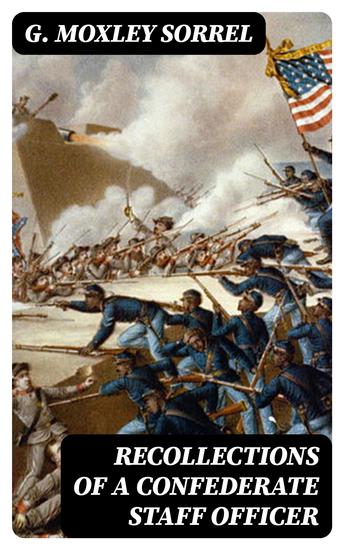
Recollections of a Confederate Staff Officer - cover

Recollections of a Confederate Staff Officer

G. Moxley Sorrel

Casa editrice: DigiCat

  • 0
  • 0
  • 0

Sinossi

In "Recollections of a Confederate Staff Officer," G. Moxley Sorrel offers an intimate and personal account of his experiences during the American Civil War as a member of General James Longstreet's staff. This memoir, written in a reflective and engaging prose style, immerses readers in the strategic corridors of war while illustrating the complexities and emotional toll of military life. Sorrel's narrative is both a historical document and a literary artifact that provides insight into the Southern perspective of the conflict, highlighting the moral ambiguities faced by soldiers and leaders alike in a vividly drawn antebellum South. G. Moxley Sorrel was not only a soldier but a keen observer of the human experience, serving close to pivotal figures in the Confederate army. His position on Longstreet's staff afforded him a unique vantage point to witness the unfolding events of the war, shaping his reflections into a compelling narrative that balances loyalty, duty, and the harsh realities of battlefield life. Sorrel's subsequent career as a prominent civil engineer further informs his structured approach to presenting historical events, emphasizing the importance of memory in shaping national identity. This book is highly recommended for readers interested in Civil War history, military strategy, or personal narratives of conflict. Sorrel's eloquent prose and candid reflections provide a rich understanding of a tumultuous era, making "Recollections of a Confederate Staff Officer" an essential addition to both scholarly collections and personal libraries.
Disponibile da: 02/06/2022.
Lunghezza di stampa: 203 pagine.

Altri libri che potrebbero interessarti

  • Success and Ethics - Implementation and Measurements of Ethical Principles in Management - cover

    Success and Ethics -...

    Georg F. Sievers

    • 1
    • 0
    • 0
    In einer groß angelegten europaweit durchgeführten Studie – mit einem besonderen Schwerpunkt auf die den sog. Visegrád-Staaten – war es Zielsetzung, die Unternehmensethik als Wettbewerbsfaktor zu erforschen. Dies mit dem Ziel, die Voraussetzungen für den nachhaltigen Transfer ethischer Werte in die unternehmerische Praxis (das unternehmerische (Personal-)Management) zu untersuchen und daraus portable Modelle für die Implementierung und Validierung (Zertifizierung, Messung) ethischer Schlüsselwerte zu entwickeln. Leitfrage der Untersuchung war es dabei, wie sich der Bezug zwischen ökonomischem Interesse und ethischer Normenorientierung so vermitteln lässt, dass die Etablierung ethischer Werte im Unternehmensmanagement anstatt zu einer Einschränkung zu einer Erhöhung der Wettbewerbsstärke (Ethik als Erfolgsfaktor) führt.
    Mostra libro
  • The American Crisis - cover

    The American Crisis

    Thomas Paine

    • 0
    • 0
    • 0
    In "The American Crisis," Thomas Paine delivers a resounding call to arms during the darkest hours of the American Revolution. Through a series of impassioned essays, Paine inspires resilience and unity, reminding readers that freedom’s triumph demands unwavering courage. His eloquent prose captures the tumultuous spirit of a nascent nation, making this work not just a historical document, but a timeless testament to the enduring fight for liberty.
    Mostra libro
  • Enigmatic Empire The: Unraveling the Secrets of Ancient Egypt - Egypt History Unearthed: 5000 Years of Ancient Egyptian History Dynasties and Mysteries - cover

    Enigmatic Empire The: Unraveling...

    Nathaniel Graves

    • 0
    • 0
    • 0
    In The Enigmatic Empire: Unraveling the Secrets of Ancient Egypt, journey through the heart of Egyptian history, from the Nile’s first civilizations to the twilight of the pharaohs. This definitive exploration of Ancient Egyptian history reveals how the history of Egypt shaped the ancient world, blending meticulous scholarship with gripping storytelling. 
    Discover how Ancient Egypt rose from scattered Nile settlements to a powerhouse of innovation, spirituality, and imperial ambition. Decode the history of ancient Egypt through its pyramids, temples, and hieroglyphs—monuments that still guard secrets of forgotten rituals, political betrayals, and divine kingship. 
    Why did the Nile’s floods dictate the rhythm of Egyptian history? How did mummification reflect their obsession with eternity? What caused the fall of dynasties that once ruled the history of the ancient world? Drawing on cutting-edge archaeology and primary sources, this book answers these questions while unearthing new mysteries. 
    From the daily lives of farmers to the intrigues of queens like Nefertiti and Hatshepsut, The Enigmatic Empire offers a panoramic view of Ancient Egypt—a civilization that redefined art, religion, and power. Perfect for enthusiasts of Egypt history and scholars alike, this work bridges millennia, proving why Ancient Egyptian history remains eternally captivating.
    Mostra libro
  • Heedfulness - cover

    Heedfulness

    Bhikkhu Khantipālo

    • 0
    • 0
    • 0
    This is an audiobook of Bodhi Leaves No. 98 by Bhikkhu Khantipālo, 'Heedfulness' found in the Pariyatti Edition of Collected Bodhi Leaves Vol. IV, narrated by Shelina Hetherington. 
     
    Excerpt: 
    ...The quality of heedfulness has been praised many times by the Exalted Buddha, just as the opposite, heedlessness, has been condemned. In this Dhamma, there is much to be practised and there is practice suitable for every posture of the body and every minute of the day. There is practice to be done concerning the stream of thoughts racing in the mind, there is more practice connected with the thousands of words spoken every day, and there is Dhamma-practice for the body, whatever it is doing. Now none of this can be accomplished without heedfulness, without making effort, without employing mindful awareness, or without wisdom. Heedfulness implies the conscious cultivation of these three aspects of Dhamma: effort, mindfulness and wisdom....
    Mostra libro
  • The Rise of Capitalism - How Market Economies Shaped Modern Wealth and Innovation - cover

    The Rise of Capitalism - How...

    Arlo Holders

    • 0
    • 0
    • 0
    The origins of capitalism can be traced back to the gradual shift from feudal economies to market-based systems. In medieval Europe, wealth was primarily tied to land ownership, with a rigid social hierarchy that limited economic mobility. The feudal system depended on agrarian production, where peasants worked the land owned by nobles in exchange for protection. However, as trade expanded and urban centers grew, the foundations of capitalism began to emerge. 
    One of the earliest indicators of this transformation was the rise of merchant guilds and early banking systems. As trade routes connected Europe, Asia, and the Middle East, merchants sought more efficient ways to conduct business, leading to the establishment of guilds that regulated commerce and maintained quality standards. Banking families, such as the Medici in Renaissance Italy, played a crucial role in financing trade and investment, paving the way for modern financial institutions. The shift toward money-based transactions rather than bartering allowed wealth to accumulate outside the traditional feudal framework. 
    Another key development was the concept of private property and individual ownership. In the late medieval period, the enclosure movement in England marked a significant departure from communal farming practices. Landowners began fencing off common lands for private use, displacing many rural laborers and forcing them to seek employment in emerging industries. This shift not only created a labor force for industrial production but also reinforced the idea that property and capital could be owned, bought, and sold freely—an essential pillar of capitalism.
    Mostra libro
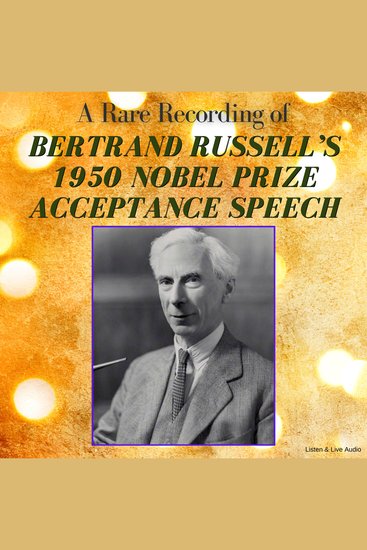
  • A Rare Recording of Bertrand Russell’s 1950 Nobel Prize Acceptance Speech - cover

    A Rare Recording of Bertrand...

    Bertrand Russell

    • 0
    • 0
    • 0
    Bertrand Arthur William Russell (May 18, 1872 – February 2, 1970) was born in Monmouthshire, Wales, into one of the most prominent aristocratic families in Britain. Russell was a philosopher, logician, mathematician, historian, prominent anti-war activist, and an outspoken opponent of nuclear weapons. On December 11, 1950, Russell delivered the following speech at the ceremony for his Nobel Prize in Literature.
    Mostra libro