Unisciti a noi in un viaggio nel mondo dei libri!
Aggiungi questo libro allo scaffale
Grey
Scrivi un nuovo commento Default profile 50px
Grey
Iscriviti per leggere l'intero libro o leggi le prime pagine gratuitamente!
All characters reduced
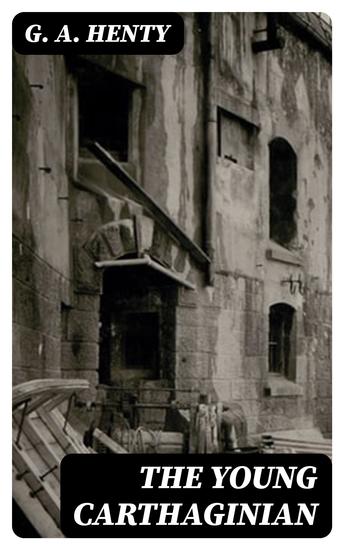
The Young Carthaginian - A Story of The Times of Hannibal - cover

The Young Carthaginian - A Story of The Times of Hannibal

G. A. Henty

Casa editrice: DigiCat

  • 0
  • 0
  • 0

Sinossi

In 'The Young Carthaginian,' G. A. Henty crafts a rich tapestry of historical adventure set in the ancient world, focusing on the life of a young boy named Mago who yearns for adventure and purpose amidst the backdrop of Carthaginian society on the brink of conflict with Rome. Henty's signature literary style combines meticulous historical research with vivid storytelling, enabling readers to experience both the excitement of battle and the intricacies of ancient cultures. The narrative is steeped in Henty's masterful use of dialogue and meticulously described settings, effectively transporting readers to a time of political intrigue and war. G. A. Henty, a prominent Victorian author and war correspondent, had a lifelong fascination with history and adventure, which influenced his prolific writing. His experiences during the Crimean War and his travels throughout Europe and the Middle East inspired him to create stories that were not only entertaining but also educational. 'The Young Carthaginian' reflects Henty's deep appreciation for classical civilizations and his intent to instill a sense of moral fortitude and character in his young readers. This book is highly recommended for those interested in historical fiction, as it offers an engaging exploration of ancient Carthage while resonating with themes of courage, loyalty, and the complexity of human experience. Whether you're a history enthusiast or a lover of adventure tales, 'The Young Carthaginian' promises to captivate and inspire.
Disponibile da: 15/09/2022.
Lunghezza di stampa: 285 pagine.

Altri libri che potrebbero interessarti

  • Battle of Anzio The: The History of the Allies’ Controversial Amphibious Landing during the Italian Campaign of World War II - cover

    Battle of Anzio The: The History...

    Editors Charles River

    • 0
    • 0
    • 0
    The immense difficulties Sicily's rugged terrain caused to the Allied forces, and the successful delaying actions fought by small numbers of well-led German soldiers, inspired Hitler and his generals to garrison Italy as an obstacle to British and American advance. A relatively limited number of Wehrmacht troops used the endless series of mountain ridges and defensible hilltop towns to slow the offensive to a crawl, tying down large numbers of Western troops. 
    	Under Albert Kesselring's expert leadership, the Germans fell back northward methodically, fighting a major delaying action at Volturno in mid-October 1943. The Wehrmacht then established themselves on the Reinhard Line, a temporary defensive front meant to delay the Allies until the Germans finished preparing the stronger Gustav Line, stretching from Gaeta to Ortona and anchored on the formidable strongpoint near the early medieval monastery of Monte Cassino. 
    	The Allies did not intend the attack on Cassino as a simple slogging match, understanding quite clearly the cost of such an operation. Instead, they planned a landing at Anzio by an entire army corps, the U.S. 6th Corps, to outflank the Gustav Line and force the Germans' withdrawal to avoid encirclement. It was a sound plan, but it would turn into something of a fiasco under the leadership of Major General John P. Lucas. The Anzio landing occurred on schedule on January 22, 1944, and despite achieving total tactical surprise, Lucas squandered the opportunity to run amok in the Gustav Line's rear by remaining supinely in Anzio. Winston Churchill, with his typical verve, excoriated Lucas' failure with a colorful description: “Instead of hurling a wildcat onto the shore all we got was a stranded whale.” A later German report also expressed surprise at Lucas' inaction. 
    What followed was months of bitter fighting as the Allies struggled to break out of their beachhead and make their long-awaited push to Rome.
    Mostra libro
  • Drawing the Line - What to Do with the Work of Immoral Artists from Museums to the Movies - cover

    Drawing the Line - What to Do...

    Erich Hatala Matthes

    • 0
    • 0
    • 0
    Recent years have proven rife with revelations about the misdeeds, objectional views, and, in some instances, crimes of popular artists. Given more access than ever thanks to social media and the internet in general, the public has turned an alert and critical eye upon the once-hidden lives of previously cherished entertainers. But what should we members of the public do, think, and feel in response to these artists' actions or statements? It's a predicament that many of us face: whether it's possible to disentangle the deeply unsettled feelings we have toward an artist from how we respond to the art they produced. As consumers of art, and especially as fans, we have a host of tricky moral question to navigate: do the moral lives of artists affect the aesthetic quality of their work? Is it morally permissible for us to engage with or enjoy that work? Can we separate an artist from their art? 


    In Drawing the Line, Erich Hatala Matthes offers insight and clarity to the ethical questions that dog us. He argues that it doesn't matter whether we can separate the art from the artist, because we shouldn't. Matthes argues both that the lives of artists can play an important role in shaping our moral and aesthetic relationship to the artworks that we love and that these same artworks offer us powerful resources for grappling with the immorality of their creators.
    Mostra libro
  • Integrity in Actions - The Honest Practice - cover

    Integrity in Actions - The...

    Esther Jameson

    • 0
    • 0
    • 0
    Integrity is often regarded as one of the most essential virtues, yet its true meaning is far more complex than many assume. At its core, integrity is the alignment of one's actions with their values, beliefs, and principles. It is the foundation of trust, and without it, relationships—both personal and professional—are built on fragile ground. Integrity goes beyond just telling the truth; it involves living authentically and consistently, regardless of external pressures or consequences. It is about doing what is right, even when no one is watching, and staying true to one's principles, even when the path seems difficult. 
    To truly understand integrity, it’s important to distinguish it from honesty. While honesty is certainly a component of integrity, the latter involves a deeper commitment to ethical living. Honesty refers to the act of telling the truth, whereas integrity encompasses the broader commitment to act in a way that reflects personal moral values and societal expectations. Someone with integrity not only speaks the truth but also lives truthfully. This practice manifests in how a person carries themselves through their decisions, actions, and behaviors, and is a constant process of self-checking to ensure they remain in alignment with their ethical principles. 
    The importance of integrity in daily life cannot be overstated. In a world full of distractions and temptations, staying grounded in integrity can be a challenge. Yet, it is through consistent, small acts of integrity that we build our character. These small decisions may seem insignificant at the time but accumulate over a lifetime to define who we are and how others perceive us. Integrity impacts not just personal satisfaction but also how we are seen in the eyes of others. People are drawn to those who exhibit strong moral character, and trust grows in environments where integrity is consistently practiced.
    Mostra libro
  • Sunbelt Capitalism and the Making of the Carceral State - cover

    Sunbelt Capitalism and the...

    Kirstine Taylor

    • 0
    • 0
    • 0
    The story of how the American South became the most incarcerated region in the world’s most incarcerated nation.
     
    Sunbelt Capitalism and the Making of the Carceral State examines the evolution of southern criminal punishment from Jim Crow to the dawn of mass incarceration, charting this definitive era of carceral transformation and expansion in the southern United States. The demise of the county chain gang, the professionalization of police, and the construction of large-scale prisons were among the sweeping changes that forever altered the southern landscape and bolstered the region’s capacity to punish. What prompted this southern revolution in criminal punishment?
     
    Kirstine Taylor argues that the crisis in the cotton fields and the arrival of Sunbelt capitalism in the south’s rising metropolises prompted lawmakers to build expansive, modern criminal punishment systems in response to Brown v. Board of Education and the Black freedom movements of the 1960s and ‘70s. Taking us inside industry-hunting expeditions, school desegregation battles, the sit-in movement, prisoners’ labor unions, and policy commissions, Taylor tells the story of how a modernizing south became the most incarcerated region in the globe’s most incarcerated nation.
    Mostra libro
  • Shut Up and Write Your First Book - 48 Reasons That Stand in your Way - cover

    Shut Up and Write Your First...

    Natasa Denman

    • 0
    • 0
    • 0
    • Have you been told time and time again that you should write a book? 
    • Is fear and procrastination preventing you from achieving this goal? 
    • Are you ready to finally smash your excuses and become a published author? 
    In this must-read book, Australia’s leading book mentor Natasa Denman shares the proven tips and strategies that will set you up for your book writing success. Natasa has helped hundreds of people just like you, from all around the world, go from uncertain, fearful and confused, to published authors. Having heard every reason under the sun from the thousands of people she has met at her writing seminars, in this book she unpacks the 48 main obstacles that come up time and time again. 
    Shut Up and Write Your First Book is the first book in the game-changing trilogy that includes Ultimate 48 Hour Author and Shut Up and Sell Your First Book. Packed with powerful insights, you’ll discover the underlying reasons why so many people give up on their dreams of becoming the author they always wanted to be – and how you can smash through the excuses and make it happen. 
    This book will help you work on your mindset and get you out of your own way. Don’t be like the unfortunate majority who realise it actually takes a bloody long time NOT to write a book. If you are sick and tired of making excuses, let Natasa show you how you can overcome all of the obstacles that are blocking your path. It’s time to Shut Up and Write Your First Book!
    Mostra libro
  • Brazil - A Historical and Economic Odyssey - cover

    Brazil - A Historical and...

    Anya Solace

    • 0
    • 0
    • 0
    Brazil is the fifth-largest country in the world, both in terms of land area and population. Its geographical diversity is staggering, stretching across the continent of South America and featuring a wide range of ecosystems, from the vast Amazon rainforest to the arid Sertão of the Northeast. The country’s geography is a crucial part of its identity, influencing the development of its people, culture, and economy. From the dense forests and sprawling wetlands to the mountainous regions and extensive coastline, Brazil’s landforms have played a significant role in shaping its history and societal structure. 
    The Amazon rainforest, often referred to as the "lungs of the Earth," is perhaps the most famous of Brazil’s natural wonders. Covering roughly 60% of Brazil’s territory, the Amazon Basin is home to an immense variety of plant and animal species, many of which are found nowhere else on Earth. The region is not only rich in biodiversity but also plays a pivotal role in regulating the global climate. However, the Amazon has also faced threats over the years, including deforestation, land conversion for agriculture, and illegal mining, leading to ongoing debates over conservation and development. 
    Brazil’s coastline, stretching over 7,000 kilometers, is another defining feature of its geography. Major cities like Rio de Janeiro and São Paulo sit along this coast, benefiting from access to international trade routes and abundant natural resources. The coastline also plays a crucial role in the cultural identity of the country, with Brazil’s famous beach culture, music, and cuisine often reflecting the coastal way of life. These cities and others in the coastal region became centers of economic activity during the colonial period and continue to be important hubs of commerce and industry.
    Mostra libro