Unisciti a noi in un viaggio nel mondo dei libri!
Aggiungi questo libro allo scaffale
Grey
Scrivi un nuovo commento Default profile 50px
Grey
Iscriviti per leggere l'intero libro o leggi le prime pagine gratuitamente!
All characters reduced
The Crocodile (Classic Unabridged Edition) - cover

The Crocodile (Classic Unabridged Edition)

Fyodor Dostoyevsky

Casa editrice: DigiCat

  • 0
  • 0
  • 0

Sinossi

In "The Crocodile," Fyodor Dostoyevsky presents a satirical novella that delves into the absurdities of human nature and societal norms through the lens of a bizarre narrative involving a man who is swallowed by a crocodile. This work intricately blends humor and existential angst, characteristic of Dostoyevsky's literary style, offering a profound commentary on bureaucracy and the human condition. It reflects the socio-political climate of 19th-century Russia, where the absurdities of modern life frequently intersected with philosophical inquiries into existence and morality. Dostoyevsky, a pivotal figure in Russian literature, faced many hardships that informed his worldview, including imprisonment and financial instability, which cultivated his acute awareness of the complexities of human existence. These experiences, alongside an evolving sense of moral philosophy, shaped his writing style, often characterized by deep psychological insight and social critique. "The Crocodile" stands as a sardonic examination of materialism and the absurdity of modern life, likely influenced by his own tumultuous experiences in a rapidly changing society. This novella is highly recommended for readers seeking a thought-provoking exploration of absurdity within the context of societal critique. Dostoyevsky's deft humor and sharp observations invite readers to reflect on their own realities while engaging with the timeless themes of identity and existential absurdity.
Disponibile da: 04/12/2023.
Lunghezza di stampa: 94 pagine.
Altri libri che potrebbero interessarti

  • New Machiavelli The - Book the First: The Making of a Man (Unabridged) - cover

    New Machiavelli The - Book the...

    H. G. Wells

    • 0
    • 0
    • 0
    Herbert George "H. G." Wells (1866 - 1946) was an English writer.
    He was prolific in many genres, including the novel, history, politics, social commentary, and textbooks and rules for war games. Wells is now best remembered for his science fiction novels and is called a "father of science fiction"
    BOOK THE FIRST: THE MAKING OF A MAN: Since I came to this place I have been very restless, wasting my energies in the futile beginning of ill-conceived books. One does not
    settle down very readily at two and forty to a new way of living, and I have found myself with the teeming interests of the life I have abandoned still buzzing like a swarm of homeless bees in my head.
    Mostra libro
  • The Scarlet Letter - cover

    The Scarlet Letter

    Nathaniel Hawthorne

    • 0
    • 0
    • 0
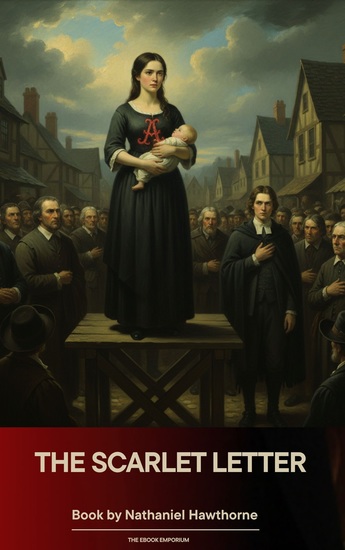
    "On the breast of her gown, in fine red cloth, surrounded with an elaborate embroidery... appeared the letter A."
    
    When Hester Prynne emerges from a dark prison cell with an illegitimate infant in her arms and a scarlet "A" stitched to her chest, she becomes the living symbol of sin in her community. Yet, as she bears her public shame with quiet dignity, the true villains of the story remain hidden in the shadows. The Scarlet Letter follows the intertwined fates of three people: Hester, who finds strength in her isolation; Arthur Dimmesdale, the revered minister dying under the weight of his secret guilt; and Roger Chillingworth, the vengeful husband whose soul withers as he seeks to destroy them. Hawthorne's "Romance" is a lush, atmospheric journey into a world where the laws of man and the laws of the heart are in a constant, tragic collision.
    
    The letter "A" itself is one of the most famous symbols in literature. Initially intended to represent "Adultery," it evolves throughout the novel to mean "Able," "Angel," and even "Awe," as Hester's character transforms her punishment into a badge of resilience. Even her daughter, Pearl, serves as a "living hieroglyphic" of her mother's passion and pain.
    
    Hawthorne goes beyond a simple morality tale to explore the physical effects of spiritual distress. He vividly depicts Dimmesdale's deteriorating health as his conscience eats away at him, contrasting it with the "black man" of the forest—the symbol of the devilish temptation to abandon one's humanity for the sake of hidden impulses.
    
    The Scarlet Letter was one of the first mass-produced books in America and remains a staple of the literary canon. Its themes of social hypocrisy, the nature of evil, and the possibility of redemption are as relevant today as they were in the mid-19th century. It is a story that proves that while society may brand the body, only the individual can define the soul.
    
    Uncover the secret behind the letter. Purchase "The Scarlet Letter" today.
    Mostra libro
  • Use of Ideals The (Unabridged) - cover

    Use of Ideals The (Unabridged)

    H. G. Wells

    • 0
    • 0
    • 0
    Herbert George "H. G." Wells (1866 - 1946) was an English writer.
    He was prolific in many genres, including the novel, history, politics, social commentary, and textbooks and rules for war games. Wells is now best remembered for his science fiction novels and is called a "father of science fiction"
    THE USE OF IDEALS: "Ideals!" said my uncle; "certainly Ideals. Of course one must have
    ideals, else life would be bare materialism. Bare fact alone, naked necessity, is impossible barren rock for a soul to root upon.
    Mostra libro
  • Blue & Green - From their pens to your ears genius in every story - cover

    Blue & Green - From their pens...

    Virginia Woolf

    • 0
    • 0
    • 0
    Adeline Virginia Woolf was born on the 25th January 1882 in South Kensington in London. 
    Although lauded as a founder of modernist writing with such classics as ‘Orlando’, ‘Mrs Dalloway’ and ‘To the Lighthouse’ and, of course, many classic short stories, her background is filled with elements of tragedy that she somehow overcame to become such a revered writer.   Her mother died when she was 13, her half-sister Stella two years later and with it her first of several nervous breakdowns.  Appallingly it was later found that three of her half-brothers had sexually abused her so darkness must have seemed ever present.   
    She began writing professionally at age 20 but her father’s death two years later brought a complete mental collapse and she was briefly institutionalised.  Somehow she found within herself a literary career and with it great innovations in writing; she was a pioneer of “stream of consciousness”.    
    Her tight circle of friends were the founders of the Bloomsbury Group, a movement whose legacy still influences across the arts and society in many way to this day.   
    Whilst the dark periods continued to interrupt her emotional state her rate of work never ceased.  Until, on 28th March 1941, Woolf put on her overcoat, filled up its pockets with stones, and walked into the River Ouse, in Lewes, East Sussex and drowned herself.  Her body was not recovered until the 18th April.  She was 59. 
    She left behind a note which read in part “Dearest, I feel certain that I am going mad again.  I feel we can't go through another of those terrible times.  And I shan't recover this time.  I begin to hear voices, and I can't concentrate.  So I am doing what seems the best thing to do”.
    Mostra libro
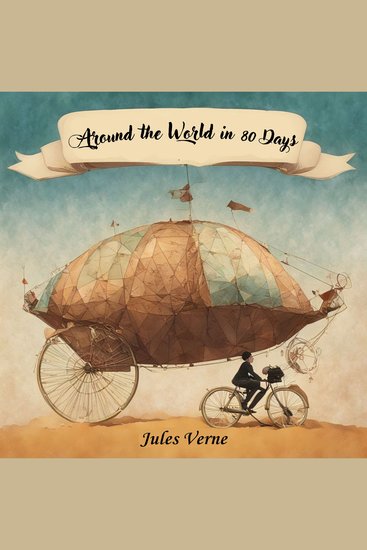
  • Around the World in 80 Days - a classic adventure novel for the new era - cover

    Around the World in 80 Days - a...

    Jules Verne

    • 0
    • 0
    • 0
    "Around the World in 80 Days" is a classic adventure novel written by Jules Verne, first published in 1872. The story follows Phileas Fogg, a wealthy and precise Englishman, who makes a daring bet that he can circumnavigate the globe in just 80 days. Accompanied by his loyal valet, Passepartout, Fogg embarks on a whirlwind journey using various modes of transportation, from trains and ships to elephants. Along the way, they face numerous obstacles and challenges, including being pursued by a detective who mistakenly believes Fogg is a bank robber. The novel is a thrilling tale of adventure, ingenuity, and perseverance.
    Mostra libro
  • David Swan - From their pens to your ears genius in every story - cover

    David Swan - From their pens to...

    Nathaniel Hawthorne

    • 0
    • 0
    • 0
    Nathaniel Hawthorne was born on 4th July 1804 in Salem, Massachusetts, a town synonymous with the earlier Salem Witch Trials. It was instrumental in Hawthorne’s later use of American Gothic and dark romanticism in his writing. 
    He was a mere four years old when his father died and his mother took him and his two sisters to live with her family and then on to their own home in Raymond, Maine. The young Hawthorne had a passion for fiction and poetry and voraciously read the works of Ann Radcliffe, Henry Fielding and Lord Byron.  
    He was sent to college at his maternal uncle’s insistence. During these years he met and befriended Henry Wadsworth Longfellow and future U S president Franklin Pierce. These friendships were lifelong and to have a crucial impact on his writings and career.  
    At college Hawthorne had made attempts at writing short stories and essays but without opportunities to publish. It was only in 1828 that he finally published his novel ‘Franshawe’ to little success and so he began work as editor for the American Magazine of Useful and Entertaining Knowledge.  
    Hawthorne’s short stories were first published in magazines but in 1837 were collected and published as ‘Twice-Told Tales’. A steady literary career still did not come his way and so he worked in a good position at Salem’s port and married the love of his life Sophia Peabody. They moved to live in ‘The Old Manse’ at Concord, Massachusetts.   
    Finally. in 1850 came spectacular literary and commercial success with ‘The Scarlet Letter’ followed by ‘The House of the Seven Gables’ the following year.  
    In 1852, Hawthorne published a biography of presidential candidate Franklin Pierce. After Pierce’s victory he was appointed consul in Liverpool, a position that offered prestige, money and fame. At the end of this appointment he returned several times to Europe before settling in Massachusetts and resuming writing and publication. 
    During the early 1860’s his health declined and on 19th May 1864 during a trip to Plymouth, New Hampshire. He was 59 and was buried in Sleepy Hollow Cemetery in Concord, Massachusetts.
    Mostra libro