Unisciti a noi in un viaggio nel mondo dei libri!
Aggiungi questo libro allo scaffale
Grey
Scrivi un nuovo commento Default profile 50px
Grey
Iscriviti per leggere l'intero libro o leggi le prime pagine gratuitamente!
All characters reduced
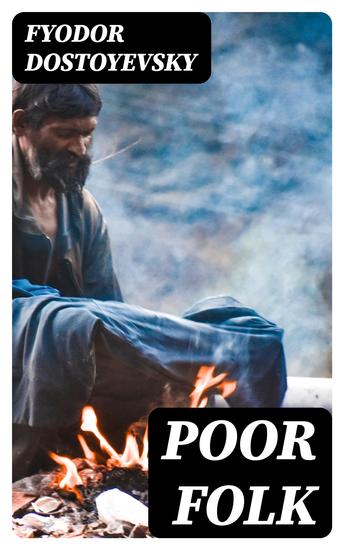
Poor Folk - cover

Poor Folk

Fyodor Dostoyevsky

Traduttore C. J. Hogarth

Casa editrice: DigiCat

  • 0
  • 0
  • 0

Sinossi

In "Poor Folk," Fyodor Dostoyevsky delivers a poignant exploration of the lives of the impoverished citizens of 19th-century St. Petersburg, melding epistolary narrative with profound psychological insight. The novel follows the correspondence between Makar Devushkin, a humble clerk, and his young neighbor, Varvara Dobroselova, illuminating their struggles against societal indifference and personal despair. With its rich character development and stark realism, Dostoyevsky demonstrates the stark contrasts between human emotion and the harsh conditions of poverty, marking a significant precursor to his later works that delve deep into existential themes. Dostoyevsky, influenced by his own experiences of financial hardship and personal turmoil, constructs a compassionate narrative that reflects his early commitment to social justice. His exposure to the destitute and disenfranchised in Russian society, particularly after his imprisonment and subsequent exile, propelled him to create a literary landscape that portrays genuine human suffering. This backdrop not only informs the narrative but also underscores Dostoyevsky's evolving philosophical concerns regarding morality and the struggles of the human spirit. "Poor Folk" is a vital read for anyone seeking to understand the formative themes that underpin Dostoyevsky's oeuvre. It offers a striking perspective on empathy, resilience, and the social fabric of his time, making it an essential recommendation for readers interested in classic literature, psychology, and social issues.
Disponibile da: 15/09/2022.
Lunghezza di stampa: 129 pagine.

Altri libri che potrebbero interessarti

  • Emma - cover

    Emma

    Jane Austen

    • 0
    • 0
    • 0
    Emma, by Jane Austen, is a novel about youthful hubris and the perils of misconstrued romance. The story takes place in the fictional village of Highbury and the surrounding estates of Hartfield, Randalls, and Donwell Abbey and involves the relationships among individuals in those locations consisting of "3 or 4 families in a country village". The novel was first published in December 1815 while the author was alive, with its title page listing a publication date of 1816. As in her other novels, Austen explores the concerns and difficulties of genteel women living in Georgian–Regency England; she also creates a lively comedy of manners among her characters and depicts issues of marriage, gender, age, and social status.
    Before she began the novel, Austen wrote, "I am going to take a heroine whom no one but myself will much like." In the first sentence, she introduces the title character as "Emma Woodhouse, handsome, clever, and rich." Emma is spoiled, headstrong, and self-satisfied; she greatly overestimates her own matchmaking abilities; she is blind to the dangers of meddling in other people's lives; and her imagination and perceptions often lead her astray.
    Emma, written after Austen's move to Chawton, was the last novel to be completed and published during her life, as Persuasion, the last novel Austen wrote, was published posthumously.
    This novel has been adapted for several films, many television programmes, and a long list of stage plays. It is also the inspiration for several novels.
    Mostra libro
  • The Kreutzer Sonata - A Dark Exploration of Love Jealousy and Moral Struggle - A Modern Translation - Adapted for the Contemporary Reader - cover

    The Kreutzer Sonata - A Dark...

    Leo Tolstoy

    • 0
    • 0
    • 0
    Can love and desire ever truly coexist without destruction? 
    In The Kreutzer Sonata, Leo Tolstoy presents one of his most controversial and psychologically complex works. Through the intense and confessional narrative of Pozdnyshev, a man consumed by jealousy and suspicion, the novel explores the fragile nature of marriage, the dangers of unchecked passion, and society’s distorted views on love and relationships. 
    After years of emotional estrangement, Pozdnyshev becomes convinced that his wife is unfaithful, leading him down a path of paranoia and despair. As his obsession grows, his inability to control his emotions drives him to commit an unthinkable act. Inspired by Tolstoy’s own moral and philosophical struggles, The Kreutzer Sonata is a scathing critique of romantic idealism, sexual passion, and the hypocrisies of social convention. 
    What You’ll Discover in This Modern Translation:A Harrowing Psychological Drama – Experience the raw and unsettling depths of human obsession and moral conflict.A Powerful Social and Moral Critique – Witness Tolstoy’s sharp dissection of love, marriage, and societal expectations.A Masterpiece in a Fresh, Readable Style – This modern adaptation ensures the novel’s brilliance and complexity remain accessible for contemporary audiences.A Timeless Story That Challenges and Provokes – Explore themes of jealousy, guilt, and the destructive potential of unchecked emotions. 
    More than just a novel, The Kreutzer Sonata is a haunting exploration of the dark side of love and the psychological forces that drive people to the edge. 
    Can passion and purity ever coexist, or must one always destroy the other? 
    Get your copy today and experience one of Tolstoy’s most gripping and thought-provoking works.
    Mostra libro
  • Utopia - cover

    Utopia

    Thomas More

    • 0
    • 0
    • 0
    'For if you suffer your people to be ill-educated and their manners to be corrupted from their infancy, and then punish them for those crimes to which their first education disposed them, what else is to be concluded from this, but that you first make thieves and then punish them.'
    
    A classic work of socio-political satire and still widely read and studied to this day, Utopia sees a fictional traveller describe an ideal society; a vehicle for More to highlight the flaws of sixteenth-century Europe.
    
    First published in 1516, Utopia is a political and philosophical satire presented as a dialogue between More and the traveller Raphael Hythlodaeus. Raphael recounts his time visiting the island of Utopia, where private property ceases to exist, all citizens work, and the laws promote equality, education and religious tolerance. Through this imagined society, More indirectly challenges the injustices of European politics, and cleverly reflects on the meaning of justice, governance and what it takes to create a 'perfect' society.
    Thomas More (1478 – 1535) was an English philosopher, statesman, lawyer and author. Venerated in the Catholic Church, More served Henry VIII as Lord Chancellor from 1529 to 1532. Today, he is noted for being a Renaissance humanist, and is best known for his political work, Utopia.
    Mostra libro
  • Je ne Parle pas Français - A Dark Psychological Tale of Love Loneliness and Obsession in the Heart of Paris - cover

    Je ne Parle pas Français - A...

    Katherine Mansfield

    • 0
    • 0
    • 0
    What if the brightest charm hid the darkest truths beneath it? In “Je ne Parle pas Français” by Katherine Mansfield, you step into the mind of Raoul Duquette, a cynical Parisian narrator whose sharp observations, moral contradictions, and unsettling humor reveal far more about himself than about the people he judges. When he encounters a young Englishman searching for inspiration and romance in Paris, Raoul’s story takes a darker, more introspective turn - blurring the line between fascination, manipulation, and self-deception. Mansfield’s writing delivers an intimate psychological portrait that is as subtle as it is incisive, exploring the shadows beneath elegance, charm, and human desire. With her signature precision, she captures the complexity of relationships, the sting of loneliness, and the illusions we cling to in order to survive. Press play and experience one of Katherine Mansfield’s most haunting and unforgettable narratives - where every word reveals a hidden truth.
    Mostra libro
  • The Viy - cover

    The Viy

    Nikolai Gogol

    • 0
    • 0
    • 0
    "The Viy" is a horror novella by Russian writer Nikolai Gogol, first published in the first volume of his collection of tales entitled Mirgorod (1835). The title is also the name of the demonic entity central to the plot.
    Every summer, there is usually a large procession of all the students moving around the area as they travel home. However, the group is reduced to three students: the theologian Khaliava, the philosopher Khoma Brut, and the rhetorician Tibery Gorobets.
    As the night draws in, the students hope to find a village near the main road where they can find some rest and food. However, they become lost in the wilderness, eventually coming upon two small houses and a farm. An older woman there tells them she has a little room and cannot accommodate any more travelers, but she eventually agrees to let them stay.
    At night, the woman comes to Khoma. At first, he thinks she is trying to seduce him, but then she draws closer and he sees that her eyes are glowing strangely. She leaps on his back, and he reluctantly finds himself galloping with her all over the countryside with a strength he previously never knew. He eventually slows the witch by chanting exorcisms out loud, and then rides on her back and later picks up a piece of wood and beats her as punishment. The older woman later collapses, and he discovers she has turned into a beautiful girl.
    Khoma runs away to Kyiv and resumes his easy life, when a rumor reaches his dean that a rich cossack's daughter was found crawling home near death, her last wish being for Khoma the philosopher to come and read psalms over her corpse for three nights after her death.
    Mostra libro
  • The Gambler - cover

    The Gambler

    Fyodor Dostoyevsky

    • 0
    • 0
    • 0
    The classic novel by Fyodor Dostoyevsky, based to some extent on the author's personal experiences as a gambler.
    Mostra libro