Unisciti a noi in un viaggio nel mondo dei libri!
Aggiungi questo libro allo scaffale
Grey
Scrivi un nuovo commento Default profile 50px
Grey
Iscriviti per leggere l'intero libro o leggi le prime pagine gratuitamente!
All characters reduced
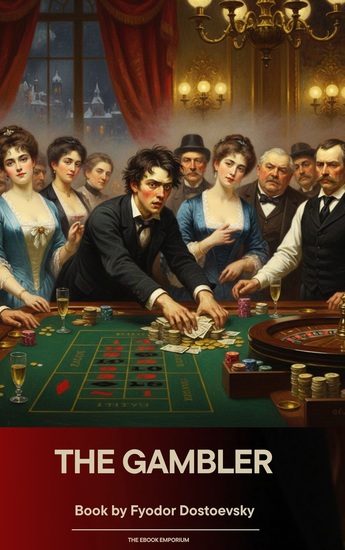
The Gambler - cover

The Gambler

Fyodor Dostoevsky

Casa editrice: The Ebook Emporium

  • 0
  • 0
  • 0

Sinossi

"I am no longer a man. I am a gambler."

Set in the fictional European spa town of Roulettenburg, The Gambler follows Alexei Ivanovich, a young tutor serving a dysfunctional aristocratic family. Alexei is consumed by two equally destructive passions: his unrequited love for the enigmatic Polina and his growing obsession with the roulette table. As the family awaits the death of their wealthy "Grandmother" to inherit her fortune, the old woman arrives in town—only to discover the thrill of the game herself. Dostoevsky provides a terrifyingly visceral look at the mechanics of addiction, where the spin of the wheel becomes the only thing that makes a man feel truly alive.

The Psychology of the Spin: Dostoevsky, a lifelong gambler himself, captures the "fever" with haunting accuracy. He explores the gambler's fallacy—the irrational belief that one can master chance through sheer will. Through Alexei's eyes, we see how the casino floor levels all social distinctions, turning princes and paupers alike into slaves of the "zero."

A Tragedy of Character: While the plot is a frantic "whodunit" of financial and romantic ruin, the core is a character study of a man losing his soul. Alexei begins the novel as a cynical observer of the upper class, but ends as a man who has traded his dignity, his love, and his future for one more turn of the wheel. It is a cautionary tale that remains startlingly relevant in an age of modern speculation.

Place your bets on a masterpiece. Purchase "The Gambler" today and experience Dostoevsky's most fast-paced and personal work.
Disponibile da: 07/01/2026.
Lunghezza di stampa: 204 pagine.
Altri libri che potrebbero interessarti

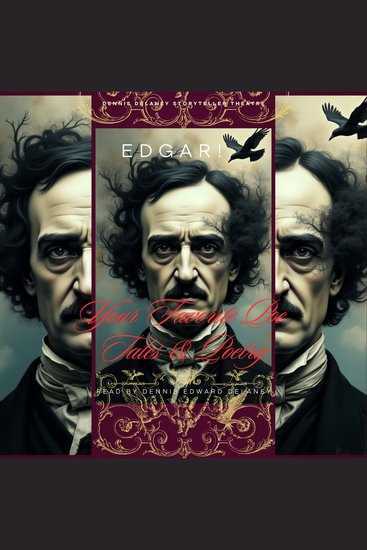
  • Edgar! - Your Favorite Poe Stories & Poetry Read by Dennis Edward Delaney - cover

    Edgar! - Your Favorite Poe...

    Edgar Allan Poe

    • 0
    • 0
    • 0
    About this AudiobookCover Design by David Earl DeWitt | ZacaPublishing.comPublic Domain Source Material was used to Publish this AudiobookAvailable at Spotify & Other Distributors! 
    - 
    A Descent Into The Maelstrom 1841 
    Annabel Lee 1849 
    Eldorado 1849 
    The Premature Burial 1844 
    The Tell-Tale Heart 1842 
    The Black Cat 1843 
    The City In The Sea 1831 
    The Conqueror Worm 1843 
    The Facts In The Case Of M. Valdemar 1845 
    The Haunted Palace 1839 
    The Masque Of The Red Death 1842 
    The Pit And The Pendulum 1843 
    -
    Mostra libro
  • Great Gatsby The: Original 1925 Edition (An F Scott Fitzgerald Classic Novel) - cover

    Great Gatsby The: Original 1925...

    F. Scott Fitzgerald

    • 0
    • 0
    • 0
    The Great Jazz Age Novel 
    The 1925 Original Version 
    The Great Gatsby is considered F. Scott Fitzgerald’s magnum opus, exploring themes of decadence, idealism, social stigmas, patriarchal norms, and the deleterious effects of unencumbered wealth in capitalistic society, set against the backdrop of the Jazz Age and the Roaring Twenties. At its heart, it’s a cautionary tale, a revealing look into the darker side to the American Dream. 
    “When I came back from the East last autumn I felt that I wanted the world to be in uniform and at a sort of moral attention forever; I wanted no more riotous excursions with privileged glimpses into the human heart. Only Gatsby, the man who gives his name to this book, was exempt from my reaction—Gatsby who represented everything for which I have an unaffected scorn. If personality is an unbroken series of successful gestures, then there was something gorgeous about him, some heightened sensitivity to the promises of life, as if he were related to one of those intricate machines that register earthquakes ten thousand miles away. This responsiveness had nothing to do with that flabby impressionability which is dignified under the name of the “creative temperament”—it was an extraordinary gift for hope, a romantic readiness such as I have never found in any other person and which it is not likely I shall ever find again. No—Gatsby turned out all right at the end; it is what preyed on Gatsby, what foul dust floated in the wake of his dreams that temporarily closed out my interest in the abortive sorrows and short-winded elations of men...”
    Mostra libro
  • Top 10 Short Stories The - Revenge - The top ten short revenge stories of all time - cover

    Top 10 Short Stories The -...

    F Scott itzgerald, H G Wells,...

    • 0
    • 0
    • 0
    Short stories have always been a sort of instant access into an author’s brain, their soul and heart.  A few pages can lift our lives into locations, people and experiences with a sweep of landscape, narration, feelings and emotions that is difficult to achieve elsewhere. 
     
    In this series we try to offer up tried and trusted ‘Top Tens’ across many different themes and authors. But any anthology will immediately throw up the questions – Why that story? Why that author?  
     
    The theme itself will form the boundaries for our stories which range from well-known classics, newly told, to stories that modern times have overlooked but perfectly exemplify the theme.  Throughout the volume our authors whether of instant recognition or new to you are all leviathans of literature. 
     
    Some you may disagree with but they will get you thinking; about our choices and about those you would have made.  If this volume takes you on a path to discover more of these miniature masterpieces then we have all gained something. 
     
    Within these ten stories our authors including Edgar Allan Poe, H G Wells, Guy de Maupassant and a host of others demonstrate the power and the motivation that revenge demands.  Yes, the pen is mightier and more brutal than the sword. 
     
    01 - The Top 10 - Revenge - An Introduction 
    02 - Bernice Bobs Her Hair by F Scott Fitzgerald 
    03 - The Cone by H G Wells 
    04 - The Hand by Guy de Maupassant 
    05 - The Cask of Amontillardo by Edgar Allan Poe 
    06 - The Signal by Vsevolod Garshin 
    07 - The Caballero's Way by O Henry 
    08 - The Cold Embrace by Mary Elizabeth Braddon 
    09 - The Bride Comes to Yellow Sky by Stephen Crane 
    10 - The Scapegoat by Paul Laurence Dunbar 
    11 - A Jury of Her Peers by Susan Glaspell
    Mostra libro
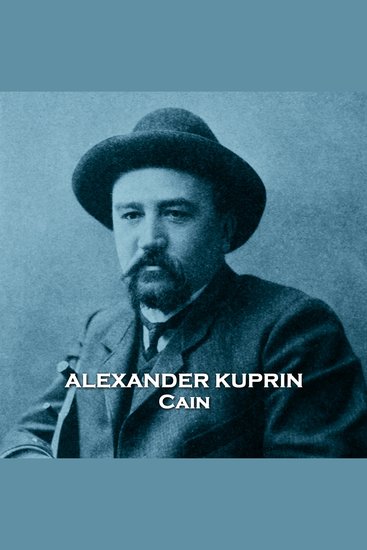
  • Cain - From their pens to your ears genius in every story - cover

    Cain - From their pens to your...

    Alexander Kuprin

    • 0
    • 0
    • 0
    Alexander Kuprin was born in Narovchat, Penza in Russia on 7th September 1870. 
    At 3 his Father died and he and mother moved to Moscow. By 10 he was enrolled at the Second Moscow Military High School and there his interest in literature began. The Alexander Military Academy followed and two years later he was a sub-lieutenant and posted to an Infantry Regiment for a further four years. 
    Despite his duties he was a now a keen writer and published his first short story at this time. His military duties also garnered him experiences for his breakthrough work ‘The Duel’.  Leaving the military he left for Kiev to work for local newspapers.  He continued to publish both stories and novels and by 1901 he was in St Petersburg becoming part of a group that included Chekhov, Ivan Bunin, Maxim Gorky and Leonid Andreyev.  
    In the years that followed further controversial works and acclaim followed.  His comments on the regime meant he was also put under secret police surveillance.   
    As World War I erupted, Kuprin opened a military hospital but was then given command of an infantry company in Finland. He was soon discharged on grounds of ill health.  
    The October Revolution saw him praise Lenin, but he warned that the Bolsheviks threatened Russian culture and might cause further widespread suffering to the peasants.  As Civil War raged he took his family to Helsinki and then on to Paris. 
    Exile saw his talents decline further and his succumbing to alcoholism. He became lonely and withdrawn. The family's poverty increased his malaise.   
    In May 1937, the Kuprin’s returned to Moscow.  He now saw his work published but wrote almost nothing new.  In 1938 his health rapidly deteriorated.  Already suffering from a kidney problems and sclerosis, he had now developed cancer of the oesophagus.  
    Alexander Kuprin died on 25th August 1938.
    Mostra libro
  • Brothers Grimm Fairy Tales - Audiobook - cover

    Brothers Grimm Fairy Tales -...

    Brothers Grimm, Classic...

    • 0
    • 0
    • 0
    Dark forests, enchanted castles, and magical creatures await in this carefully curated collection of fairy tales by the Brothers Grimm. Including unforgettable classics like Cinderella, Rapunzel, and Snow White, these stories have enchanted readers and listeners for generations.Presented with their original intensity and timeless moral lessons, the Grimm tales mix wonder with wisdom. This audiobook is a journey through the heart of European folklore—perfect for listeners of all ages who seek adventure, magic, and meaning.
    Mostra libro
  • Notes from Underground - cover

    Notes from Underground

    Fyodor Dostoyevsky

    • 0
    • 0
    • 0
    Notes from Underground also translated as Notes from the Underground or Letters from the Underworld) is a novella by Fyodor Dostoevsky, first published in the journal Epoch in 1864. It is a first-person narrative in the form of a "confession": the work was originally announced by Dostoevsky in Epoch under the title "A Confession".The novella presents itself as an excerpt from the memoirs of a bitter, isolated, unnamed narrator (generally referred to by critics as the Underground Man), who is a retired civil servant living in St. Petersburg. Although the first part of the novella has the form of a monologue, the narrator's form of address to his reader is acutely dialogized. According to Mikhail Bakhtin, in the Underground Man's confession "there is literally not a single monologically firm, undissociated word". The Underground Man's every word anticipates the words of an other, with whom he enters into an obsessive internal polemic.
    Mostra libro