Junte-se a nós em uma viagem ao mundo dos livros!
Adicionar este livro à prateleira
Grey
Deixe um novo comentário Default profile 50px
Grey
Assine para ler o livro completo ou leia as primeiras páginas de graça!
All characters reduced
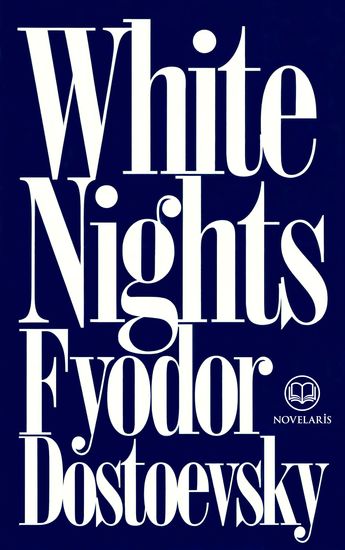
Fyodor Dostoevsky: White Nights - Original Translation by Constance Garnett (Novelaris Classics) - cover
LER

Fyodor Dostoevsky: White Nights - Original Translation by Constance Garnett (Novelaris Classics)

Fyodor Dostoevsky

Editora: Novelaris Verlag

  • 0
  • 0
  • 0

Sinopse

In the luminous summer nights of St. Petersburg, a lonely dreamer encounters a troubled young woman. Fyodor Mikhailovich Dostoevsky's "White Nights" unfolds as an intimate tale of four evenings that hover between hope and melancholy. Through shared confidences and tender moments, the bond between Nastenka and the nameless narrator grows into something as fragile as it is profound. As she awaits her long-absent fiancé, their connection deepens into a love story that captures the ache of what cannot be.
This 1848 novella captures the poignant space between romantic fantasy and reality in Dostoevsky's distinctive prose, leaving readers with an unforgettable meditation on solitude and the fleeting nature of love.
Disponível desde: 29/01/2025.
Comprimento de impressão: 40 páginas.

Outros livros que poderiam interessá-lo

  • Lair of the White Worm The (Unabridged) - cover

    Lair of the White Worm The...

    Bram Stoker

    • 0
    • 0
    • 0
    The Lair of the White Worm is a horror novel by the Irish writer Bram Stoker. It was first published by Rider and Son of London in 1911 - the year before Stoker's death - with colour illustrations by Pamela Colman Smith. The story is based on the legend of the Lambton Worm. It has also been issued as The Garden of Evil.
    Ver livro
  • The Quest of Iranon - cover

    The Quest of Iranon

    H. P. Lovecraft

    • 0
    • 0
    • 0
    The Quest of Iranon by H. P. Lovecraft is a haunting fantasy short story that follows the wandering minstrel Iranon on his search for the lost city of Aira—a place of beauty, memory, and dreams. Blending melancholic lyricism with Lovecraft’s signature dreamlike style, the tale explores themes of youth, longing, disillusionment, and the ephemeral nature of beauty. Perfect for fans of classic fantasy and dark, poetic storytelling, this story lingers as a meditation on the elusive search for belonging and the bittersweet pull of nostalgia.
    Ver livro
  • Pickman's Model (Unabridged) - cover

    Pickman's Model (Unabridged)

    H. P. Lovecraft

    • 0
    • 0
    • 0
    The story revolves around a Bostonian painter named Richard Upton Pickman who creates horrifying images. His works are brilliantly executed, but so graphic that they result in the revocation of his membership in the Boston Art Club and he is shunned by his fellow artists. The narrator is a friend of Pickman, who, after the artist's mysterious disappearance, relates to another acquaintance how he was taken on a tour of Pickman's personal gallery, hidden away in a run-down backwater slum of the city. As the two delved deeper into Pickman's mind and art, the rooms seemed to grow ever more evil and the paintings ever more horrific, ending with a final enormous painting of an unearthly, red-eyed and vaguely canine humanoid balefully chewing on a human victim. A noise sent Pickman running outside the room with a gun while the narrator reached out to unfold what looked like a small piece of rolled paper attached to the monstrous painting. The narrator heard some shots and Pickman walked back in with the smoking gun, telling a story of shooting some rats, and the two men departed.
    Ver livro
  • Women In Love - cover

    Women In Love

    D. H. Lawrence

    • 0
    • 0
    • 0
    Women in Love (1920) is a novel by English author D. H. Lawrence. It is a sequel to his earlier novel The Rainbow (1915), and follows the continuing loves and lives of the Brangwen sisters, Gudrun and Ursula. Gudrun Brangwen, an artist, pursues a destructive relationship with Gerald Crich, an industrialist. Lawrence contrasts this pair with the love that develops between Ursula Brangwen and Rupert Birkin, an alienated intellectual who articulates many opinions associated with the author. The emotional relationships thus established are given further depth and tension by an intense psychological and physical attraction between Gerald and Rupert. 
     
    The novel ranges over the whole of British society before the time of the First World War and eventually concludes in the snows of the Tyrolean Alps. Ursula's character draws on Lawrence's wife Frieda and Gudrun's on Katherine Mansfield, while Rupert Birkin's has elements of Lawrence himself, and Gerald Crich is partly based on Mansfield's husband, John Middleton Murry. David Herbert. 
     
    Lawrence was an English writer, novelist, poet and essayist. His works reflect on modernity, industrialization, sexuality, emotional health, vitality, spontaneity and instinct..
    Ver livro
  • A Thousand Deaths - From their pens to your ears genius in every story - cover

    A Thousand Deaths - From their...

    Jack London

    • 0
    • 0
    • 0
    John Griffith Chaney was born on January 12th, 1876 in San Francisco.   
    His father, William Chaney, was living with Flora Wellman when she became pregnant.  Chaney insisted she have an abortion.  Flora's response was to turn a gun on herself.  Although her wounds were not severe the trauma made her temporarily deranged. 
    In late 1876 his mother married John London and the young child was brought to live with them as they moved around the Bay area, eventually settling in Oakland where now, calling himself Jack, he completed grade school. 
    Jack worked hard at several jobs, sometimes 12-18 hours a day, but his dream was university.  He studied hard and borrowed the money to enrol in the summer of 1896 at the University of California in Berkeley. 
    In 1897, at 21, Jack searched out newspaper accounts of his mother's suicide attempt and for the name of his biological father. He wrote to Chaney, then living in Chicago, who claimed he could not be Jack’s father because he was impotent and casually asserted that London's mother had relations with other men.  Jack, devastated by the response, quit Berkeley and went to the Klondike. Other accounts suggest that his dire finances presented Jack with the excuse he needed to leave. 
    In the Klondike Jack began to gather material for his writing but also accumulated many health problems, including scurvy, which together with hip and leg problems he would carry for the rest of his life. 
    During the late 1890's Jack was regularly publishing short stories and by the turn of the century full blown novels. 
    By 1904 Jack had married, fathered two children and was now in the process of divorcing.  A stint as a reporter on the Russo-Japanese war of 1904 was equal amounts trouble and experience. But that experience was always put to good use in a continuing and remarkable output of work. 
    In 1905 he married Charmian Kittredge who at last was a soul and companion who brought him some semblance of peace despite his advancing alcoholism and his incurable wanderlust. 
    Twelve years later Jack had amassed both wealth and a literary reputation through such classics as ‘The Call of the Wild’, ‘White Fang’ and many others. He had a reputation as a social activist and was a tireless friend of the workers.   
    Jack London died suffering from dysentery, late-stage alcoholism and uremia, aged only 40, on November 22nd 1916 at his property in Glen Elen in California.
    Ver livro
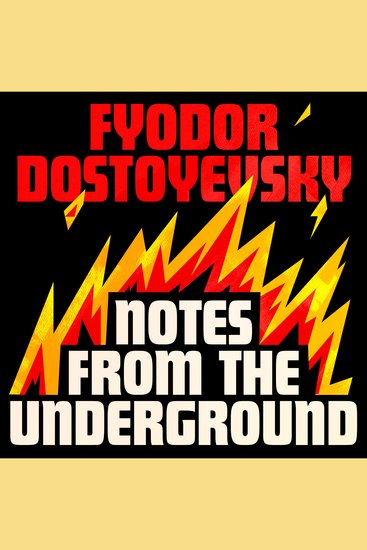
  • Notes from Underground - cover

    Notes from Underground

    Fyodor Dostoevsky

    • 0
    • 0
    • 0
    "I am a sick man... I am a spiteful man. I am an unattractive man."
    
    From the dark, damp recesses of a crawlspace in St. Petersburg, a retired civil servant launches a scathing attack on the modern world. The "Underground Man" is one of literature's first and greatest anti-heroes—a man who chooses to be miserable, spiteful, and irrational simply to prove that he is free. In a world obsessed with logic, progress, and "enlightened self-interest," he stands as a disturbing reminder that human beings will often destroy their own happiness just to assert their individuality.
    
    A War Against Rationality: The Underground Man's primary target is the "Palace of Crystal"—a metaphor for a perfect, scientifically organized society where all human needs are met. Dostoevsky argues that such a world would be a prison. Through his protagonist's chaotic internal monologue, he asserts that man's "most advantageous advantage" is the freedom to act against his own interests, even if it leads to suffering.
    
    A Tragic Human Encounter: The second half of the book moves from philosophy to a painful, cringe-inducing narrative. We see the Underground Man in his youth, attempting to assert power over his former schoolmates and the vulnerable prostitute, Liza. These encounters reveal the true tragedy of the "underground": the paralyzing self-consciousness and vanity that make it impossible for a man to love or be loved.
    
    The Mirror of the Modern Mind: Notes from Underground is a bridge between the classic novels of the 19th century and the modernist masterpieces of the 20th. It is a raw, uncomfortable, and essential read for anyone who has ever felt at odds with the "logical" flow of society. It is a scream from the depths of the human spirit that still resonates today.
    
    Dare to look into the underground. Purchase "Notes from Underground" today and confront the darker side of freedom.
    Ver livro