Unisciti a noi in un viaggio nel mondo dei libri!
Aggiungi questo libro allo scaffale
Grey
Scrivi un nuovo commento Default profile 50px
Grey
Iscriviti per leggere l'intero libro o leggi le prime pagine gratuitamente!
All characters reduced
THE BIRTH OF TRAGEDY (Classical Art vs Nihilism) - Enriched edition Hellenism and Pessimism - cover

THE BIRTH OF TRAGEDY (Classical Art vs Nihilism) - Enriched edition Hellenism and Pessimism

Friedrich Nietzsche

Traduttore Wm. A. Haussmann

Casa editrice: DigiCat

  • 0
  • 0
  • 0

Sinossi

In "The Birth of Tragedy," Friedrich Nietzsche explores the profound interplay between the Apollonian and Dionysian elements of art, positing that the synthesis of these opposing forces gives rise to the true genius of Greek tragedy. With its rich stylistic tapestry, the work oscillates between philosophical discourse and poetic reflection, inviting readers to contemplate the aesthetic experience as a conduit for existential meaning. Nietzsche critiques the decline of art and culture in his contemporary society, linking it to a broader philosophical nihilism that he perceives as threatening the very foundations of Western civilization. Friedrich Nietzsche, a pivotal figure in 19th-century philosophy, grapples with the implications of art and culture against the backdrop of burgeoning nihilism and the crisis of European thought. His experiences in the shadow of Romanticism, combined with a deep engagement with ancient Greek culture, motivated him to articulate a vision that champions tragedy as an essential cultural expression. This work serves as both a celebration and a lamentation, offering glimpses into Nietzsche's complex relationship with art, beauty, and the human condition. This seminal text is essential for readers interested in philosophy, literature, and the evolution of Western thought. Nietzsche's provocative insights challenge us to rethink the role of art in confronting life's inherent pain and chaos, making "The Birth of Tragedy" a timeless exploration of the depths of human experience.

In this enriched edition, we have carefully created added value for your reading experience:
- A succinct Introduction situates the work's timeless appeal and themes.
- The Synopsis outlines the central plot, highlighting key developments without spoiling critical twists.
- A detailed Historical Context immerses you in the era's events and influences that shaped the writing.
- An Author Biography reveals milestones in the author's life, illuminating the personal insights behind the text.
- A thorough Analysis dissects symbols, motifs, and character arcs to unearth underlying meanings.
- Reflection questions prompt you to engage personally with the work's messages, connecting them to modern life.
- Hand‐picked Memorable Quotes shine a spotlight on moments of literary brilliance.
- Interactive footnotes clarify unusual references, historical allusions, and archaic phrases for an effortless, more informed read.
Disponibile da: 12/12/2023.
Lunghezza di stampa: 140 pagine.


Altri libri che potrebbero interessarti

  • Fugitive Pedagogy - Carter G Woodson and the Art of Black Teaching - cover

    Fugitive Pedagogy - Carter G...

    Jarvis R. Givens

    • 0
    • 0
    • 0
    A fresh portrayal of one of the architects of the African American intellectual tradition, whose faith in the subversive power of education will inspire teachers and learners today. 


    Black education was a subversive act from its inception. African Americans pursued education through clandestine means, often in defiance of law and custom, even under threat of violence. They developed what Jarvis Givens calls a tradition of "fugitive pedagogy"—a theory and practice of Black education in America. The enslaved learned to read in spite of widespread prohibitions; newly emancipated people braved the dangers of integrating all-White schools and the hardships of building Black schools. Teachers developed covert instructional strategies, creative responses to the persistence of White opposition. From slavery through the Jim Crow era, Black people passed down this educational heritage. 


    There is perhaps no better exemplar of this heritage than Carter G. Woodson—groundbreaking historian, founder of Black History Month, and legendary educator under Jim Crow. Givens shows that Woodson succeeded because of the world of Black teachers to which he belonged: Woodson's first teachers were his formerly enslaved uncles; he himself taught for nearly thirty years; and he spent his life partnering with educators to transform the lives of Black students.
    Mostra libro
  • Summary: The Seven Spiritual Laws of Success by Deepak Chopra - A Practical Guide to the Fulfillment of Your Dreams - cover

    Summary: The Seven Spiritual...

    FlashBooks, Dean Bokhari

    • 0
    • 0
    • 0
    Book Summary of The Seven Spiritual Laws of Success by Deepak Chopra 
     
    The Seven Spiritual Laws of Success: A Practical Guide to the Fulfillment of Your Dreams by Deepak Chopra 
     
    About 
    The Seven Spiritual Laws of Success is a classic book by Deepak Chopra. Chopra has a way of taking deep spiritual concepts and simplifying them, offering you just the right metaphors and examples to help you grasp the ideas. And because of how easy it is to understand (relative to most spiritual texts) and apply the principles outlined by Chopra, practically anyone can learn from the Big Ideas in this book. The main idea behind the book is to develop a symbiotic relationship between spiritual success + financial success… the idea that the two don’t jive well with one another is often the cause of either moral or financial distress for a lot of people. Hopefully, this summary can help shed light on how important it is to marry these two types of success—spiritual as well as financial. 
     
    Tweetable Summary  
    There’s an easier way to get what you want from life—all you’ve gotta do is get in sync with nature + the universe.
    Mostra libro
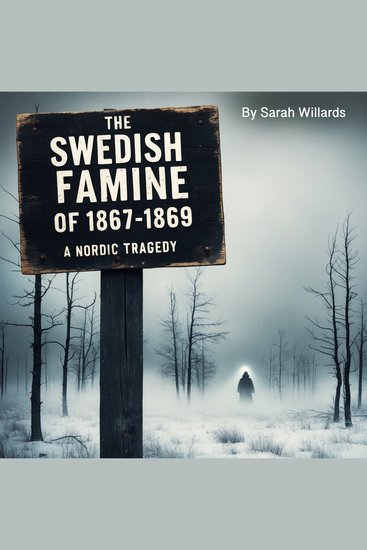
  • The Swedish Famine of 1867-1869 - A Nordic Tragedy - cover

    The Swedish Famine of 1867-1869...

    Sarah Willards

    • 0
    • 0
    • 0
    In the years leading up to the Swedish Famine of 1867–1869, the Kingdom of Sweden stood at a crossroads between tradition and transformation. The mid-19th century was a period of great change, with emerging industrialization in urban areas clashing with the deep-rooted agrarian lifestyle that still defined the countryside. A vast majority of Swedes lived in rural regions, relying heavily on subsistence farming and small-scale agriculture. This dependence on crop yields, particularly barley, rye, and potatoes, made the rural population extremely vulnerable to climatic changes and poor harvests. 
    Despite some gradual modernization efforts, Sweden’s agricultural systems remained underdeveloped and highly sensitive to weather conditions. Farming techniques were largely traditional, and the infrastructure for food storage and distribution was limited. There was little to cushion communities in the event of failed crops. In a nation where most people lived off what they could grow or trade locally, a single bad season could spell hardship. Several parts of the country had endured minor food shortages in prior decades, but none on the scale that would soon descend upon the nation. 
    Adding to this vulnerability were the unusual weather patterns beginning to emerge in the mid-1860s. Winters grew colder and longer, and summers were often too short or too wet for successful harvesting. These anomalies were not yet fully understood at the time, and meteorological science was in its infancy. Farmers, used to working in rhythm with the natural seasons, found themselves unprepared for the climatic disruptions that lay ahead. The winter of 1867 would prove to be particularly devastating, marking the beginning of a three-year catastrophe.
    Mostra libro
  • Rejection: From Fear to Fuel - How the King Warrior Magician Lover archetypes can help you face and deal with rejection - cover

    Rejection: From Fear to Fuel -...

    Mael Duin

    • 0
    • 0
    • 0
    In the intricate tapestry of human emotions, few threads are as pervasive and powerful as the fear of rejection. "Rejected" explores how this primal fear shapes men's lives, relationships, and identities – often without their conscious awareness. Drawing on Robert Moore's archetypal framework, this groundbreaking audiobook reveals how the four masculine archetypes – King, Warrior, Magician, and Lover – offer complementary pathways to transform rejection from a devastating blow into a catalyst for growth. Each archetype brings unique strengths: the King's inner sovereignty that transcends external validation; the Warrior's disciplined action that converts setback into forward momentum; the Magician's transformative perspective that extracts wisdom from painful experience; and the Lover's capacity to remain open-hearted despite vulnerability. Through practical exercises, real-world applications, and powerful personal stories, listeners will discover how integrating these archetypes creates not just resilience, but true antifragility – becoming STRONGER because of rejection rather than despite it. This isn't about eliminating the fear of rejection – it's about developing a relationship with fear that empowers rather than inhibits. For any man who has ever held back from pursuing dreams, expressing his authentic self, or forming meaningful connections due to rejection fear, this audiobook offers a transformative path forward.
    Mostra libro
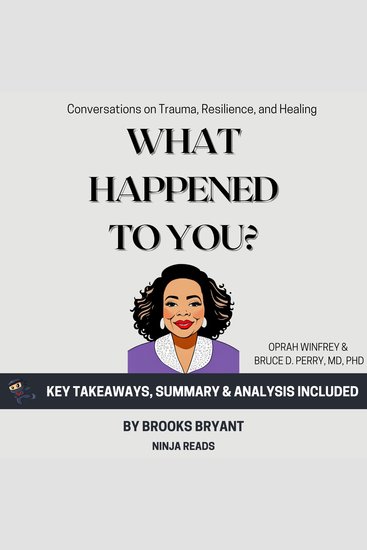
  • Summary: What Happened to You? - Conversations on Trauma Resilience and Healing by Oprah Winfrey & Bruce D Perry: Key Takeaways Summary & Analysis - cover

    Summary: What Happened to You? -...

    Brooks Bryant

    • 0
    • 0
    • 0
    Disclaimer: This is NOT the official book. This is a summary book & it does NOT accompany the official book. 
    In this distilled summary, we encapsulate the key insights that Winfrey and Dr. Perry share, taking you through a transformative exploration of self-understanding and resilience. Learn how personal experiences shape your emotional landscape and how acknowledging past traumas can lead to healing and personal growth. This isn't just a journey to understand your past; it's an invitation to reshape your future. 
    This summarized rendition of "What Happened to You?" presents personal narratives and scientific insights in a concise, accessible format. It encourages you to reflect on your own life experiences, provides a path to understand your behaviors, and helps build empathy for others' actions. It isn't just a book; it's a catalyst to redefine your perspective on trauma and resilience.
    Mostra libro
  • Knights and Chivalry - The Warrior Code - cover

    Knights and Chivalry - The...

    Harris Ropes

    • 0
    • 0
    • 0
    Chivalry, a code of conduct and a set of ideals, emerged during the early Middle Ages, forming the backbone of the knightly order and defining the conduct of warriors across Europe. The origins of chivalry can be traced back to the feudal system, where the role of the knight was essential in maintaining the social and political structure of the time. Knights were initially seen as mounted warriors serving a lord or king, and their duties were deeply intertwined with the political and military landscapes of medieval society. 
    The concept of chivalry grew from various sources, including the martial traditions of early medieval Europe, the influence of the church, and the rising importance of courtly love in literature. Early codes of conduct, though not uniform, emphasized qualities such as bravery, loyalty, and honor. These ideals were primarily martial in nature, as knights were expected to protect their lords and lands from invaders. Over time, however, the influence of Christianity began to shape the code of chivalry, adding elements of piety, mercy, and the protection of the weak. 
    One of the key influences in the development of chivalry was the rise of feudalism. As the Roman Empire fell and Europe entered a period of fragmentation, the feudal system became the dominant form of social and economic organization. Lords granted land to vassals in exchange for military service, and knights became essential for the protection of these lands. This system encouraged the development of a warrior class that was bound by loyalty and honor, principles that would later become central to chivalric codes.
    Mostra libro