Unisciti a noi in un viaggio nel mondo dei libri!
Aggiungi questo libro allo scaffale
Grey
Scrivi un nuovo commento Default profile 50px
Grey
Iscriviti per leggere l'intero libro o leggi le prime pagine gratuitamente!
All characters reduced
The Condition of the Working-Class in England in 1844 with a Preface written in 1892 - Enriched edition - cover

The Condition of the Working-Class in England in 1844 with a Preface written in 1892 - Enriched edition

Friedrich Engels

Traduttore Florence Kelley

Casa editrice: DigiCat

  • 0
  • 0
  • 0

Sinossi

Friedrich Engels' seminal work, "The Condition of the Working-Class in England in 1844," serves as a profound investigation into the social and economic conditions faced by the working class during the Industrial Revolution. Written with a meticulous eye for detail, Engels employs a blend of sociological analysis and vivid exposition to portray the dire realities of life for laborers in urban industrial centers. The text embodies a critical response to capitalism, articulating the transformative power dynamics that arose from rapid industrialization, and is often considered a cornerstone in the development of socialist thought and labor rights discourse. Engels, a German philosopher, social scientist, and collaborator of Karl Marx, drew from both personal experiences and extensive empirical research while writing this work. Having witnessed the grinding poverty and exploitation firsthand, Engels felt a moral obligation to expose the injustices inflicted upon the working class. His role as a co-founder of Marxism also established a framework for his critiques, as he sought to illuminate the intrinsic link between economic systems and social conditions, paving the way for revolutionary thought. This book is a must-read for anyone intrigued by the historical aspects of labor movements, socio-economic theory, or the roots of modern socialism. Engels not only documents the plight of workers but also challenges readers to reflect on the implications of industrial capitalism, making this text as relevant today as it was over a century ago.

In this enriched edition, we have carefully created added value for your reading experience:
- A succinct Introduction situates the work's timeless appeal and themes.
- The Synopsis outlines the central plot, highlighting key developments without spoiling critical twists.
- A detailed Historical Context immerses you in the era's events and influences that shaped the writing.
- An Author Biography reveals milestones in the author's life, illuminating the personal insights behind the text.
- A thorough Analysis dissects symbols, motifs, and character arcs to unearth underlying meanings.
- Reflection questions prompt you to engage personally with the work's messages, connecting them to modern life.
- Hand‐picked Memorable Quotes shine a spotlight on moments of literary brilliance.
- Interactive footnotes clarify unusual references, historical allusions, and archaic phrases for an effortless, more informed read.
Disponibile da: 28/05/2022.
Lunghezza di stampa: 306 pagine.
Altri libri che potrebbero interessarti

  • Robin Hood: The True Story of the Life & Time of the Outlaw Hero - cover

    Robin Hood: The True Story of...

    Liam Dale

    • 0
    • 0
    • 0
    If I asked you how many Robin Hoods you could name, what would the list be like? 
     
    I’m sure you’d reel off a whole host of famous actors, like Errol Flynn, Douglas Fairbanks, Kevin Costner, Michael Praed, Sean Connery, and John Cleese, to name but six. All of these men have played the role of Robin Hood in various television and movie adaptations of the famous story. 
     
    But that’s not what I meant. 
     
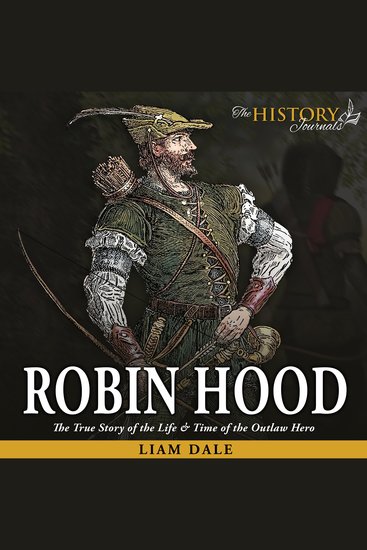
    I’m talking about Robin Hood himself; the ever popular and ever noble outlaw hero who robbed from the rich and gave to the poor, with his trusty bow and arrow as his weapon of choice. The leader of a band of like-minded outlaws, christened the Merry Men (‘merry’ – in this instance – derives from an Anglo-Saxon word meaning ‘illustrious, famous, great, mighty’, etc. In the same sense, Hood means ‘hoodlum, thief, thug, criminal’). Robin Hood was a champion for justice, fighting against the oppression of the evil Sheriff of Nottingham and his right-hand man Guy of Gisbourne, all under the watchful eye of the wicked Prince John (who had been placed on the throne as a substitute monarch whilst his brother, King Richard The Lionheart, fought in the Crusades). 
     
    Of course, that was only one Robin Hood. Very much like the various incarnations that have appeared in classic novels, Hollywood movies, television series, radio serials and theatrical plays, Robin Hood was more than one man.
    Mostra libro
  • Project Management Mastery - From Chaos to Clarity Complete Study Guide with Exam Practice Tests & Answers - cover

    Project Management Mastery -...

    Peter Spencer

    • 0
    • 0
    • 0
    Project Management Mastery: From Chaos to Clarity – Complete Study Guide with Exam Practice Tests & Answers 
    Master the Art of Project Management – From Beginner to Expert! 
    Are you struggling to keep projects on track, manage deadlines, and lead teams effectively? Do you want to pass your PMP®, CAPM®, or PRINCE2® exam with confidence? Whether you're an aspiring project manager, a business leader, or a seasoned professional, this book is your ultimate roadmap to mastering project management and excelling in your career. 
    Why This Book? 
     Step-by-Step Learning: Covers everything from the basics of project management to advanced strategies, ensuring you understand, apply, and succeed. 
     Master Agile, Waterfall & Hybrid Models: Learn real-world techniques to manage projects efficiently in any industry. 
     Exam Success Guaranteed: Get comprehensive practice tests, answers, and explanations to pass PMP®, CAPM®, PRINCE2®, and other certifications. 
     Risk & Crisis Management: Learn how to identify, assess, and mitigate risks while handling challenges with confidence. 
     Leadership & Communication Skills: Discover how to influence stakeholders, manage teams, and become a high-impact leader. 
     Stop struggling with project chaos. Take control, get certified, and elevate your career with confidence!
    Mostra libro
  • Japan's Surrender - The Path to Victory in the Pacific and the End of World War II - cover

    Japan's Surrender - The Path to...

    Sage Winters

    • 0
    • 0
    • 0
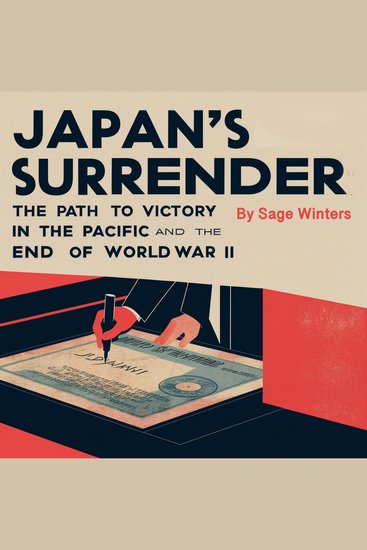
    The Pacific theater of World War II was a brutal and protracted conflict, defined by fierce battles, shifting strategies, and immense human cost. By 1945, the war had entered its final stages, with the Allied forces, led primarily by the United States, gradually gaining the upper hand over Imperial Japan. The end of the Pacific War seemed inevitable, yet the path to Japan's surrender was far from straightforward. The road to victory in the Pacific involved a combination of military ingenuity, strategic alliances, and significant geopolitical shifts. However, the culmination of this path was not solely the result of battlefield victories but also of profound shifts in the political, economic, and moral considerations of both the Japanese leadership and the Allied powers. 
      
    The turning point in the Pacific War came with key battles such as the Battle of Midway in 1942, which severely crippled Japan’s naval forces, and the Allied island-hopping strategy, which successfully isolated and neutralized key Japanese strongholds in the Pacific. Despite these significant losses, Japan’s leadership remained determined to continue the war, believing that they could negotiate a favorable peace settlement or, at worst, fight to a bloody conclusion. In 1945, as Japan’s ability to defend its empire steadily diminished, the Allied forces intensified their efforts, culminating in the invasion of Okinawa—an operation that proved to be one of the bloodiest of the war. 
      
    As the war raged on, the Japanese home islands were subjected to relentless bombing campaigns, both conventional and, later, nuclear. The United States, having developed the atomic bomb, found itself at a crossroads. The decision to deploy this new weapon was fueled by the desire to force Japan’s surrender without having to launch a full-scale invasion, which would likely result in catastrophic casualties for both sides.
    Mostra libro
  • Gentle Guidance: Empowering Kids Through Connection and Care - "Discover the art of gentle parenting through our captivating audiobook enriching your child's life with care and connection!" - cover

    Gentle Guidance: Empowering Kids...

    Orson Wexley

    • 0
    • 0
    • 0
    Gentle Guidance: Empowering Kids Through Connection and Care 
    Are you eager to advance your understanding of child development and strengthen the bonds with your kids? 
    Searching for a thorough guide that equips you with all the necessary tools to nurture confidence through understanding and foster strong parent-child relationships?  
    Your quest ends here! 
    This audiobook is your ultimate companion for enhancing your knowledge, applying practical skills, and engaging in meaningful exercises. With this resource, you're set for success. 
    Updated for 2024-2025. 
    Key features of this insightful guide: 
    - In-depth insights about child development principles 
    - Comprehensive explanations of nurturing confidence in children 
    - Effective strategies for fostering strong connections between parents and kids 
    Our audiobook stands out with its extensive coverage, which is crucial for your growth as a caregiver. Concepts are not just touched upon; they are explored in detail.  
    This audiobook is an independent resource, not affiliated with any official early childhood education entity. 
    Crafted with a clear structure and accessible language, our guide ensures smooth transitions between topics. Say goodbye to complex jargon and embrace clear, concise, and accurate content. 
    So why wait? Click the BUY NOW button, secure your audiobook, and embark on your journey toward empowering your kids through connection and care! 
    Take this step towards nurturing your child's potential today!
    Mostra libro
  • From Prosperity to Peril - The Economic History of Argentina - cover

    From Prosperity to Peril - The...

    Anya Solace

    • 0
    • 0
    • 0
    The economic history of Argentina is deeply rooted in its colonial past, which shaped much of the country’s early economic structures and patterns. Argentina, as part of the Spanish Empire, was initially regarded as a peripheral region, with its economic activities largely shaped by the colonial powers’ interests. The Spanish imposed a rigid economic system in which the colony’s natural resources were exploited to benefit Spain, primarily through the export of silver, agricultural products, and other raw materials. This colonial legacy set the stage for Argentina’s agricultural-based economy and influenced the development of land ownership patterns and labor systems that would persist well into the 19th century. 
    During the colonial period, the region that would become Argentina was an important supplier of agricultural products, such as cattle and grains, to the Spanish Empire. Large estates, known as estancias, were established, and much of the labor force was provided by indigenous peoples and African slaves. The development of these estates led to the establishment of an agrarian economy that would remain a cornerstone of Argentina’s economic identity. The concentration of land and wealth in the hands of a few, however, created significant economic inequalities that would become a recurring theme in Argentina’s history. 
    Following Argentina’s independence from Spain in 1816, the young nation faced significant challenges in establishing its economic identity. The economic institutions that had been put in place by the colonial powers were largely centered around the needs of the empire, and there was little infrastructure to support an autonomous economy. The new republic was faced with the task of building a functional economy that could support its growing population while integrating itself into the global economy.
    Mostra libro
  • African Mythology - Exploring African Mythology and Spiritual Traditions - cover

    African Mythology - Exploring...

    Christiano Farrezi

    • 0
    • 0
    • 0
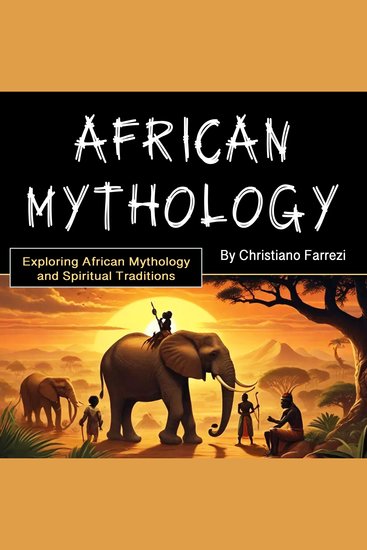
    African mythology is a vast and complex field that encompasses the myths, legends, and spiritual beliefs of numerous cultures across the continent. Unlike mythologies from other parts of the world that often center around a single pantheon or narrative, African mythology is a tapestry of stories that vary widely among regions, tribes, and languages. These myths serve not only as captivating tales but also as the foundation for many African cultural values, ethics, and social norms. Through mythology, African societies have historically explained the mysteries of the universe, human existence, and the relationship between the physical and spiritual realms. The myths often act as a bridge that connects the people to their ancestors, guiding them through life’s challenges, reinforcing traditions, and celebrating the wonders of nature and the supernatural. 
    Myths hold a central place in African culture, weaving through every aspect of life, from religious practices and ceremonies to moral lessons and social structures. They serve as more than just entertainment; they are the backbone of cultural identity, teaching values, history, and spiritual wisdom. In many African communities, myths are used to instill societal values such as respect, bravery, honesty, and the importance of community over individualism. These stories also shape the rituals and ceremonies that mark significant life events, including birth, initiation into adulthood, marriage, and death. Myths give people a sense of belonging and identity, linking them to their ancestors, land, and the unseen forces that govern their world. Through these narratives, individuals are reminded of their place in a larger cosmic order, where human actions and natural elements are interconnected.
    Mostra libro