Unisciti a noi in un viaggio nel mondo dei libri!
Aggiungi questo libro allo scaffale
Grey
Scrivi un nuovo commento Default profile 50px
Grey
Iscriviti per leggere l'intero libro o leggi le prime pagine gratuitamente!
All characters reduced
Beyond Good and Evil - cover

Beyond Good and Evil

Frederich Nietzche

Casa editrice: BookRix

  • 0
  • 0
  • 0

Sinossi

Beyond Good and Evil is a book by philosopher Friedrich Nietzsche. It draws on and expands the ideas of his previous work, Thus Spoke Zarathustra, but with a more critical and polemical approach. In Beyond Good and Evil, Nietzsche accuses past philosophers of lacking critical sense and blindly accepting dogmatic premises in their consideration of morality. Specifically, he accuses them of founding grand metaphysical systems upon the faith that the good man is the opposite of the evil man, rather than just a different expression of the same basic impulses that find more direct expression in the evil man. The work moves into the realm "beyond good and evil" in the sense of leaving behind the traditional morality which Nietzsche subjects to a destructive critique in favor of what he regards as an affirmative approach that fearlessly confronts the perspectival nature of knowledge and the perilous condition of the modern individual.

Of the four "late-period" writings of Nietzsche, Beyond Good and Evil most closely resembles the aphoristic style of his middle period. In it he exposes the deficiencies of those usually called "philosophers" and identifies the qualities of the "new philosophers": imagination, self-assertion, danger, originality, and the "creation of values". He then contests some of the key presuppositions of the old philosophic tradition like "self-consciousness," "knowledge," "truth," and "free will", explaining them as inventions of the moral consciousness. In their place he offers the "will to power" as an explanation of all behavior; this ties into his "perspective of life", which he regards as "beyond good and evil", denying a universal morality for all human beings. Religion and the master and slave moralities feature prominently as Nietzsche re-evaluates deeply held humanistic beliefs, portraying even domination, appropriation and injury to the weak as not universally objectionable.
Disponibile da: 19/12/2023.
Lunghezza di stampa: 249 pagine.

Altri libri che potrebbero interessarti

  • Crows and Ravens - Mystery Myth and Magic of Sacred Corvids - cover

    Crows and Ravens - Mystery Myth...

    Rick de Yampert, H. Byron Ballard

    • 0
    • 0
    • 0
    Exploring history, folklore, mythology, and science, this book gives you a unique look at two of the most popular magical creatures of all time. The crow and his cousin, the raven, are featured players in many cultures throughout the world, including Norse, Celtic, Jewish, and Indigenous traditions. This guide teaches you how to welcome these highly intelligent birds into your own spiritual practice, whether you follow Wicca, Heathenry, Druidry, or any other path. 


    Crows and Ravens presents rituals, meditations, and exercises that help you discover the magic and mystery of corvids. Learn about crow and raven divination, create your own crow-raven talisman, uncover the shadowy side of corvids, and more. Found in nearly all urban and wild environments, these birds present you with magical opportunities and life lessons wherever you go.
    Mostra libro
  • Propaganda - cover

    Propaganda

    Edward Bernays

    • 0
    • 0
    • 0
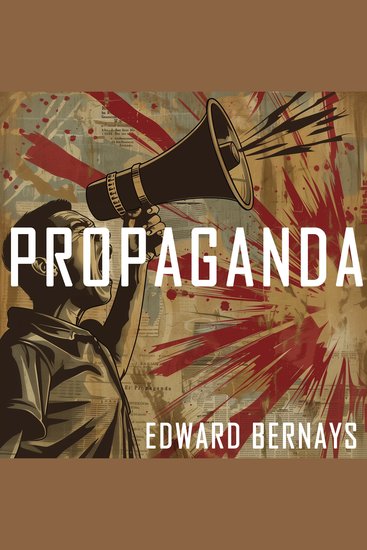
    "Propaganda," penned by Edward Bernays in 1928, delves into the mechanics of shaping public opinion. Bernays, often dubbed the "father of public relations," argues that propaganda is an essential tool for guiding public thought in a democratic society. He outlines strategies for manipulating public perception, drawing from psychological and sociological principles. While his work is credited with pioneering modern public relations, it has also drawn criticism for its potential to be used for manipulation and control.
    Mostra libro
  • Voices - Inside the mind of someone who hears voices - cover

    Voices - Inside the mind of...

    Nic Richelle

    • 0
    • 0
    • 0
    This is an interactive book where the the main character engages with the reader. The reader will get a glimpse into the mind of someone who is not in full control of their reality because they hear voices. One of those voices are YOU! The main character, Dee out of Lakecity, Fl, will take you on a mission to kill her ex lover.
    Mostra libro
  • Made-Up - A True Story of Beauty Culture under Late Capitalism - cover

    Made-Up - A True Story of Beauty...

    Daphné B.

    • 0
    • 0
    • 0
    A nuanced, feminist, and deeply personal take on beauty culture and YouTube consumerism, in the tradition of Maggie Nelson’s Bluets
    		 
    As Daphné B. obsessively watches YouTube makeup tutorials and haunts Sephora’s website, she’s increasingly troubled by the ways in which this obsession contradicts her anti-capitalist and intersectional feminist politics. In this poetic treatise, she rejects the false binaries of traditional beauty standards and delves into the celebrities and influencers, from Kylie to Grimes, and the poets and philosophers, from Anne Boyer to Audre Lorde, who have shaped the reflection she sees in the mirror. At once confessional and essayistic, Made-Up is a meditation on the makeup that colours, that obscures, that highlights who we are and who we wish we could be.
    		 
    The original French-language edition was a cult hit in Quebec. Translated by Alex Manley—like Daphné, a Montreal poet and essayist—the book’s English-language text crackles with life, retaining the flair and verve of the original, and ensuring that a book on beauty is no less beautiful than its subject matter.
    Mostra libro
  • Reagan-Mondale Debate 1 - cover

    Reagan-Mondale Debate 1

    Ronald Reagan, Walter Mondale

    • 0
    • 0
    • 0
    The first of two debates between President Ronald Reagan and former Vice President Walter F. Mondale was held in Louisville, Kentucky on October 7, 1984. Barbara Walters was the debate moderator. James Weigart, Diane Sawyer, and Fred Barnes were the three panelists who asked questions. 
    This first debate was on the economy and domestic issues. Questions focused on the following topics: the nation’s economy, leadership qualities, religion, political issues, abortion, federal taxation, social welfare programs, the presidential campaign, and closing statements. Reagan won a landslide victory in 1984 winning every state except Minnesota and the District of Columbia. 
    Note: 43 seconds of the audio (part of Barbara Walter’s introduction) was garbled. The section from 57 seconds to 1 minute 40 seconds was omitted. This omitted section can be seen and heard in the text and video versions at the Ronald Reagan Presidential Library. Search online for “Ronald Reagan major speeches” to see both a text version and a video version of this debate.  
    Audio recording courtesy of the Ronald Reagan Presidential Library. 
    aspenleafmedia.com
    Mostra libro
  • Negotiating in Civil Conflict - Constitutional Construction and Imperfect Bargaining in Iraq - cover

    Negotiating in Civil Conflict -...

    Haider Ala Hamoudi

    • 0
    • 0
    • 0
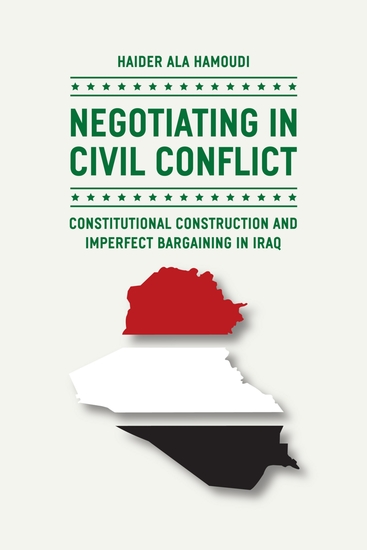
    In 2005, Iraq drafted its first constitution and held the country’s first democratic election in more than fifty years. Even under ideal conditions, drafting a constitution can be a prolonged process marked by contentious debate, and conditions in Iraq are far from ideal: Iraq has long been racked by ethnic and sectarian conflict, which intensified following the American invasion and continues today. This severe division, which often erupted into violence, would not seem to bode well for the fate of democracy. So how is it that Iraq was able to surmount its sectarianism to draft a constitution that speaks to the conflicting and largely incompatible ideological view of the Sunnis, Shi’ah, and Kurds? Haider Ala Hamoudi served in 2009 as an adviser to Iraq’s Constitutional Review Committee, and he argues here that the terms of the Iraqi Constitution are sufficiently capacious to be interpreted in a variety of ways, allowing it to appeal to the country’s three main sects despite their deep disagreements. While some say that this ambiguity avoids the challenging compromises that ultimately must be made if the state is to survive, Hamoudi maintains that to force these compromises on issues of central importance to ethnic and sectarian identity would almost certainly result in the imposition of one group’s views on the others. Drawing on the original negotiating documents, he shows that this feature of the Constitution was not an act of evasion, as is sometimes thought, but a mark of its drafters’ awareness in recognizing the need to permit the groups the time necessary to develop their own methods of working with one another over time.
    Mostra libro