Unisciti a noi in un viaggio nel mondo dei libri!
Aggiungi questo libro allo scaffale
Grey
Scrivi un nuovo commento Default profile 50px
Grey
Iscriviti per leggere l'intero libro o leggi le prime pagine gratuitamente!
All characters reduced
Why is the Negro Lynched? - cover

Why is the Negro Lynched?

Frederic Douglass

Casa editrice: DigiCat

  • 0
  • 0
  • 0

Sinossi

In "Why is the Negro Lynched?", Frederick Douglass presents a compelling and urgent inquiry into the pervasive violence against African Americans, particularly the horrific act of lynching. Masterfully articulated, Douglass employs a poignant yet accessible literary style, leveraging both emotional appeal and stark factual evidence to expose the systemic racism embedded in American society. His essay not only highlights the immediate horrors of lynching but also situates it within the broader context of slavery's legacy, racism, and the struggle for civil rights, illustrating a grim narrative that confronts readers with the reality of human suffering and moral failure in a purportedly civilized society. Frederick Douglass, a former enslaved person and renowned abolitionist, dedicated his life to advocating for justice and equality. His personal experiences with oppression and his profound understanding of societal injustices profoundly informed his writing. Douglass's eloquence and passion arose from a direct confrontation with inequality, which shaped his lifelong mission to illuminate the disenfranchisement of Black people in America and challenge the moral conscience of his contemporaries. This essential work is a clarion call for awareness and action against racial violence, making it a crucial read for anyone seeking to understand the roots and repercussions of systemic racism. Douglass's incisive analysis and heartfelt plea invite readers to engage with the moral imperative of justice, urging them to confront the uncomfortable truths of history and their present implications.
Disponibile da: 15/08/2022.
Lunghezza di stampa: 40 pagine.
Altri libri che potrebbero interessarti

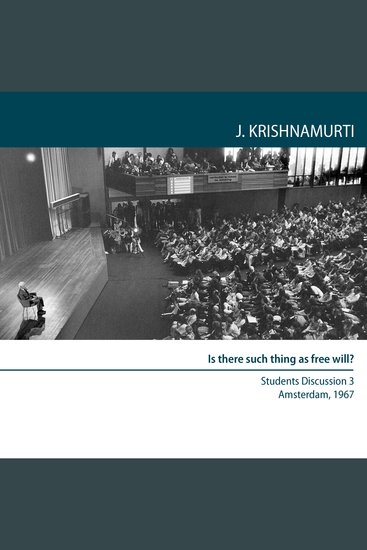
  • Is There Such Thing As Free Will? - Amsterdam 1967 - Students Discussion 3 - cover

    Is There Such Thing As Free...

    Jiddu Krishnamurti

    • 0
    • 0
    • 0
    "s there such thing as free will? - 31 May 1967  
    • Is freedom partial? 
    • Why should I be bound to destiny? Born in India with the tremendous cultural 
    traditions, why should I be caught in it? 
    • Man is more important than the frame into which he is put. 
    • Is it possible for a human being to free himself from society, psychologically? 
    • Human beings have to change, and will thought change us? 
    • Man is society, has created the society in which we live. 
    • Are you influenced to change from outside or do you change from yourself? 
    • To change according to a pattern is no change at all."
    Mostra libro
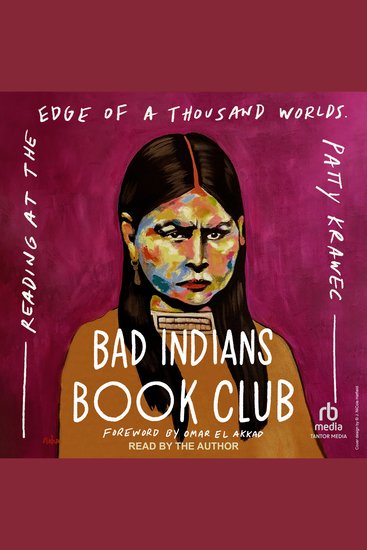
  • Bad Indians Book Club - Reading at the Edge of a Thousand Worlds - cover

    Bad Indians Book Club - Reading...

    Patty Krawec, Omar El Akkad

    • 0
    • 0
    • 0
    When a friend asked what books could help them understand Indigenous lives, Patty Krawec, author of Becoming Kin, gave them a list. This list became a book club and then a podcast about a year of Indigenous reading, and then this book. The writers in Bad Indians Book Club refuse to let dominant stories displace their own and resist the way wemitigoozhiwag—European settlers—craft the prevailing narrative and decide who they are. 
     
    In Bad Indians Book Club, we examine works about history, science, and gender as well as fiction, all written from the perspective of "Bad Indians"—marginalized writers whose refusal to comply with dominant narratives opens up new worlds. Interlacing chapters with short stories about Deer Woman, who is on her own journey to decide who she is, Krawec leads us into a place of wisdom and medicine where the stories of marginalized writers help us imagine other ways of seeing the world. 
     
    Now, in Bad Indians Book Club comes a potent challenge to all the stories settler colonialism tells—stories that erase and appropriate, deny and deflect. Following Deer Woman, who is shaped by the profuse artistry of Krawec, we enter the multiple worlds Indigenous and other subaltern stories create. Together we venture to the edges of worlds waiting to be born.
    Mostra libro
  • Unsustainable - How American Healthcare Became a Machine for Managing Disease—And How We Can Fix It - cover

    Unsustainable - How American...

    MD Christopher Voss

    • 0
    • 0
    • 0
    The American healthcare system is on an unsustainable trajectory. Despite remarkable medical advancements, escalating costs and a chronic disease epidemic have transformed healthcare into an industry focused more on managing disease than curing it. In Unsustainable, Dr. Christopher Voss-a physician with expertise in anesthesiology, critical care, pain medicine, and lifestyle medicine-offers a compelling, well-researched examination of how capitalism has shaped modern healthcare, often rewarding continuous treatment over definitive cures. 
     
    Dr. Voss traces the historical evolution of American medicine, exposing the misaligned incentives that have led to rising costs, physician burnout, and a public increasingly dependent on pharmaceuticals and high-cost procedures. He delves into third-party payers, the pharmaceutical industry, and hospital consolidations, revealing the systemic forces that prioritize financial gain over genuine health outcomes. 
     
    But this book is not just about diagnosing the problem-it presents real solutions. Drawing from successful models in preventive medicine, value-based care, and global healthcare systems, Unsustainable outlines a vision for rebalancing capitalism in medicine. Dr. Voss argues that profit and patient well-being don't have to be at odds-if incentives are structured to reward prevention, patient empowerment, and curative treatments. 
     
    This book is a must-read for physicians, policymakers, healthcare administrators, and patients who want to understand why healthcare costs continue to spiral and what can be done to create a sustainable, ethical, and patient-centered system. Through a mix of rigorous research, real-world examples, and bold policy recommendations, Unsustainable challenges the status quo and presents a compelling roadmap for the future of American healthcare.
    Mostra libro
  • April 1865: The Tumultuous History of the Confederacy’s Last Month - cover

    April 1865: The Tumultuous...

    Editors Charles River

    • 0
    • 0
    • 0
    By the close of 1864, Abraham Lincoln had been reelected, the Union army had taken Nashville from General Hood, and Sherman had concluded his total war, “slash-and-burn” march of destruction to Savannah, Georgia, offering it as a Christmas present to Lincoln. Nevertheless, with everything seemingly falling to pieces, the South still held out hope of some sort of miracle, and Davis even attempted to send a peace delegation to meet with Lincoln in the early months of 1865. On January 28, 1865 as Union General Ulysses S. Grant was continuing to lay siege to Lee’s army at Petersburg, Virginia, Davis sent three commissioners headed by Vice-President Stephens to initiate informal peace talks with Lincoln. By February 3, however, the talks, known as the Hampton Roads Conference, came to a stalemate as Lincoln would accept nothing less than total union, while Davis would only accept Southern independence.  
    	Even at that point, the South was clearly on its last legs. General George H. Thomas destroyed John Bell Hood’s Confederate army at the battles of Nashville and Franklin, leaving only two large Confederate armies still in the field. Lee's army was weakened by desertion, lack of supplies and casualties, and Joseph E. Johnston’s army could barely resist against Sherman’s army as it was advancing north toward Virginia.  
    	To most observers, the South was clearly reaching its end, but Davis had no intention of quitting the war. Even while he was fleeing, he attempted to order Confederate generals in the field to keep fighting. On April 9, 1865, Lee formally surrendered his weary army to Grant at Appomattox. Appomattox is frequently cited as the end of the Civil War, but there still remained several Confederate armies across the country, mostly under the command of General Joseph E. Johnston.
    Mostra libro
  • Strategies for Quick Understanding of Human Behavior - "Unlock the secrets of human behavior! Dive into dynamic audio lessons tailored for swift comprehension" - cover

    Strategies for Quick...

    Lysander Vexley

    • 0
    • 0
    • 0
    Strategies for Quick Understanding of Human Behavior 
     ⭐⭐ Simplified Guide & Explanations Included  ⭐⭐ 
    Are you eager to advance in your career by enhancing your understanding of human behavior?  
    Searching for an all-inclusive guide that equips you with the essential tools to transform your connections through improved comprehension of others? 
    Your quest ends here! 
    This audiobook is your ultimate resource for deepening your insight, honing your skills, and participating in hands-on exercises. With this knowledge, you’ll be set for success. 
    Updated for the Latest Knowledge on Transforming Connections. 
    Key features of this enhanced guide: 
    - In-depth insights into understanding human behavior 
    - Thorough explanations of the principles behind interpersonal dynamics 
    - Effective strategies for preparing and engaging with others 
    Our guide stands out through its comprehensive approach, which is vital for your success. Concepts are explored in detail rather than glossed over. 
    Please be aware that this guide operates independently and is not associated with any official organization regarding human behavior. 
    Crafted with a straightforward structure and accessible language, our guide ensures seamless topic transitions. Say goodbye to complicated jargon and embrace content that is clear, precise, and technically accurate. 
    So, why hesitate? Click the BUY NOW button, secure your guide, and start your journey toward a deeper understanding of human behavior!
    Mostra libro
  • There Is No Other - The Way to Harmony and Wholeness - cover

    There Is No Other - The Way to...

    Ram Dass, Parvati Markus

    • 0
    • 0
    • 0
    Best Spiritual Books of 2025 - Spirituality and Practice An essential balm for these tumultuous times, this thoughtful and inspiring guide features newly gathered teachings to abandon the idea there is an “other,” bridging differences and cherishing our lives in the world, from beloved spiritual leader Ram Dass. 
    With the world seeming to teeter between democracy and authoritarianism, between humanitarianism and individualism, Ram Dass’s teachings on wholeness and unity are more needed than ever. 
    There Is No Other is a groundbreaking work showcasing the late spiritual leader’s thoughts and insights on broaching the divide and bringing disparate souls together. In these profound, newly gathered writings, Ram Dass shows us how a house divided against itself—whether that “house” is our individual self or the society in which we live—can come together in wholeness. There is no “other,” he explains. It is all one. 
    Structured in three sections, There Is No Other teaches us to open ourselves, come together in community, and love one another—and ourselves—across all our seeming contradictions and divisions. Anne Lamott contributes a beautiful foreword and each section is followed by a short essay reflecting on the endurance of Ram Dass’s ideas penned by Sharon Salzberg, Joseph Goldstein, Jack Kornfield, and Mirabai Bush, as well as guided meditations to deepen each lesson. 
    As he leads us toward wholeness within our unique selves and as a human community, Ram Dass gives us the most precious gift: hope. Only in seeing ourselves in our complexity can we come together and honor our incarnations on the sacred planet we inhabit.
    Mostra libro