Unisciti a noi in un viaggio nel mondo dei libri!
Aggiungi questo libro allo scaffale
Grey
Scrivi un nuovo commento Default profile 50px
Grey
Iscriviti per leggere l'intero libro o leggi le prime pagine gratuitamente!
All characters reduced
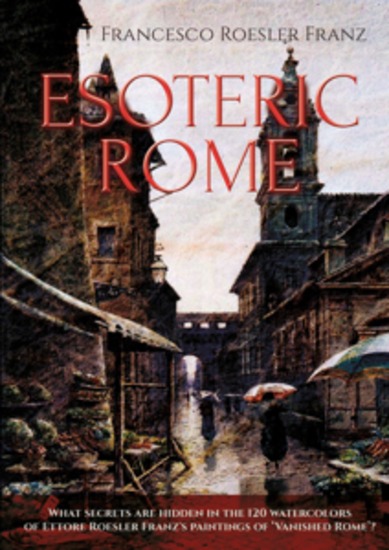
Esoteric Rome - cover

Esoteric Rome

Francesco Roesler Franz

Casa editrice: Youcanprint

  • 0
  • 0
  • 0

Sinossi

Forte di questa sua simbologia insita, l'arte si rivela ancora una volta il luogo deputato del pensiero mitico sia quanto luogo di esibizione del simbolo, come nelle arti figurative, sia come luogo nel quale il pensiero poetante disegna la duplicità del reale nel dipanarsi della narrazione.  

Tre serie di quaranta acquerelli, per un totale di centoventi quadri. È questa Roma Sparita, un'opera complessa e mozzafiato che tocca le corde più alte dell'arte. A firmarla è stato Ettore Roesler Franz, ma quali erano davvero le sue intenzioni? Questi quadri non sono solo la testimonianza di un grande talento artistico ma un vero e proprio mistero perché dietro di essi c'è un mondo intero da scoprire. Celebrazione della Roma massonica, testimonianza dei cambiamenti urbanistici della città, esaltazione della spiritualità, elogi ai grandi artisti: tanti sono i significati esoterici che si intrecciano tra questi quadri e che vengono esaminati e approfonditi in questo incredibile saggio, scritto dal pronipote del grande artista.
Disponibile da: 15/03/2022.
Altri libri che potrebbero interessarti

  • Ferdinand Magellan: A short biography - 5 Minutes: Short on time - long on info! - cover

    Ferdinand Magellan: A short...

    5 Minutes, 5 Minute Biographies,...

    • 0
    • 0
    • 0
    Ferdinand Magellan, adventurer and discoverer: Life and work in a short biography! Everything you need to know, brief and concise. Infotainment, education and entertainment at its best!
    Mostra libro
  • The End of the Roman Republic - cover

    The End of the Roman Republic

    Editors Charles River

    • 0
    • 0
    • 0
    Possibly the most important man of antiquity, and even all of history, was Julius Caesar. Alexander Hamilton, the famous American patriot, once remarked that “the greatest man who ever lived was Julius Caesar”. Such a tribute, coming from one of the Founding Fathers of the quintessential modern democracy in reference to a man who destroyed the Roman Republic, is testament to the enduring mark that Caesar left upon the world. The ultimate conqueror, statesman, dictator, visionary, and opportunist, during his time in power Caesar expanded the borders of Rome to almost twice their previous size, revolutionized the infrastructure of the Roman state, and destroyed the Roman Republic for good, leaving a line of emperors in its place. His legacy is so strong that his name has become, in many languages, synonymous with power. 
    	During one of the most turbulent periods in the history of Rome, men like Julius Caesar, Mark Antony, and Octavian participated in two civil wars that would spell the end of the Roman Republic and determine who would become the Roman emperor. In the middle of it all was history’s most famous woman, the Egyptian pharaoh Cleopatra, who famously seduced both Caesar and Antony and thereby positioned herself as one of the most influential people in a world of powerful men. Cleopatra was a legendary figure even to contemporary Romans and the ancient world, and she was a controversial figure who was equally reviled and praised through the years, depicted as a benevolent ruler and an evil seductress.  
    Octavian was the first true Roman Emperor, and the first man since the Tarquinus, five centuries earlier, to establish a successful hereditary ruling dynasty in what had been a proud Republic for over half a millennium. He was a canny strategist, an excellent orator, a fine writer, a generous patron of the arts and enthusiastic promoter of public works, but above all he was a master politician.
    Mostra libro
  • Israel: The Last Vestige of European Colonialism in the Middle East - cover

    Israel: The Last Vestige of...

    A.A. Castor

    • 0
    • 0
    • 0
    "Israel: The Last Vestige of European Colonialism in the Middle East" is an in-depth examination of the historical and ongoing impact of European colonialism on the formation and expansion of Israel. Through a critical lens, this book challenges the mainstream narratives that depict Israel as the rightful homeland of the Jewish people and instead explores its colonial roots and the displacement of the indigenous Palestinian population. 
      
    The book delves into the role of European powers, from the Zionist movement's inception in the late 19th century to the political maneuvers that facilitated the establishment of Israel in 1948. It uncovers how Western support, particularly from Britain and the United States, enabled the colonization of Palestine while ignoring the rights of the native population. It also analyzes the demographic changes brought about by waves of European Jewish immigration and presents genetic evidence highlighting the European ancestry of much of the modern Israeli population. 
      
    By exploring topics such as the marginalization of non-European Jewish communities, the ongoing occupation of Palestinian territories, and the influence of Western powers, this book aims to shed light on the historical injustices and colonial dynamics that continue to shape the Israeli-Palestinian conflict. Readers will be encouraged to question established narratives, understand the broader geopolitical implications, and consider the pathways to justice and accountability for the Palestinian people.
    Mostra libro
  • The Second Book of Esdras - The Timeless Revelation of Vision Wisdom and Prophecy - cover

    The Second Book of Esdras - The...

    Ezra The Scribe, Tim Zengerink

    • 0
    • 0
    • 0
    Are you searching for answers to life’s greatest mysteries? Do you long to deepen your understanding of faith, prophecy, and divine purpose? 
    The Second Book of Esdras is one of the most profound and reflective works of ancient scripture.  
    Attributed to Ezra the Scribe, this timeless text offers powerful visions, deep spiritual insights, and heartfelt questions about life, suffering, and the fate of humanity. 
    Now available in a clear, modern translation, this edition brings Esdras’ wisdom to today’s listener—preserving the depth of the original while making it accessible and inspiring for all. 
    What you'll discover inside: 
    •	Explore Eternal Questions – Esdras’ reflections on life’s meaning, divine justice, and the end times 
    •	Embrace Prophetic Wisdom – Visions and revelations that speak to faith, hope, and perseverance 
    •	Strengthen Spiritual Understanding – Ancient teachings made clear through modern language 
    •	Apply Its Lessons to Modern Life – Timeless truths that resonate in today’s world of uncertainty 
    This sacred text is more than history—it’s a guide for your personal journey toward truth, resilience, and purpose. 
    Start your journey through The Second Book of Esdras today and let its timeless wisdom illuminate your path.
    Mostra libro
  • The Compleat Angler - cover

    The Compleat Angler

    Izaak Walton

    • 0
    • 0
    • 0
    Walton's popular classic treatise on fishing goes far beyond techniques, as it embraces a life that values serenity and appreciation for creation. Some of the natural history lore is antiquated, but keen intelligence and good humor express themselves in a readable and enjoyable manner.
    Mostra libro
  • Xia Dynasty - The Myth and Mystery of China's First Dynasty - cover

    Xia Dynasty - The Myth and...

    Rolf Hedger

    • 0
    • 0
    • 0
    The Xia Dynasty is often considered the first dynasty of China, marking the transition from a prehistoric era dominated by tribal alliances to a structured monarchy. However, much of what is known about the Xia comes from ancient texts written centuries later, blurring the line between history and legend. At the heart of this foundation myth is Yu the Great, a figure credited with taming the catastrophic floods that once plagued the Yellow River region. 
    According to traditional accounts, China before the Xia was ruled by the Five Emperors, semi-mythical sages who brought order and knowledge to early societies. The final ruler of this period, Emperor Shun, recognized Yu for his brilliance and appointed him to control the devastating floods that had threatened agricultural settlements for generations. Unlike his predecessors, who attempted to block or divert the waters, Yu devised a system of dredging and canal-building that allowed the floodwaters to drain naturally into rivers and the sea. His efforts reportedly took over a decade, during which he traveled across the land, surveying the terrain and directing large-scale labor projects. His selfless dedication won him the admiration of the people, and his success in flood control cemented his reputation as a leader with the Mandate of Heaven. 
    The concept of the Mandate of Heaven, though later fully developed under the Zhou Dynasty, has its roots in the Xia period. It suggested that rulers were chosen by divine will and that their legitimacy depended on their ability to maintain order and prosperity. Yu's ability to tame the floods demonstrated both his virtue and his right to rule. Upon Emperor Shun’s abdication, Yu became the first king of the Xia Dynasty, establishing a hereditary monarchy that would continue for generations.
    Mostra libro