Unisciti a noi in un viaggio nel mondo dei libri!
Aggiungi questo libro allo scaffale
Grey
Scrivi un nuovo commento Default profile 50px
Grey
Iscriviti per leggere l'intero libro o leggi le prime pagine gratuitamente!
All characters reduced
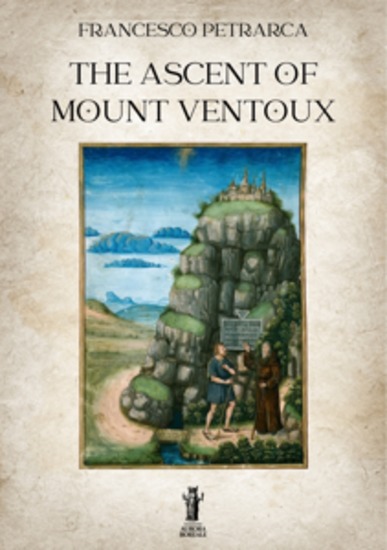
The Ascent of Mount Ventoux - cover

The Ascent of Mount Ventoux

Francesco Petrarca

Casa editrice: Edizioni Aurora Boreale

  • 0
  • 0
  • 0

Sinossi

Francesco Petrarca (1304-1374), better known in English as Francis Petrarch, was a Tuscan scholar, poet and initiate of the early Italian Renaissance and one of the fathers of Humanism. His rediscovery of Cicero's letters is often credited with initiating the 14th-century Italian Renaissance and the founding of Renaissance humanism. In the 16th century, Pietro Bembo created the model for the modern Italian language based on Petrarca's works, as well as those of Giovanni Boccaccio, and, to a lesser extent, Dante Alighieri.Petrarca's sonnets were admired and imitated throughout Europe during the Renaissance and became a model for lyrical poetry. He is also known for being the first to develop the concept of the "Dark Ages".He traveled extensively in Europe, served as an ambassador and was called "the first tourist" because he used to travel for pleasure and for historical and cultural interest, as in the case of his famous ascent to Mont Ventoux in Provence.Petrarca wrote about his ascent of Mont Ventoux (a high mountain in Provence, France) on April 26, 1336, in a well-known letter published as one of his Epistolae Familiares. In this letter, written around 1350, Petrarca claimed to be the first person since antiquity to have climbed a mountain for the view. Although the historical accuracy of his account has been questioned by modern scholars, it is often cited in discussions of the new spirit of the Renaissance.
Disponibile da: 26/02/2025.
Altri libri che potrebbero interessarti

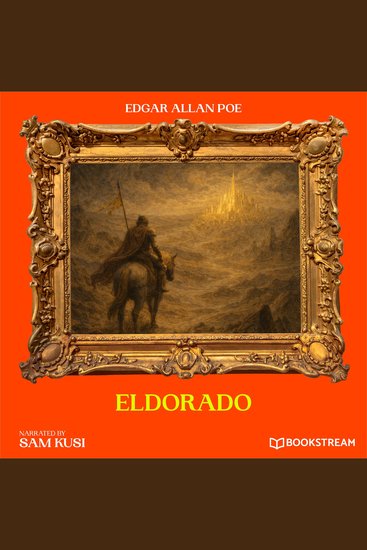
  • Eldorado - cover

    Eldorado

    Edgar Allan Poe

    • 0
    • 0
    • 0
    Eldorado: Edgar Allan Poe was an American writer, poet, editor, and literary critic who is best known for his poetry and short stories.
    
    Gaily bedight,
    A gallant knight,
    In sunshine and in shadow,
    Had journeyed long,
    Singing a song,
    In search of Eldorado.
    Mostra libro
  • Brightness Falls - From their pens to your ears genius in every story - cover

    Brightness Falls - From their...

    Mary Butts

    • 0
    • 0
    • 0
    Mary Frances Butts was born on 13th December 1890 in Poole, Dorset. 
    Her early years were spent at Salterns, an 18th-century house overlooking Poole Harbour.  Sadly in 1905 her father died, and she was sent for boarding at St Leonard's school for girls in St Andrews. 
    Her mother remarried and, from 1909, Mary studied at Westfield College in London, and here, first became aware of her bisexual feelings.  She was sent down for organising a trip to Epsom races and only completed her degree in 1914 when she graduated from the London School of Economics.  By then Mary had become an admirer of the occultist Aleister Crowley and she was given a co-authorship credit on his ‘Magick (Book 4)’. 
    In 1916, she began the diary which would now detail her future life and be a constant reference point for her observations and her absorbing experiences. 
    During World War I, she was doing social work for the London County Council in Hackney Wick, and involved in a lesbian relationship.  Life changed after meeting the modernist poet, John Rodker and they married in 1918. 
    In 1921 she spent 3 months at Aleister Crowley's Abbey of Thelema in Sicily; she found the practices dreadful and also acquired a drug habit.  Mary now spent time writing in Dorset, including her celebrated book of short stories ‘Speed the Plough’ which saw fully develop her unique Modernist prose style. 
    Europe now beckoned and several years were spent in Paris befriending many artists and writing further extraordinary stories.   
    She was continually sought after by literary magazines and also published several short story collections as books. Although a Modernist writer she worked in other genres but is essentially only known for her short stories.  Mary was deeply committed to nature conservation and wrote several pamphlets attacking the growing pollution of the countryside. 
    In 1927, she divorced and the following year her novel ‘Armed with Madness’ was published.  A further marriage followed in 1930 and time was spent attempting to settle in London and Newcastle before setting up home on the western tip of Cornwall.  By 1934 the marriage had failed. 
    Mary Butts died on 5th March 1937, at the West Cornwall Hospital, Penzance, after an operation for a perforated gastric ulcer. She was 46.
    Mostra libro
  • Speed - From their pens to your ears genius in every story - cover

    Speed - From their pens to your...

    Sinclair Lewis

    • 0
    • 0
    • 0
    Harry Sinclair Lewis was born on 7th February 1885 in the village of Sauk Centre, Minnesota. 
    Childhood was lonely. He was ungainly looking—red-headed, tall, overly thin, stricken with acne and somewhat pop-eyed—making friends and meeting girls were difficult for him. At 13 he unsuccessfully absconded from home in an attempt to become a drummer boy in the Spanish-American War. 
    In late 1902 Lewis left home for the Oberlin Academy in preparation for Yale University. At Oberlin, he developed a religious enthusiasm that ebbed and flowed for his remaining teenage years. The following year he was at Yale but did not receive his degree until 1908, having taken time off to work at Upton Sinclair's cooperative-living colony in Englewood, New Jersey, and to travel to Panama.  
    Lewis's earliest published creative work—romantic poetry and short sketches—appeared in some Yale magazines, one of which he later became editor of. After graduation Lewis moved location and jobs several times trying to make ends meet whilst writing fiction for publication.  
    In working for newspapers and publishing houses he developed a knack for churning out short stories for magazines. He also earned money by selling plots to Jack London. 
    Lewis first published  ‘Hike and the Aeroplane’ in 1912 under a pseudonym. A couple of years later his books were rather more serious in tone and by 1930 he was the first American author to receive the Nobel Prize in Literature, which was awarded "for his vigorous and graphic art of description and his ability to create, with wit and humor, new types of characters."  
    Amongst his classics which changed the shape of American fiction were ‘Main Street’, ‘Babbitt’, ‘Arrowsmith’ (for which he received but declined the 1926 Pulitzer Prize), ‘Elmer Gantry’, ‘Dodsworth’ and his prediction of a US fascist dictator in ‘It Can’t Happen Here.’ 
    As well as novels, he wrote numerous short stories, plays and other articles. 
    Sinclair Lewis died in Rome on 10th January 1951, aged 65, from advanced alcoholism.
    Mostra libro
  • A Pair of Silk Stockings - From their pens to your ears genius in every story - cover

    A Pair of Silk Stockings - From...

    Kate Chopin

    • 0
    • 0
    • 0
    Katherine O'Flaherty was born on the 8th February 1850 in St Louis, Missouri to parents of French and Irish descent. 
    At age 5, she was sent to the Sacred Heart Academy and, apart from a 2 year period at home when her father died, remained there until graduating in 1868.  Whilst there she began writing and became an avid reader of almost anything that crossed her path.   
    Kate married Oscar Chopin in 1870 and the couple moved to New Orleans, and later to the rural setting of Cloutierville, Louisiana to raise their 6 children.  
    In 1882 her husband died leaving her in a deep trench of debt.  Despite her best efforts to turn the businesses around they were sold, and she moved the family back to St Louis and the financial help of her mother.  Sadly, her mother died within the year.  Kate, now struggling with depression, pushed herself to write and gained a local reputation as a writer of short stories that captured the local color and vibrancy of her surroundings. 
    By the early 1890’s her short stories were published nationally.  With this widespread audience also came negative reviews, controversy, and cries of immorality as themes such as interracial relationships, the rights of women and other burning issues of the day were written about. 
    Despite the criticism, which unnerved her, she continued to write though in the main her works, around 100 short stories and two novels, were not attributed with any literary worth. 
    Kate Chopin died from a brain haemorrhage in St Louis Missouri on the 22nd of August 1904.  She was 54. 
    For much of the 20th Century her work was forgotten and out of print.  It was only in early 1970’s, with the rise of feminism and the call for a more just society that she was given the status her works had long described and shone a literary light at.  She is now safely revered as one of America’s great authors.
    Mostra libro
  • To-- (1836) - cover

    To-- (1836)

    Edgar Allan Poe

    • 0
    • 0
    • 0
    To–– (1836): Edgar Allan Poe was an American writer, poet, editor, and literary critic who is best known for his poetry and short stories.
    
    The bowers whereat, in dreams, I see
    The wantonest singing birds
    Are lips—and all thy melody
    Of lip-begotten words—
    Mostra libro
  • A Fragment of Stained Glass - From their pens to your ears genius in every story - cover

    A Fragment of Stained Glass -...

    D H Lawrence

    • 0
    • 0
    • 0
    David Herbert Lawrence was born on the 11th September 1885 in Eastwood, Nottinghamshire, a coal mining town where the reality of a harsh life was only useful as experiences for future literary works. 
    He was educated at Beauvale Board School and became the first local boy to receive a scholarship to attend Nottingham High School. After 3 years he became a junior clerk in Haywood’s surgical appliances factory. He was also attempting a literary career which, in the short term, led to a teacher training position in Eastwood and later a teaching qualification from University College, Nottingham.  
    Lawrence’s first efforts were poems, short stories and a draft of ‘The White Peacock’. Moving to London and a teaching position in Croydon his writing attracted the attention of Ford Madox Ford, editor of The English Review, and he commissioned him to write ‘Odour of Chrysanthemums’.  
    Wanting to write full-time he now began work on what would become ‘Sons and Lovers.   
    In 1912 he met the older and married mother-of-three Frieda Weekley. They eloped to Germany and here Lawrence could see for himself the growing tensions with France.  So keen was his interest that he was arrested and accused of being a British spy.  
    In early 1914 Frieda obtained her divorce and they returned to Britain to be married just days before the outbreak of war. Owing to her German parentage, and his own public dislike of militarism and violence, the couple were treated with contempt and suspicion throughout the war years.  
    Despite this he continued to write but his reputation in England was so tarnished and, mirrored by his own disdain for the country, he and Frieda left England in November 1919, first for Europe and then America via Ceylon and Australia. 
    They bought a ranch in Taos, New Mexico and visited Mexico several times. The third visit in March 1925 caused a near fatal attack of malaria. To convalesce they moved to Florence. Here he continued work on ‘Lady Chatterley’s Lover’ which for many years would cause controversy. A renewed interest in oil painting resulted in an exhibition in 1929 which was raided by the police and several works were confiscated.  
    D H Lawrence died of complications arising from a bout of tuberculosis on the 2nd of March 1930 in Vence, France.  He was 44.
    Mostra libro